The contenders
Side by side
The digital case, made well
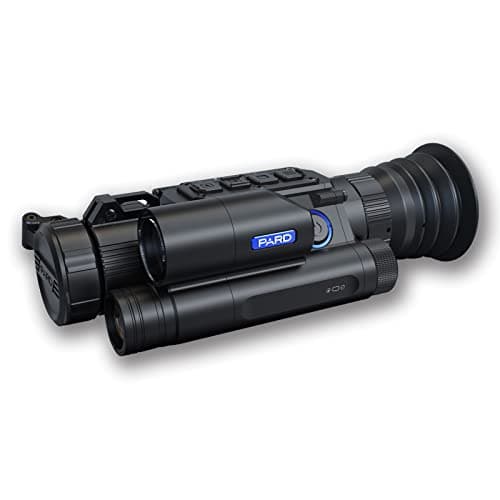
PARD NV008SP2-LRF
Under $5008.2/10A rangefinder, a ballistic calculator, IP67 and a 6,000 J recoil rating in the tier where analog gets you nothing usable. This is what digital buys you.
$499.00Amazon#ad · Price as of October 11, 2026 · How we make money for the link to PARD NV008SP2-LRF
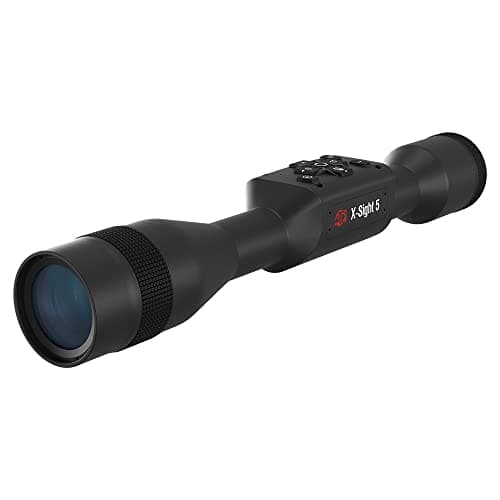
The best sensor on this page
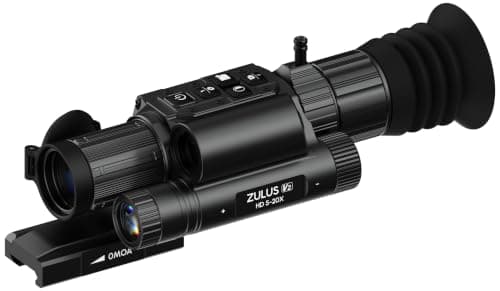
DNT Optics Zulus HD V2 LRF
$500 to $1,0008.0/10Sony STARVIS 2 at 1920x1080 and 60 Hz, a 1,100-yard rangefinder, two 21700 cells in the box and a .50 BMG recoil rating.
$599.99Amazon#ad · Price as of October 11, 2026 · How we make money for the link to DNT Optics Zulus HD V2 LRF
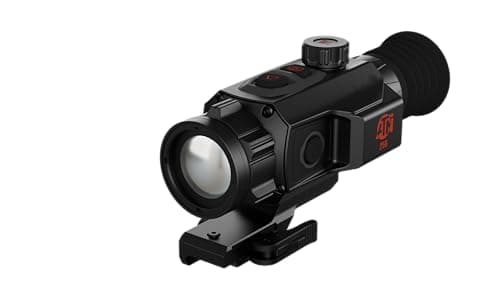
The 'Gen II' that isn't a tube
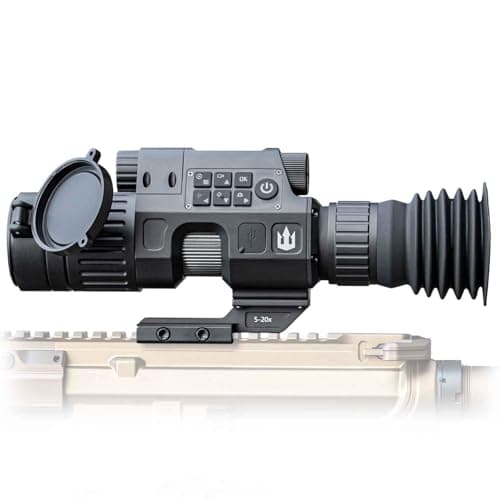
Triton StarStrike Gen II 5-20x
Under $5005.8/10Named like an analog generation, built as a digital camera scope. A lifetime warranty and about 200 yards of claimed night viewing; no published sensor spec.
$299.99Amazon#ad · Price as of October 11, 2026 · How we make money for the link to Triton StarStrike Gen II 5-20x
How each one makes a picture
Analog night vision is an image-intensifier tube. Light that is already present — starlight, moonlight, skyglow — hits a photocathode, becomes electrons, gets multiplied, and lands on a phosphor screen you look at directly with your eye. There is no computer in the path. The picture is green (or white, on newer phosphor) because that is what the screen emits, and it appears in your eye at the speed of physics.
Digital night vision is a camera. A low-light CMOS sensor captures the scene, a processor turns it into a video frame, and a small display in the eyepiece shows you that frame. Pulsar's own explainer on night vision types is a fair summary of the split: the tube amplifies, the digital unit records and re-displays.
Two consequences follow from that and they explain nearly everything else. First, because a digital unit is a camera, it can save video, run software, hold several zeroes, drive a ballistic calculator and show a reticle that you can edit — none of which a phosphor screen can do. Second, because a digital sensor is far less sensitive than a good tube, almost every digital unit leans on an infrared illuminator to make light of its own. Infrared sits just past the red end of what the eye can see (NASA's visible-light primer puts the eye's limit at roughly 700 nm; hunting illuminators run 850 or 940 nm), so the animal mostly cannot see it and your sensor can.
What "Gen" actually means, and where it is being misused
Generation numbers — Gen 1, Gen 2, Gen 3 — describe tube technology. They are a real, meaningful hierarchy for analog: successive generations changed the photocathode material and the electron multiplication stage, and the jump from Gen 1 to Gen 3 is the difference between a dim, distorted, short-lived image and the kind of picture that costs thousands of dollars per tube.
Those numbers mean nothing on a digital scope, and the industry uses them anyway. One of the scopes on this page is literally sold as the Triton StarStrike Gen II and it has no tube in it at all — it is a digital camera scope with a built-in illuminator, and Triton publishes neither a sensor resolution nor an IR wavelength for it. We are not accusing anyone of lying; "Gen II" is a product name. But if you came here trying to work out whether a sub-$500 scope advertised as "Gen 2" is getting you Gen 2 tube performance, the answer is no, and it was never claiming to.
What digital buys you
- Daylight use. These are day/night scopes. You zero in daylight through the same optic you hunt with at night. Pointing a real analog tube at daylight is how you destroy it.
- Recording. 1080p or 4K video to a card, and on some units recoil-activated capture.
- Rangefinders and ballistics. The PARD NV008SP2-LRF publishes a 1,200-yard rangefinder and a ballistic calculator; the DNT Zulus HD V2 LRF publishes 5 to 1,100 yards plus app-adjustable ballistics. No tube does this.
- Multiple zero profiles and editable reticles. Software, so free.
- Price. This is the real one. Everything on this page sits under $1,000 and two of the three publish recoil ratings a tube scope would envy — 6,000 J on the PARD and .50 BMG on the DNT.
What analog buys you, and what it costs
- No latency. The image is in your eye as fast as light moves. A digital unit has a frame rate and a processing delay; on a 60 Hz unit like the DNT it is hard to notice, on a cheap 30 Hz unit it smears when you pan.
- No emitter needed. A good tube works on starlight. A digital scope mostly needs IR, and IR is a light that another hunter with night vision can see from a long way off.
- Better dynamic range in practice. Tubes handle a mixed-brightness scene — a lit yard beside a dark treeline — more gracefully than most low-cost sensors, which bloom.
- Cost and fragility. A tube with performance worth having costs several times any scope on this page, has a finite operating life measured in thousands of hours, and is damaged by bright light.
- No video, no ranging, no ballistics, no profiles.
If you want an analog-style experience at a digital price, the closest thing is a head-worn digital goggle, which we rank on best night vision goggles for the money — but understand it is still a screen.
The digital units we hold, side by side
Read down the IR wavelength row and you have the single most useful line on this page. PARD publishes a 5 W VCSEL illuminator and documents its night vision behaviour in its own support FAQ. DNT does not publish a wavelength for the Zulus at all. Triton publishes neither a wavelength nor a sensor resolution. On digital night vision the illuminator is half the optic, and a maker who will not say what it emits is asking you to buy on faith.
An honest limit on this page
We hold no analog image-intensifier units in our registry. That is deliberate and worth saying plainly: tube night vision in a form we could verify — a stated tube generation, a figure of merit, a warranty — is not something we found reliably sold through the channels this site covers, and we will not rank a product whose core specification we cannot source. So this comparison is digital units we can document against analog as a technology, not against three specific tubes.
If you are shopping analog seriously, you are buying from a specialist dealer, you are asking for the tube's data sheet (figure of merit, signal-to-noise, blemish map), and you are spending multiples of anything here. That is a legitimate thing to do. It is just not a hog-hunting purchase for most people.
Which belongs on a hog rifle
| If this matters most… | Choose | Why |
|---|---|---|
| Budget under $1,000 | Digital | Analog with usable performance does not exist at this price |
| Recording the hunt | Digital | A tube has no frame to save |
| Ranged holds at night | Digital | Rangefinder plus ballistic calculator, on two of the three above |
| One scope for day and night | Digital | Daylight destroys tubes |
| No emitted light at all | Analog | A good tube runs on starlight; digital leans on IR |
| Zero lag when you pan fast | Analog | No frame rate in the path |
| Finding hogs in brush | Neither — thermal | Both of these need line of sight and light |
For the reader this site is written for — a landowner trying to clear hogs off a pasture — digital wins on every axis that costs money, and the real decision is not digital versus analog at all. It is digital night vision versus thermal, which we settle on thermal vs night vision for hog hunting.
Mistakes buyers make
- Reading a "Gen" badge on a digital scope as a tube generation. It is a product name.
- Buying digital and no illuminator budget. The included units are feeder-distance tools. See best IR illuminators.
- Expecting starlight performance from a camera. Some units genuinely do passive moonlight work; none of them do it as well as a tube.
- Assuming 940 nm is free. It is invisible and it costs you reach. 850 nm throws further with a faint red glow.
- Treating detection claims as identification. Triton's 200 yards and Sightmark's 300 yards are detection figures in favourable conditions.
- Buying either for brush. Heat goes through cover; light does not.
In detail
The contenders, in full
The digital case, made well
PARD NV008SP2-LRF
A rangefinder, a ballistic calculator, IP67 and a 6,000 J recoil rating in the tier where analog gets you nothing usable. This is what digital buys you.
Published specsResearched · every spec sourced
| Sensor | 2688x1520 CMOS; 0.001 lux |
|---|---|
| Objective lens | 50 mm or 70 mm |
| Magnification | 4.5x or 6.5x optical; 2x digital (4.5-9x / 6.5-13x) |
| IR illuminator | Built-in 5 W VCSEL, 3 levels, 350 mMaker's claim |
| IR wavelength | 850 nm or 940 nm (two versions) |
| Display | 1440x1080 OLED |
| Rangefinder | Up to 1,200 yd (LRF version)Maker's claim |
| Ballistic calculator | Built in |
| Recording | Self-activated (on the shot) and loop recording; microSD up to 128 GB |
| Battery | 18650; up to 8 h; USB-C external power |
| IP rating | IP67 |
| Recoil rating | 6,000 J |
| Weight | 495 g with battery |
| Warranty | 2-year limited |
How the 8.2 score breaks down
- Image & IR (30%)
- 8.5
- Usability (20%)
- 8
- Recording, LRF & ballistics (15%)
- 9
- Battery (15%)
- 7.5
- Warranty (10%)
- 6
- Value (10%)
- 9.5
What the specs support
- Sold in 850 nm and 940 nm IR versions
- Rangefinder feeds a built-in ballistic calculator
- IP67 and a 6,000 J recoil rating
- Records automatically on the shot
Where it falls short
- Narrow view: about 6.4° horizontal on the 50 mm and 4.6° on the 70 mm
- 2-year limited warranty
Skip this if…
…You need a wide view to follow hogs moving at feeder range; the 4.5x-6.5x base magnification is narrow up close.
#ad · Price as of October 11, 2026 · How we make money for the link to PARD NV008SP2-LRF
The best sensor on this page
DNT Optics Zulus HD V2 LRF
Sony STARVIS 2 at 1920x1080 and 60 Hz, a 1,100-yard rangefinder, two 21700 cells in the box and a .50 BMG recoil rating.
Published specsResearched · every spec sourced
| Sensor | Sony STARVIS 2; 1920x1080 at 60 Hz |
|---|---|
| Magnification | 3-12x (ZHD312R-V2; a 5-20x ZHD520R-V2 is also sold) |
| IR illuminator | Built in |
| Display | 1920x1080 micro-OLED, 60 Hz |
| Rangefinder | 5-1,100 ydMaker's claim |
| Ballistic calculator | Built in; adjustable in the DNT app |
| Recording | 1800x1080 video; 32 GB built in; Wi-Fi |
| Battery | 21700; up to 10 h; 2 included; USB-C external power |
| IP rating | IP67 |
| Recoil rating | .50 BMG |
| Weight | 18.4 oz (522 g) |
| Warranty | 2 years on night vision and thermal products |
How the 8.0 score breaks down
- Image & IR (30%)
- 7.5
- Usability (20%)
- 8.5
- Recording, LRF & ballistics (15%)
- 8.5
- Battery (15%)
- 9
- Warranty (10%)
- 6
- Value (10%)
- 8
What the specs support
- Rated up to 10 hours per 21700 battery, with two included
- 60 Hz 1920x1080 micro-OLED display
- Rangefinder plus ballistic calculator
- IP67 and a .50 BMG recoil rating
Where it falls short
- IR wavelength isn't stated on the product page
- 2-year warranty
- The Amazon title doesn't say 3-12x or 5-20x; check the listing before buying
Skip this if…
…You specifically want a 940 nm illuminator for a less visible glow; DNT doesn't publish this scope's wavelength.
#ad · Price as of October 11, 2026 · How we make money for the link to DNT Optics Zulus HD V2 LRF
The 'Gen II' that isn't a tube
Triton StarStrike Gen II 5-20x
Named like an analog generation, built as a digital camera scope. A lifetime warranty and about 200 yards of claimed night viewing; no published sensor spec.
Published specsResearched · every spec sourced
| Magnification | 5-20x (a 3-18x version is also sold) |
|---|---|
| IR illuminator | Built in |
| Night detection range | Up to about 200 ydMaker's claim |
| Recording | 1080p video and stills to microSD |
| Reticle | 4 options |
| Battery | About 4 h; can run continuously from a power bank |
| Weight | About 25 oz |
| Warranty | Lifetime (subject to Triton's terms) |
How the 5.8 score breaks down
- Image & IR (30%)
- 4.5
- Usability (20%)
- 6
- Recording, LRF & ballistics (15%)
- 5.5
- Battery (15%)
- 5
- Warranty (10%)
- 9
- Value (10%)
- 7.5
What the specs support
- Lifetime warranty
- 1080p recording to microSD
- Can run continuously from a power bank
Where it falls short
- Triton doesn't publish sensor resolution or IR wavelength
- About 4 hours of rated runtime
- About 25 oz, heavy for its class
Skip this if…
…You plan night shots past 200 yards; Triton lists viewing to about 200 yards in suitable conditions.
#ad · Price as of October 11, 2026 · How we make money for the link to Triton StarStrike Gen II 5-20x
How we scored this
Every score, built from the published record
Every pick here is labeled Researched: we read each maker's published specs, manuals and warranty terms, compare products only against others in the same budget tier, and score them on a public rubric. Every figure links to where it came from, and seller performance numbers are labeled “maker's claim,” so you can see exactly what you are buying.
Scores are our editorial read of that documented evidence. Commissions never set a score or decide a pick. The rubric and its weights are published.
What changed
- Published.
Questions
Frequently asked
What is the difference between digital and analog night vision?
Is a 'Gen 2' digital night vision scope the same as Gen 2 analog?
Does digital night vision need an IR illuminator?
Is analog night vision better than digital for hunting?
Should I just buy thermal instead?
Receipts
Sources
- Pulsar: night vision and thermal technology explainer (checked 2026-10-11)
- PARD USA: NV008SP2 / NV008SP2-LRF product page and spec table (checked 2026-10-11)
- PARD USA: night vision support FAQ (checked 2026-10-11)
- DNT Optics: Zulus HD V2 3-12x LRF product page and specifications (checked 2026-10-11)
- Triton: StarStrike Gen 2 product page and technical specifications (checked 2026-10-11)
- NASA Science: visible light and the limits of the eye's response (checked 2026-10-11)
- TPWD: Outdoor Annual, Nongame and Other Species, feral hogs (checked 2026-10-11)
- Texas Parks & Wildlife Code §62.005, Hunting with Light (texas.public.law; checked 2026-10-11)
Specs come from each maker's own pages or the product listing (linked on every product), hog biology and trapping advice from Texas A&M AgriLife, and rules from TPWD and Texas statute. Prices are set by Amazon and change often, so we don't print them. Where a figure isn't published, we say so. Read the full method.