Not legal advice. This page summarizes Texas rules from the official sources linked in the text (TPWD Outdoor Annual, valid Sep 1, 2026 through Aug 31, 2027). Rules checked . Laws change: confirm the current rules with Texas Parks and Wildlife and your local game warden before you rely on them.
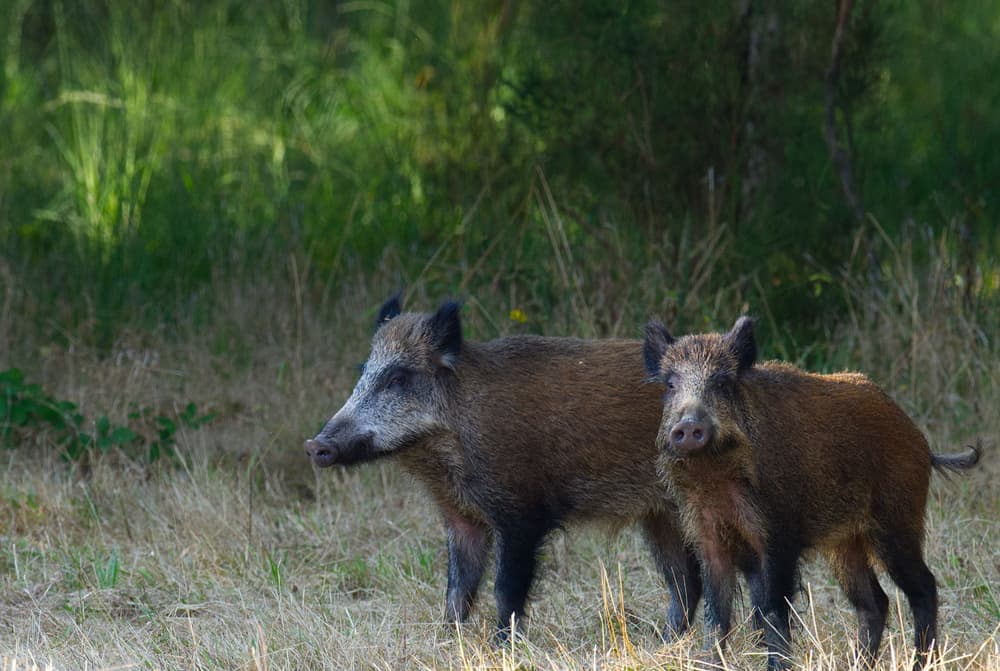
Texas law leaves feral hogs unprotected, so there's no season to wait for and no limit to count toward. Most of what you can't do is about protecting other things: deer and other protected game, public roads, your neighbor's land, and the spread of disease through live hogs. This page walks through each rule in plain English and links the source that says it. It's part of our hog control and Texas rules section, and it pairs with the whole-sounder plan in how to get rid of feral hogs.
Which rules year this covers
Texas hunting regulations run on a September-to-August year. The TPWD Outdoor Annual pages cited here are stamped "Valid Sep. 1, 2026 through Aug. 31, 2027," and we checked every rule on this page against them on September 19, 2026. We re-check each September 1, when the new regulations year starts, and whenever TPWD, TAHC or TDA announce a change.
This page is a summary, not legal advice. Where a rule turns on your exact situation (a paid lease, a public hunting unit, a holding pen), call the agency or your local game warden before you act.
Do you need a license to hunt hogs in Texas?
On private land with the landowner's authorization, no. TPWD's Outdoor Annual says it directly: "No hunting license is required to hunt feral hogs on private property with landowner authorization." That rule dates to Senate Bill 317, which took effect Sept. 1, 2019. TPWD's news release on the change says the law "exempts any person (resident or nonresident), with landowner consent, from a hunting license requirement to hunt feral hogs," and that it "removes any reference to depredation," so the exemption covers all feral hogs, not only ones causing damage.
The same release spells out where the exemption stops:
- No consent, no exemption. "It is still a violation to hunt without a license if hunting without consent."
- Public land needs a license. "A hunting license is still required on public land."
- Hunter Education still applies (more on that below).
- Paid access needs a lease license. "Allowing hunting access in return for financial or other consideration still requires a hunting lease license from the Texas Parks and Wildlife Department." If you charge hunters for hog hunting on your place, that part is on you as the landowner.
Texas A&M's Natural Resources Institute reached the same reading in its April 2026 update on feral pig laws: Texas "no longer requires a hunting license to hunt or trap them on private property," while a license "is still required if you are hunting public property such as state and federal lands." Older pages around the web, including some agency pages written before 2019, still say a license is required on private land. The 2019 law changed that.
Hunter Education
Dropping the license requirement did not drop Hunter Education. The Outdoor Annual's hog section says "Hunter Education requirements apply," and NRI notes that certification is required "for all hunters on both private and public land." TPWD's Hunter Education rules for 2026-27 set out who that means:
- Every hunter, including out-of-state hunters, born on or after Sept. 2, 1971, must complete a Hunter Education course. The minimum certification age is 9.
- Hunters under 9 must be accompanied, and hunters 9 through 16 must complete the course or be accompanied. "Accompanied" means by a person at least 17 who is licensed to hunt in Texas, who has passed Hunter Education or is exempt, and who stays within normal voice control.
- A person 17 or older who hasn't completed the course can buy a one-time deferral that lasts up to one year.
- Proof of certification or deferral has to be on your person while you hunt, printed or electronic.
One wrinkle to note: TPWD's definition of "accompanied" mentions a person licensed to hunt in Texas. If a youth hunter is going out on private land with you, carry a license yourself or confirm with TPWD that your setup qualifies.
Can you hunt hogs year-round in Texas?
Yes, on private property. The Outdoor Annual lists feral hogs with the non-protected and exotic species and says that on private property there are "no required means and methods of take, state bag or possession limits, or closed seasons (hunting hours)" for those species (TPWD nongame and other species). NRI's 2026 summary agrees: "There are no regulations on bag or possession limits or a closed season" for feral pigs.
That means no season dates, no daily limit and no required method on private land. It doesn't mean anything goes. The rules in the rest of this page still apply: protected game, public roads, property lines, live transport, toxicants and aircraft. Public hunting lands are a separate case with their own hours (see public land below).
Night hunting and lights
Hunting hogs at night on private land is legal, and so is using a spotlight. TPWD's law-enforcement FAQ answers the question "Is it legal to use a spotlight for hunting coyotes and feral hogs in deer country?" with "Yes, but it is recommended that a person who is going to hunt coyotes or feral hogs give a courtesy call to the local Texas Game Warden." NRI adds that spotlights, handheld thermals, thermal rifle scopes and night-vision scopes can all be used when removing feral pigs.
The hard line is protected game. Parks and Wildlife Code §62.005 bars hunting a protected game animal or bird with an artificial light that illuminates it, "including the headlights of a motor vehicle," and §62.004 bars hunting protected wild game between one-half hour after sunset and one-half hour before sunrise. Hogs aren't covered because they aren't protected. Deer are. Identify every animal before the light and the safety come off.
The night question gets its own page, with the lights, thermal, vehicle and public-land details: can you hunt hogs at night in Texas?
Vehicles and public roads
TPWD's means-and-methods rules list it as legal to "hunt animals and non-migratory game birds from a motor vehicle... within the boundaries of private property or upon private water." So shooting a hog from a truck or UTV on the ranch is lawful.
Roads are where that stops. The same page makes it unlawful to "discharge a firearm on or across a public road or hunt from public roads" and to hunt any wild animal "on foot or from a vehicle on any public road or road right-of-way." The statute says the same thing: §62.0031 provides that "a person may not hunt a wild animal or bird when the person is on a public road or right-of-way." A public road that runs through your land is still a public road. Get off it, and make sure no shot crosses it.
Property lines
Hogs don't respect fences, but your bullets have to. Under TPWD's means and methods, it is unlawful to "knowingly discharge a firearm causing a projectile to cross a property line, unless the person owns both sides of the property line or has obtained written permission from the owner of any land crossed by the projectile."
If your hogs work a fence line with a neighbor, get that permission in writing before the season you need it, not the night you need it. Better still, coordinate: a sounder that splits its time between two properties is easier to remove when both owners trap and shoot on the same plan.
Suppressors
Texas allows them. TPWD's means-and-methods page says suppressors "may be used to take any wildlife resource; however, all federal, state and local laws continue to apply." Texas A&M's NRI notes that federal approval through ATF (an approved Form 4) is required. Federal rules are outside what this page covers, and they change, so go to the ATF's National Firearms Act Division for the current federal process. We don't sell or link suppressors.
Trapping on private land
TPWD lists it as legal to "trap nongame/exotic animals (such as feral hogs, rabbits, etc.) on private property" (means and methods), and NRI confirms no license is needed to hunt or trap them on private property. What you do with a hog after it's caught is the regulated part (next section).
For the how-to, see our step-by-step guide to trapping feral hogs, built on Texas A&M AgriLife's corral-trap and pre-baiting guidance.
Moving live hogs
This is the rule that catches people out. TPWD's Outdoor Annual says "Transportation and release of live feral hogs is unlawful, unless in compliance with Texas Animal Health Commission (TAHC) regulations," and it gives TAHC's number, (800) 550-8242, for questions. TAHC regulates the movement of feral swine for disease control; its swine page notes the Legislature gave it that authority in 2007.
The rule itself is 4 Texas Administrative Code §55.9. It prohibits moving live feral swine except in the ways it lists, which include:
- Directly from the premises where they were trapped to a recognized slaughter facility.
- To an approved holding facility, which TAHC describes as a temporary place to hold feral swine pending movement to slaughter, an authorized hunting preserve or another approved holding facility.
- To an authorized hunting preserve, where only male feral swine (boars and barrows) may be released, and only after they are individually identified.
Hogs trapped and held for transport to an authorized location "may be held in an escape-proof cage on the vehicle or trailer... for up to seven days." Holding facilities need a swine-proof fence that the owner or operator maintains to keep feral swine from getting in or out.
Warfarin (Kaput) and toxicants
The feral hog toxicant you'll hear about in Texas is warfarin, sold as Kaput Feral Hog Bait, and it's restricted. The Texas Department of Agriculture's feral hog pesticide page says warfarin is "classified as a state limited use pesticide when used specifically as a feral hog (Sus scrofa) toxicant," effective January 31, 2024. In practice:
- "A person may not purchase a state limited use pesticide unless the person is a licensed pesticide applicator or is working under the direct supervision of a licensed applicator."
- TDA lists commercial, noncommercial and noncommercial political subdivision applicator licenses certified in the Vertebrate category for agricultural use. Texas A&M sources describe the license requirement a little differently, so for licensing details TDA is the authority.
- Dealers must hold a TDA pesticide dealer's license and can't sell warfarin to a licensee without the right category.
Kaput was registered for state limited use by licensed applicators on February 1, 2024, per a TDA release. AgriLife's chemical control page adds that the label requires a hog-specific feeder and a detailed pre-baiting process, and that following it is critical both for success and to use the product legally. We don't recommend, sell or link any toxicant. If you think it belongs in your plan, talk to a licensed applicator.
Drones and aircraft
TPWD's means-and-methods rules make it unlawful to "use aircraft (including drones, except by activity-specific permit) to hunt, locate, manage, harass, drive, trap or photograph any wild animal." Note the word locate, and the word photograph: flying a thermal drone over the pasture to find a sounder falls under the rule, even if nobody fires a shot from the air.
The permit is TPWD's Aerial Wildlife Management (AWM) permit, which TPWD describes as a permit "to count, photograph, capture, or take wildlife or exotic animals by use of aircraft, including unmanned aircraft systems (drones)." Applications go through TPWD's online TWIMS system. We don't sell or link drones for finding hogs.
Public land
Public land runs on different rules. A hunting license is required (TPWD, 2019), and TPWD's nongame section warns that public hunting lands may also have additional restrictions.
On TPWD's Annual Public Hunting lands, the biggest difference is the clock. TPWD's 2026-27 public hunting rules say that "unless otherwise specified for a specific unit, shooting hours for feral hogs, rabbits, and hares will be restricted to daylight hours only," and hunters 17 and older need the Annual Public Hunting Permit along with a hunting license and any required stamps. The program's FAQ repeats the daylight-only rule. Check the rules for the specific unit before you go. Federal lands in Texas are managed by their own agencies, so ask the managing office.
A before-you-go checklist
- Authorization. The license exemption depends on landowner authorization. If it isn't your land, get permission in writing so you can show it.
- Hunter Education proof on your person, printed or on your phone, if you were born on or after Sept. 2, 1971.
- A courtesy call to the local game warden before you hunt at night, as TPWD recommends.
- Your boundaries. Know where the property lines and any public road run, and have written permission for any line a shot might cross.
- A plan for trapped hogs before the gate drops: dispatch on site, or a TAHC-compliant move.
- No drone scouting without an AWM permit, and no warfarin without the right TDA license.
With the rules settled, the practical question is how to clear the hogs, and that starts with trapping whole sounders, not shooting one hog at a time. Our complete feral hog removal plan lays out the system, and the rest of the hog control hub covers damage, fencing and calibers.
Questions
Frequently asked
Do you need a hunting license to hunt hogs in Texas on private property?
Do you need a license to hunt hogs on public land in Texas?
Can you hunt hogs year-round in Texas?
Is there a bag limit on feral hogs in Texas?
Can you use a suppressor to hunt hogs in Texas?
Can I move trapped hogs in Texas?
Can you use a drone to find hogs in Texas?
Is hog poison legal in Texas?
Receipts
Sources
- TPWD: Outdoor Annual 2026-27, Nongame and Other Species (Feral Hogs and Coyotes) (checked 2026-09-19)
- TPWD: Outdoor Annual 2026-27, General Regulations: Means and Methods (checked 2026-09-19)
- TPWD: News release on SB 317, feral hog license exemption, Aug. 29, 2019 (checked 2026-09-19)
- TPWD: Law enforcement FAQ, spotlighting coyotes and feral hogs in deer country (checked 2026-09-19)
- TPWD: Outdoor Annual 2026-27, Hunter Education (checked 2026-09-19)
- TPWD: Annual Public Hunting, What You Need to Know, 2026-27 (checked 2026-09-19)
- TPWD: Annual Public Hunting FAQ (checked 2026-09-19)
- TPWD: Aerial Wildlife Management permit (checked 2026-09-19)
- Texas Parks and Wildlife Code §62.004, Hunting at Night (texas.public.law, checked 2026-09-19)
- Texas Parks and Wildlife Code §62.005, Hunting with Light (texas.public.law, checked 2026-09-19)
- Texas Parks and Wildlife Code §62.0031, public roads (texas.public.law, checked 2026-09-19)
- Texas Animal Health Commission: Swine and feral swine page (checked 2026-09-19)
- 4 Texas Administrative Code §55.9, feral swine movement (Cornell LII, checked 2026-09-19)
- Texas Department of Agriculture: Feral Hog Pesticide (checked 2026-09-19)
- Texas Department of Agriculture: Kaput registration release, Feb. 8, 2024 (checked 2026-09-19)
- Texas A&M NRI: An update on feral pig laws and regulations in Texas, April 1, 2026 (checked 2026-09-19)
- Texas A&M AgriLife: Coping with Feral Hogs, Chemical Control (checked 2026-09-19)
- Texas A&M AgriLife: Coping with Feral Hogs, Feral Hog Management (checked 2026-09-19)
- ATF: National Firearms Act Division (checked 2026-09-19)
We haven't tested the gear on this page and we don't pretend to. Specs come from each maker's own pages or the product listing (linked on every product), hog biology and trapping advice from Texas A&M AgriLife, and rules from TPWD and Texas statute. Prices are set by Amazon and change often, so we don't print them. Where a figure isn't published, we say so. Read the full method.