If you've taken a few hogs, seen the rooting stop for a while, and then watched it come back, reproduction is the reason. This page puts the published figures in one place, each labeled with its source and year, then works through the arithmetic they imply. The arithmetic is illustrative, built from published averages. It is not a population model, and it leaves out deaths, which every real population has.
The published numbers
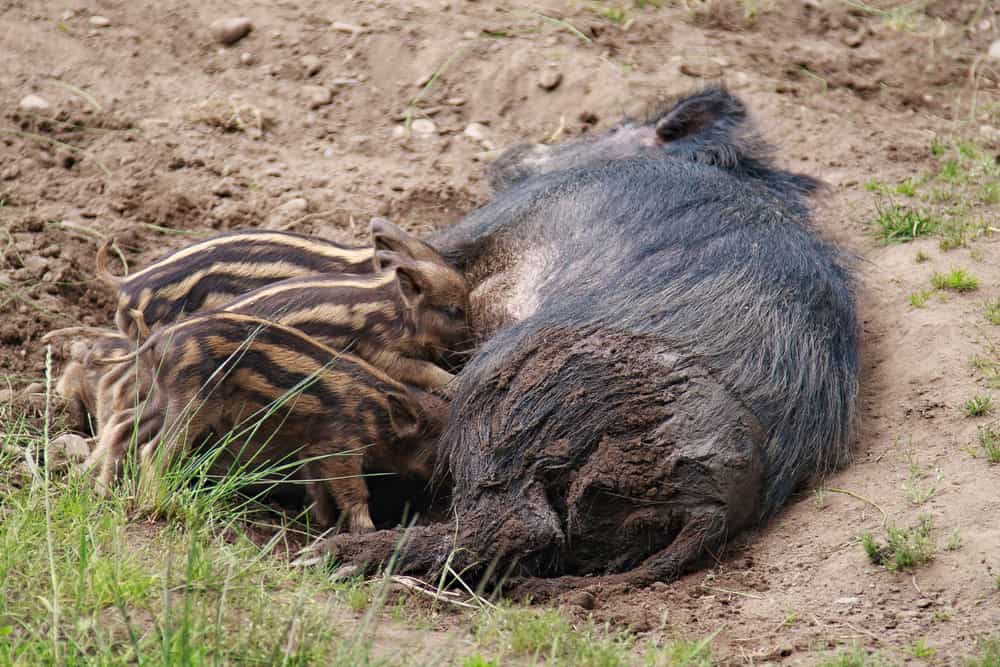
The anchor figures come from Texas A&M's Natural Resources Institute (NRI, November 2019): "A sow can average 1.5 litters a year and each litter typically produces five to six piglets," and "we'd need to eliminate 66% of our wild pig population annually just to stop our population numbers from growing." Other authorities add the biology around those numbers. They don't all measure the same thing, so we keep them separate rather than blending them.
| What | Published figure | Source |
|---|---|---|
| Litters per year | A sow can average 1.5 litters a year | Texas A&M NRI, 2019 |
| Piglets per litter | Typically five to six | Texas A&M NRI, 2019 |
| Piglets per litter | 4 to 6 on average | Texas A&M AgriLife, Feral Hog Ecology |
| Litters and litter size | "Up to two litters of 4 to 12 piglets per year" | USDA APHIS |
| Gestation | 115 days (AgriLife); about 115 days (Noble) | AgriLife; Noble Research Institute |
| Females begin breeding | As early as 6 to 12 months old (AgriLife); sexually mature at 6 to 8 months (APHIS) | AgriLife; USDA APHIS |
| Males begin breeding | 12 to 18 months old | Texas A&M AgriLife |
| Breeding season | "Can breed year-round" | USDA APHIS |
| Sex ratio of litters | 1:1 male to female | Noble Research Institute |
| Removal needed to stop growth | About 66% of the population every year | Texas A&M NRI, 2019 |
| Suitable habitat in Texas | More than 79% of the state | Texas A&M NRI, 2019 |
APHIS goes further and says feral swine populations "have the potential to double in size in 4 months." That is APHIS's statement of what is possible, not a measured rate for any Texas county, and we don't build on it below.
The math for one sow (illustrative)
Even with that caveat, the scale is the point. Three sows can produce several times their own number in young in a single year, and about half of those young are the next generation of sows. The researchers behind a 2018 trapping study describe wild pigs as having "high reproductive rates, high survival" and the ability to "recolonize areas rapidly" (Gaskamp et al., 2018).
How soon a young female can breed
Two published figures set the clock. Texas A&M AgriLife says females can begin reproducing "as early as 6 to 12 months old," and APHIS puts sexual maturity at 6 to 8 months. Gestation takes 115 days, per AgriLife, and about 115 days per Noble.
Worked through: 115 days is a little under four months. A female that breeds at 6 months could farrow her first litter at about 10 months old. At the later end of AgriLife's range, 12 months plus 115 days is roughly 16 months. So on the published figures, a female piglet born this year can be raising her own litter within about 10 to 16 months. APHIS adds that feral swine can breed year-round, so there is no off-season when the numbers rest.
The sounder is the breeding unit
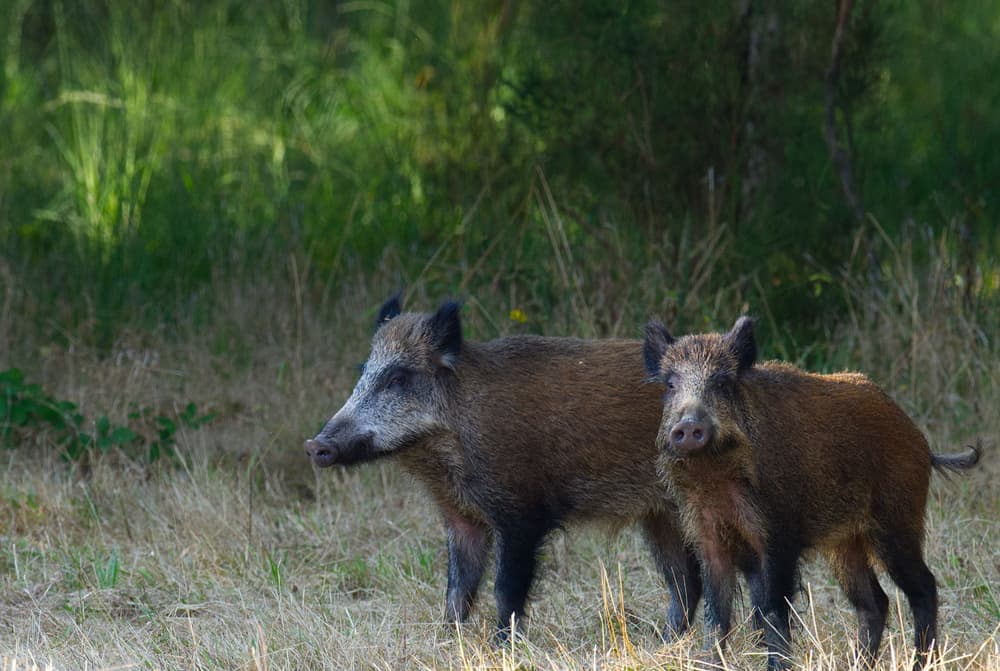
Texas A&M AgriLife's ecology page explains where this pace comes from: the feral hogs seen today "are descendants of domestic swine who were intentionally bred to reproduce quickly, often, and in large quantities." Their social structure concentrates that output. Females "typically travel in multi-generational groups of related individuals called sounders," which range "from 2 individuals up to 50 individuals" and help them protect their young. Males are typically solitary and territorial, and fight for the chance to breed.
That is why control is measured in sounders, not hogs. A sounder is related females across generations, traveling with their young: the population's breeding engine, all in one group. Remove the whole group and the engine goes with it. Remove one or two animals and the rest of the sounder keeps producing, on the schedule above.
What "66% a year" means on the ground
NRI's figure is the one to remember: about 66% of the population removed every year just to stop it growing. NRI is describing the wild pig population as a whole, not your ranch, so treat the examples below as a sense of scale, not a prescription.
- 30 hogs using your place: 30 × 0.66 = about 20 removed in a year just to hold the count level.
- 100 hogs: about 66 removed in a year to stand still.
- Removing a third (33%): half of what NRI estimates is needed. On NRI's figure, the population keeps growing.
That 66% is the bar for standing still. Getting ahead of the hogs means removing more than that, year after year.
For context on how many hogs that is statewide, the published estimates differ by source and year and shouldn't be merged: AgriLife Today put the Texas population at an estimated 2.6 million in January 2026 (AgriLife Today, 2026), while an August 2023 AgriLife Today article said more than 3 million (AgriLife Today, 2023). What they do to the land is covered in our page on feral hog damage.
Why shooting a few doesn't keep up
The same 2019 NRI piece is blunt: "recreational hunting alone cannot control the wild pig problem." Shooting has a job, but it's a finishing job. Texas A&M AgriLife's selective shooting guidance calls it a great way to finish off a sounder that trapping only partly removed, or to act when hogs first show up in very small numbers. Noble's Derick Warren describes the problem with leading with a rifle (Noble Research Institute): "If you shoot at them, you might get rid of one, but the rest scatter. Then they become your neighbor's problem for a while."
Illustrative math again: one hog a week is 52 a year. Against 100 hogs, that's 52%, still short of NRI's 66%, and that assumes a hog every single week, all year. If the question is which cartridge to use for those finishing shots, our guide to the best caliber for hogs covers it.
What whole-sounder removal takes
The published answer is trapping the whole group at once. Texas A&M AgriLife's trapping page calls corral traps a very successful style because their size can capture entire sounders at once, while box traps catch fewer pigs. It stresses keeping bait out every single day so the site becomes part of the hogs' routine. Noble's Josh Gaskamp gives the timeline: habituate the pigs to a bait site, and "after 10 to 14 days, maybe longer, you can set the trap and choose the right time to drop."
That points to three things to look for in a whole-sounder setup:
- A trap big enough for the group, without corners. AgriLife's trap design guidance uses a teardrop shape and warns against hard corners, where hogs pile up and may go over the top.
- A gate you close on your timing. AgriLife notes that guillotine and saloon gates close only after a trigger is set off. A remote trigger lets you wait for the last hog instead of catching the first one.
- A way to count before you drop. If your pre-baiting camera shows twelve hogs, you want to see twelve inside before the gate falls. Otherwise the ones left outside stay free to keep breeding.
Our picks for this job
A whole-sounder trap and the camera that drops it
These two are designed to work together: the net trap's remote drop is built around the HogEye system. Chosen from published specs; we haven't used either. Budget for the HogEye's monthly data plan.
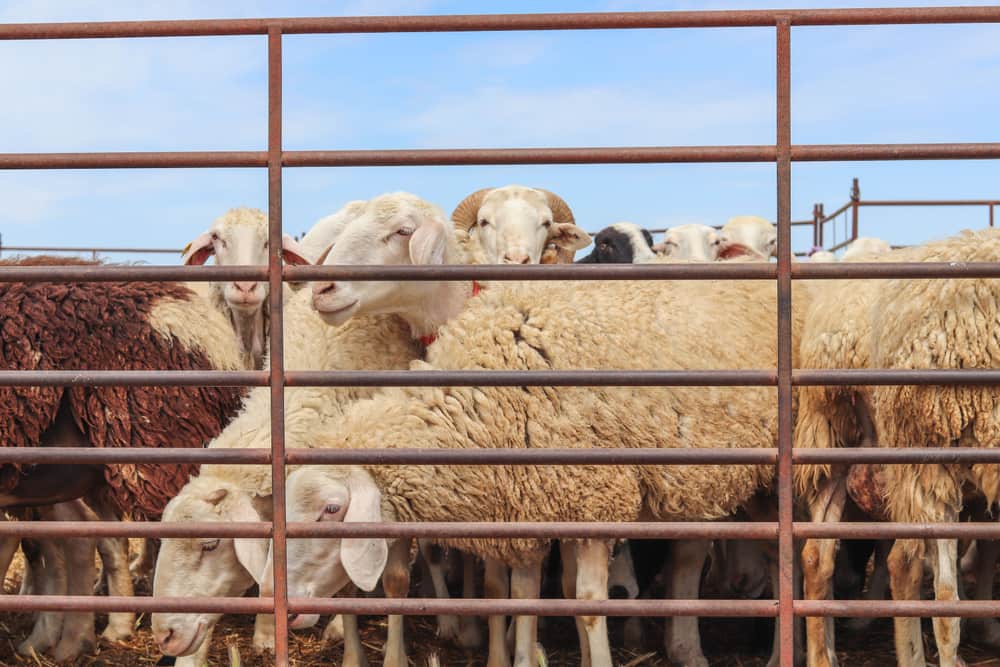 Stock photo
Best whole-sounder trap system on Amazon
Boar Blanket Feral Pig Net Trap
$2,000 and up6.2/10ResearchedA 20 ft round net trap on 8 T-posts with no corners, the corral-style layout that holds a group. Its remote drop runs through the HogEye camera system, sold separately.
Check price · Amazon#ad · Price set by Amazon · How we make money for the link to Boar Blanket Feral Pig Net Trap
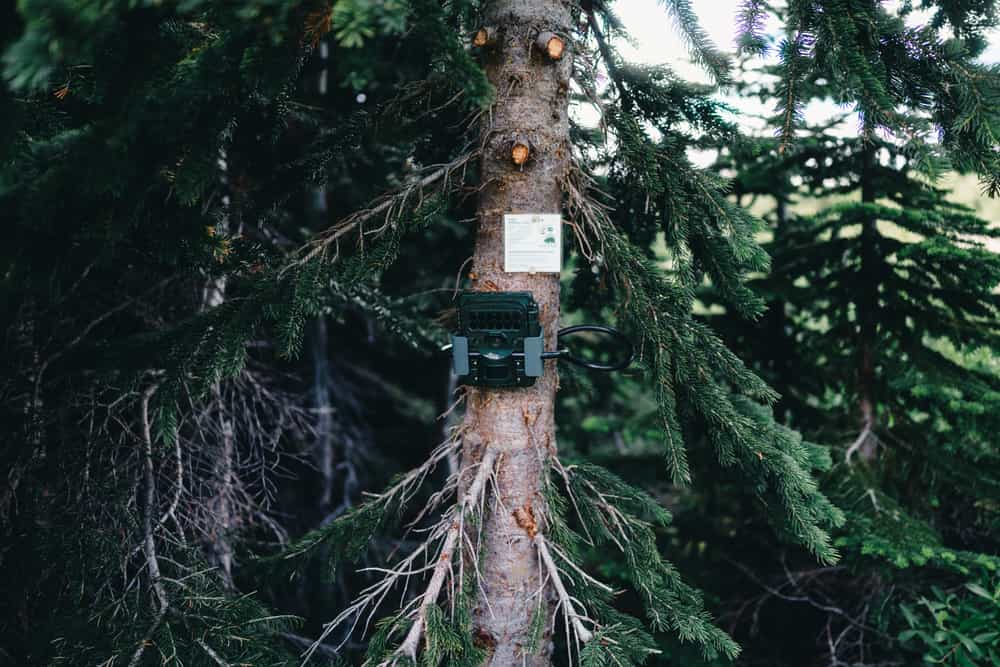 Stock photo
Best all-in-one trap camera and gate release
Wildlife Dominion HogEye Mini Trap Camera (AT&T)
$1,000 to $2,0008.2/10ResearchedLive video plus a gate latch in one system: count the sounder in the app, then drop the trap when the last hog is in. Needs a data plan; this listing is the AT&T version.
Check price · Amazon#ad · Price set by Amazon · How we make money for the link to Wildlife Dominion HogEye Mini Trap Camera (AT&T)
Want to compare other ways to build the same system? Our ranking of the best hog trap systems on Amazon covers drop gates and cellular triggers for a DIY corral, and the step-by-step is in how to trap feral hogs.
Scale: your land and your neighbors'
Trapping works on the damage, and fast. In the 2018 study led by Noble's Josh Gaskamp, removing 356 wild pigs over two years cut rooting damage by 43 to 82% across three sites after only one trap session, and by 90% from start to finish. Damage fell on nearby untrapped ground too. But the authors conclude that large-scale, intensive control is needed for lasting reductions, because pigs recolonize so quickly.
Property lines don't hold them, either. NRI notes that sows can roam a territory of around 2 miles, or 1,100 acres, and that if a neighbor or a neighboring county has wild pigs, "odds are it is just a question of time until you do too." "Pigs don't stay within one ranch," Gaskamp says in the Noble article, which is why he recommends working with neighbors. Cooperative programs show what scale can do. A Missouri partnership of more than 15 federal and state entities reported removing 6,289 hogs in 2022 and a nearly 65% decline since 2016 in the watershed acreage occupied by feral hogs. If you want help, USDA APHIS says to call the APHIS Wildlife Services office in your state.
For the full plan that ties trapping, shooting and exclusion together, read how to get rid of feral hogs, or browse the rest of our hog control and Texas rules hub.
Once they're trapped in Texas
Trapping is only half the job; what happens next is regulated. TPWD says the transportation and release of live feral hogs is unlawful unless it complies with Texas Animal Health Commission rules (TPWD). Those rules let live feral swine move only to a recognized slaughter facility, an approved holding facility or an authorized hunting preserve, held up to seven days in an escape-proof enclosure (4 TAC §55.9). Relocating and releasing trapped hogs is illegal. Our guide to what to do with trapped hogs in Texas walks through the options. This is a summary, not legal advice.
How we scored this
Units we claim to have tested: 0
Plenty of gear sites say they field-tested everything they list. We haven't, and we say so. Every pick here is labeled Researched: we read each maker's published specs, manuals and warranty terms, compare products only against others in the same budget tier, and score them on a public rubric. Every figure links to where it came from, and seller performance numbers are labeled “maker's claim.”
Scores are editorial judgments from that documented research, not test results. Commissions never set a score or decide a pick. The rubric and its weights are published.
Questions
Frequently asked
How many piglets can a wild hog have in a year?
How old are feral hogs when they start breeding?
How long is a feral hog pregnant?
Do feral hogs breed year-round?
How many hogs are in a sounder?
How many hogs do you have to remove to control them?
Why do hogs come back after I shoot a few?
Receipts
Sources
- Texas A&M Natural Resources Institute: Startling statistics everyone needs to know about wild pigs, Josh Helchel, Nov. 2, 2019 (checked 2026-09-19)
- Texas A&M AgriLife, Coping with Feral Hogs: Feral Hog Ecology (checked 2026-09-19)
- USDA APHIS: Identifying Feral Swine (checked 2026-09-19)
- USDA APHIS: Feral Swine, Managing an Invasive Species (checked 2026-09-19)
- Noble Research Institute: The Feral Hog in Oklahoma, Russell Stevens (checked 2026-09-19)
- Noble Research Institute: Four ways feral hogs cost farmers and ranchers (checked 2026-09-19)
- Gaskamp, Gee, Campbell, Silvy and Webb: Damage caused to rangelands by wild pig rooting activity is mitigated with intensive trapping, Cogent Environmental Science, 2018 (abstract checked 2026-09-19)
- University of Missouri Extension: Partnership helps southern Missouri landowner stave off feral hogs, Oct. 30, 2023 (checked 2026-09-19)
- Texas A&M AgriLife, Coping with Feral Hogs: Selective Shooting (checked 2026-09-19)
- Texas A&M AgriLife, Coping with Feral Hogs: Trapping (checked 2026-09-19)
- Texas A&M AgriLife, Coping with Feral Hogs: Hog Trap Design (checked 2026-09-19)
- AgriLife Today: Texas A&M AgriLife publication focuses on urban, suburban feral hog management, Jan. 15, 2026 (checked 2026-09-19)
- AgriLife Today: feral hog toxicant article, Aug. 31, 2023 (checked 2026-09-19)
- TPWD: Outdoor Annual 2026-27, Nongame and Other Species (Feral Hogs and Coyotes) (checked 2026-09-19)
- Texas Administrative Code, 4 TAC §55.9, feral swine movement (Cornell LII, checked 2026-09-19)
- Boar Blanket: product specs page (checked 2026-09-19)
- Wildlife Dominion: HogEye Mini Camera System product page (checked 2026-09-19)
We haven't tested the gear on this page and we don't pretend to. Specs come from each maker's own pages or the product listing (linked on every product), hog biology and trapping advice from Texas A&M AgriLife, and rules from TPWD and Texas statute. Prices are set by Amazon and change often, so we don't print them. Where a figure isn't published, we say so. Read the full method.