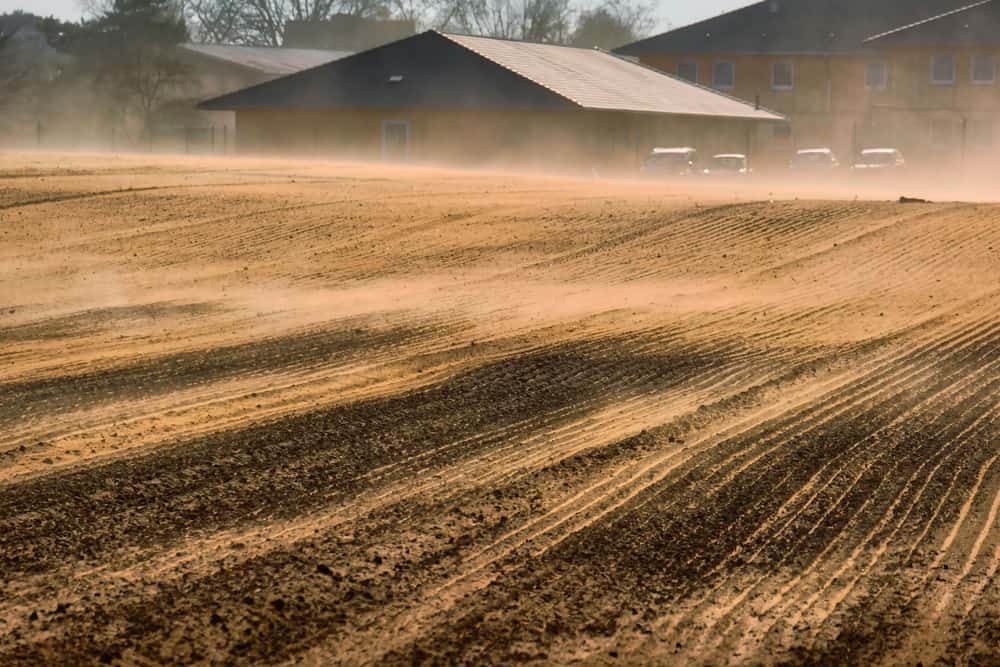
Most landowners meet feral hogs through their damage, not the hogs. AgriLife Today explains why: wild pigs are "largely nocturnal, which means you are more likely to see the damage they do than see the animals themselves." This guide covers what that damage looks like, what it costs according to the studies that measured it, and why it grows. Each figure is tied to its source and year, and we don't blend estimates from different studies into one number. It's part of our hog control and Texas rules section.
What hog damage looks like
Texas A&M AgriLife's trapping guidance lists four signs of feral hog activity:
- Rooting: ground turned over where hogs have dug for food.
- Wallows: muddy spots where hogs have been lying in the mud.
- Tracks and scat, often along the trails hogs use between food, cover and water.
Add to that the damage that sends most people looking: an emptied feeder, a torn-up food plot, a rooted lawn.
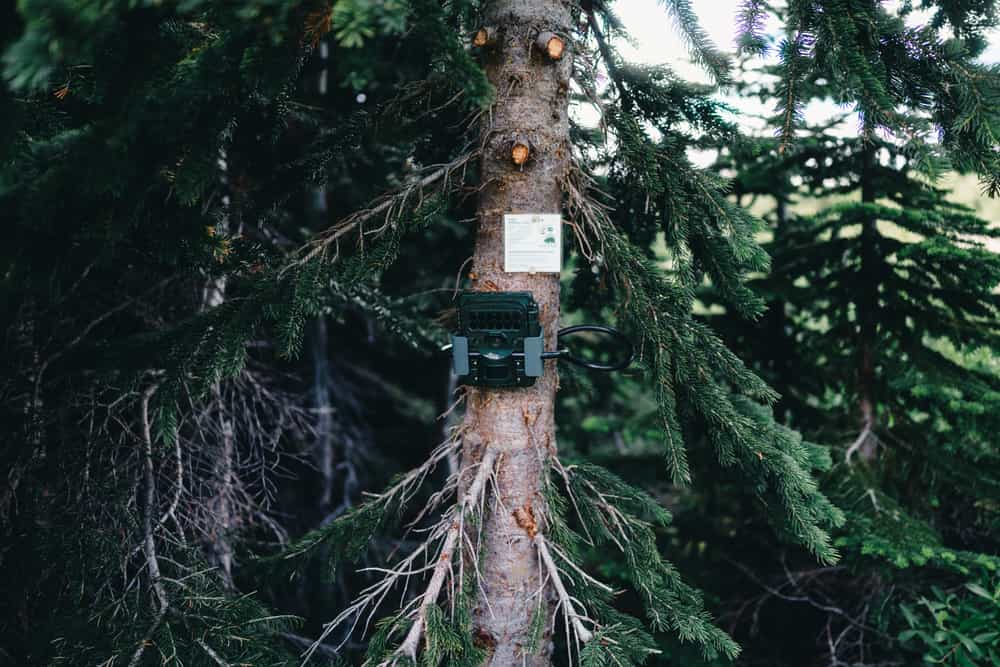
If you're not sure it's hogs, or you want to know how many, put a camera on it. A few nights of photos tell you what's visiting, when it comes and how big the group is. Our ranking of the best cellular trail cameras compares cameras that send those photos to your phone.
Crops
AgriLife's impacts page describes crop damage in three forms: "Rooted areas can cause loss of harvestable crops, seeds and seedlings can be consumed during foraging, and irrigation systems can be damaged by rooting or wallowing." It cites a 2020 study of crop damage across 12 states that estimated hog damage caused $272 million in losses to crop production in a single year.
For a single operation, the same page cites a 2021 Texas study which found that impacts to individual producers can cost upwards of two hundred thousand dollars a year "when losses, management efforts, and lost opportunities are all taken into account." That last part matters: the cost isn't just the crop in the ground, it's the time and money spent fighting hogs and the plantings you don't make because of them.
Pasture and livestock
AgriLife lists four ways hogs cost livestock producers:
- Pasture: "The rooting behavior of feral hogs can damage pastures and sometimes facilitate weed encroachment."
- Feed: hogs can cause conflicts with supplemental feeding by "consuming the feed intended for livestock."
- Disease: hogs "can impact the health of livestock populations through the potential transmission of diseases" (more below).
- Predation: feral hogs "have been documented predating young goats, sheep, and in some cases, young calves."
If your pasture is already torn up, our guide on how to repair hog damage in pastures covers the fix. Repairing ground that hogs are still using risks doing the work twice, so pair the repair with removal.
Ponds, creeks and water quality
Ponds and creeks take damage too, and AgriLife describes it: "Rooting and wallowing behaviors can damage and uproot aquatic vegetation, can contribute to increased erosion of banks, increased sedimentation of waterbodies, and increase turbidity or murkiness of water." Hogs also "distribute fecal matter that introduces E.coli to the water system," can alter the water's pH, and can reduce dissolved oxygen (AgriLife impacts). For a stock tank your cattle drink from, that's more than a cosmetic problem.
Wildlife, deer and feeders
Hogs eat more than roots and grain. AgriLife notes studies that found remains of freshwater mussels, birds, armadillos and toads in feral hog stomachs, and documented depredation of white-tailed deer fawns, turkey nests and quail nests (AgriLife impacts).
They also eat the corn you put out for deer. Texas A&M's Natural Resources Institute has studied fencing hogs out of feeding stations; its December 2025 article found that a 20-inch fence reduced feral pig access without stopping it, while fences 28 to 34 inches high kept feral pigs off the feed completely. It recommends 34-inch hog panels and says an exclusion fence "pays for itself" in feed that would otherwise have been lost. Our guide to keeping hogs away from a deer feeder covers the options.
Lawns, property and roads
Hog damage isn't only a ranch problem. AgriLife says "rooting and wallowing behaviors can cause costly damage to lawns and sport fields, as well as the irrigation systems that care for them," and that hogs damage outdoor furniture and fencing. In January 2026, AgriLife Today reported on a new AgriLife publication on urban and suburban feral hog management.
On the road, AgriLife notes that feral hogs "can cause property damage, human injury, and human fatalities through vehicle collisions." A December 2019 Texas A&M Today report said vehicle-versus-pig accidents cost Texas drivers more than $1,100 per accident, and that hog damage had been reported in nearly all 254 Texas counties.
Disease risk
Disease is the reason Texas regulates moving live hogs: the Legislature gave the Texas Animal Health Commission that authority in 2007 as a disease-control measure. TAHC's swine page gives historical figures: about 10% of feral swine carry swine brucellosis, and about 20% may carry pseudorabies. Nationally, USDA APHIS lists 8% of feral swine as infected with brucellosis, which it notes affects livestock and people (APHIS). The two figures come from different agencies and populations, so read each on its own.
The numbers, source by source
You'll see a lot of hog damage figures quoted, often without a date. Here is each one we could trace to a source, with what it measures. They come from different years, places and methods, which is why they don't agree, and why we don't combine them.
| Figure | What it measures | Source (date) |
|---|---|---|
| More than $500 million a year | Damage to agriculture and private property, Texas | AgriLife Today (Aug. 2023) |
| $52 million a year | Agricultural damage, Texas, from a 2004 AgriLife Extension survey | Texas A&M NRI (Nov. 2019) |
| Upwards of two hundred thousand dollars a year | Costs to an individual producer, including management and lost opportunities, Texas | 2021 study cited by AgriLife (page undated) |
| $272 million in one year | Crop-production losses across 12 states | 2020 study cited by AgriLife (page undated) |
| More than $1,100 per accident | Cost to Texas drivers of a vehicle-hog collision | Texas A&M Today (Dec. 2019) |
| $800 million to $1.5 billion a year | National damage estimates cited in 2019 | Texas A&M NRI (Nov. 2019) |
| $2.5 billion a year | Damage and control costs, U.S. agricultural sector | USDA APHIS (page undated) |
| $3.4 billion a year, minimum | All feral swine damage, United States | USDA APHIS (page undated) |
The two Texas totals show why dates matter. The $52 million figure is a 2004 survey of agricultural damage; the more than $500 million figure, from 2023, also counts private property. They measure different things nearly 20 years apart.
How many hogs are we talking about?
- AgriLife Today, January 2026: "an estimated population of 2.6 million feral hogs" in Texas (source).
- AgriLife Today, August 2023: "more than 3 million feral hogs" in Texas (source).
- Texas A&M NRI, November 2019: a 2012 study put Texas at 2.6 million, with models then "closer to 3 million" (source).
These are estimates from different years and methods. The newest one isn't necessarily a sign the population fell; it's a different estimate.
Why the damage keeps growing
Hogs replace themselves fast. Texas A&M NRI (Nov. 2019) reports that "a sow can average 1.5 litters a year and each litter typically produces five to six piglets," which works out to 7.5 to 9 piglets per sow per year (1.5 × 5 and 1.5 × 6). The same source estimates Texas would need to remove 66% of its wild pig population every year just to stop it from growing, and says more than 79% of Texas is suitable habitat.
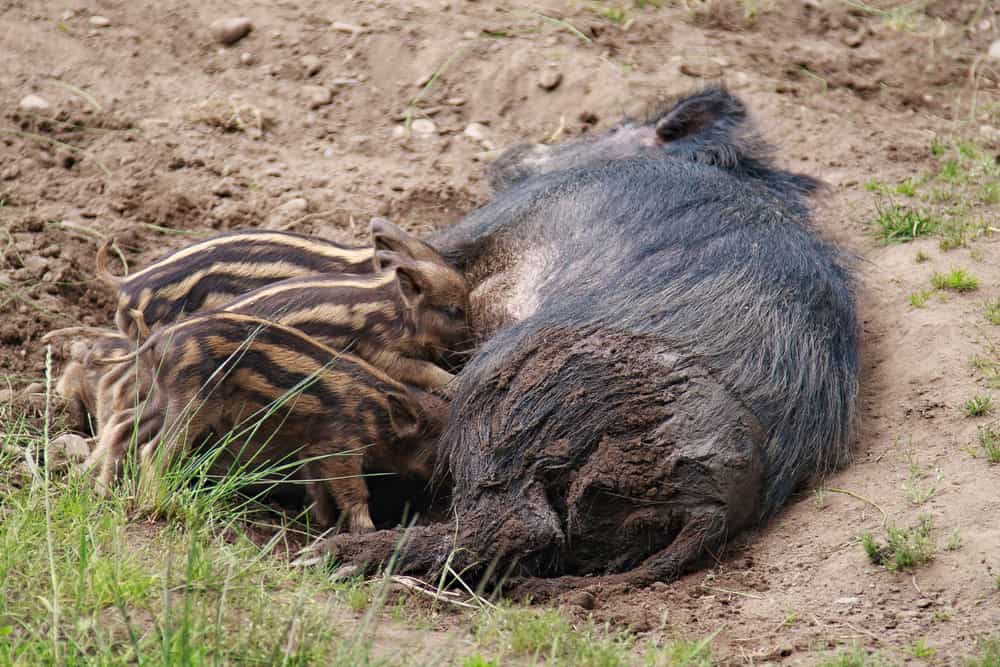
To see what that means on one property, take AgriLife's own example of a small sounder: two sows and several juveniles (AgriLife trapping). At the NRI averages, those two sows alone could produce 15 to 18 piglets in a year (2 × 7.5 = 15; 2 × 9 = 18). That is an illustration from average figures, not a forecast, but it shows why damage on your place tends to grow unless removal outpaces the litters. Our explainer on how fast feral hogs reproduce walks through the math.
Write it down
Before you start fixing anything, keep a simple record. It costs nothing, and it pays off three ways: it shows whether your control work is actually reducing damage, it gives you something concrete to show a county Extension agent or a wildlife damage professional if you ask for help, and it tells you which spots to protect first.
- Dated photos of each damaged area, taken from the same spot each time so you can compare.
- A rough note of the size of rooted areas, and which fields, plots or tanks they're in.
- Feed you've lost at feeders, and any livestock losses you suspect were hogs.
- Camera photos with dates and times, and your best count of the sounder.
- What you did and when: traps set, hogs caught, fences built.
That last list becomes your management log. AgriLife's own measure of producer costs counts management efforts and lost opportunities alongside losses, so it's worth tracking your time and spending on hogs too.
What to do next
The fix is the same whatever the damage: find the hogs, remove whole sounders, then protect what matters. Our plan to get rid of feral hogs lays out the four steps, and how to trap feral hogs covers the step that does most of the removal. For the places you can't afford to lose, see the best electric fence for hogs. Two first purchases follow from that: a camera to confirm and count the hogs, and a trap big enough to take the whole group.
Our picks for this job
Start with a camera, then a trap
A camera confirms it's hogs and tells you how many; a whole-sounder trap removes them. Specs are the makers' published figures.
 Stock photo
Best no-glow cam with a free plan
SPYPOINT Flex-Dark
Under $5008.1/10ResearchedSwitchable no-glow flash and dual-SIM auto-connect, with SPYPOINT's free plan of 100 photos a month per camera: a low-commitment way to confirm what's rooting your pasture and count the group.
Check price · Amazon#ad · Price set by Amazon · How we make money for the link to SPYPOINT Flex-Dark
 Stock photo
Best whole-sounder trap system on Amazon
Boar Blanket Feral Pig Net Trap
$2,000 and up6.2/10ResearchedA round, 20 ft suspended net trap: the corral-style layout that can take a whole sounder at once. It needs 8 T-posts (not included), and a remote drop needs a HogEye camera bought separately.
Check price · Amazon#ad · Price set by Amazon · How we make money for the link to Boar Blanket Feral Pig Net Trap
How we scored this
Units we claim to have tested: 0
Plenty of gear sites say they field-tested everything they list. We haven't, and we say so. Every pick here is labeled Researched: we read each maker's published specs, manuals and warranty terms, compare products only against others in the same budget tier, and score them on a public rubric. Every figure links to where it came from, and seller performance numbers are labeled “maker's claim.”
Scores are editorial judgments from that documented research, not test results. Commissions never set a score or decide a pick. The rubric and its weights are published.
Questions
Frequently asked
How much damage do feral hogs cause in Texas?
What does feral hog damage look like?
Do feral hogs damage pastures?
Do feral hogs kill livestock?
Do feral hogs hurt deer and turkey?
Do feral hogs carry diseases?
Receipts
Sources
- Texas A&M AgriLife: Coping with Feral Hogs, Impacts (checked 2026-09-19)
- Texas A&M AgriLife: Coping with Feral Hogs, Trapping (signs of hog activity) (checked 2026-09-19)
- AgriLife Today: feral hog toxicant article, Aug. 31, 2023 (checked 2026-09-19)
- AgriLife Today: publication on urban and suburban feral hog management, Jan. 15, 2026 (checked 2026-09-19)
- AgriLife Today: Things you need to know about wild pigs, Oct. 4, 2019 (checked 2026-09-19)
- Texas A&M NRI: Startling statistics everyone needs to know about wild pigs, Nov. 2, 2019 (checked 2026-09-19)
- Texas A&M NRI: Using exclusion fencing to prevent feral hog access at feeding stations, Dec. 16, 2025 (checked 2026-09-19)
- Texas A&M Today: Feral hogs increase their urban and suburban sprawl, Dec. 12, 2019 (checked 2026-09-19)
- Texas Animal Health Commission: Swine and feral swine page (checked 2026-09-19)
- USDA APHIS: Feral Swine, Managing an Invasive Species (damage and disease figures) (checked 2026-09-19)
- SPYPOINT: FLEX-DARK product page (checked 2026-09-19)
- Boar Blanket: product specs page (checked 2026-09-19)
We haven't tested the gear on this page and we don't pretend to. Specs come from each maker's own pages or the product listing (linked on every product), hog biology and trapping advice from Texas A&M AgriLife, and rules from TPWD and Texas statute. Prices are set by Amazon and change often, so we don't print them. Where a figure isn't published, we say so. Read the full method.