The contenders
Side by side
 Stock photo
The optic for either upper: under $1,000
ATN ThOR 6 Mini 256 2-16x
$500 to $1,0007.3/10Rated for 6000 J recoil, IP67, with a wide 11.7° view for close hogs and a five-year warranty. The 15 mm lens keeps it a close-range scope.
Check price · Amazon#ad · Price set by Amazon · How we make money for the link to ATN ThOR 6 Mini 256 2-16x
- Stock photo
The optic for either upper: $1,000 to $2,000
Pulsar Talion XQ35 Pro
$1,000 to $2,0007.9/10A 384 sensor behind a 35 mm lens with a 2.5x base and 10.7° view: more detail per hog than the ThOR Mini at the same close distances. Rated 6000 J, IPX7.
Check price · Amazon#ad · Price set by Amazon · How we make money for the link to Pulsar Talion XQ35 Pro
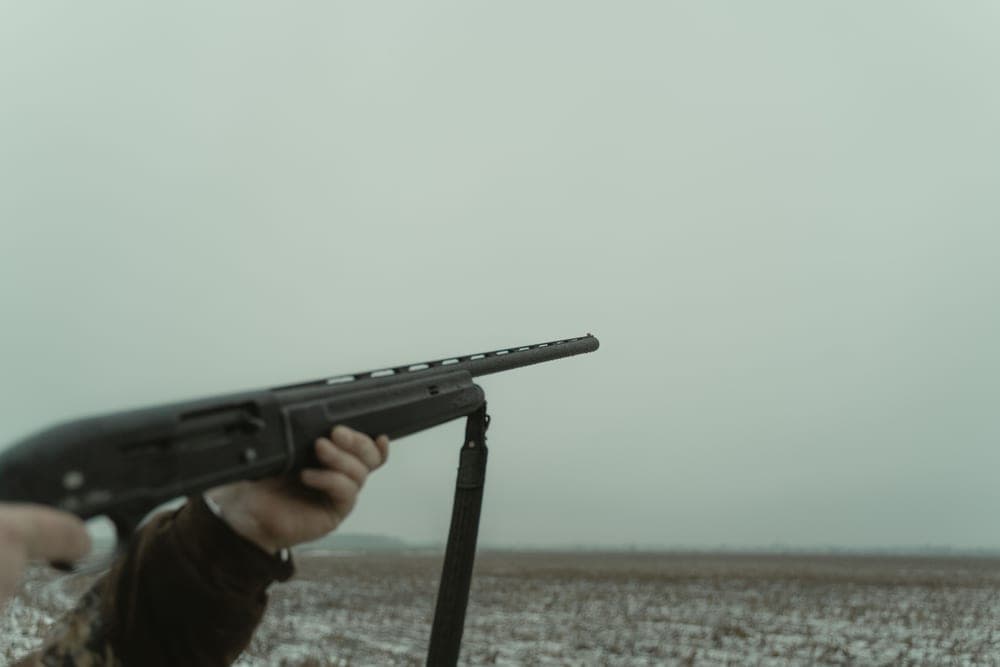
Why the products on this page are scopes
This is a cartridge comparison, not a product comparison. Amazon doesn't sell ammunition or rifles, and we don't link either. The optic is the product we can link, so the two picks above are thermal scopes that suit an AR in either chambering: one under $1,000 and one between $1,000 and $2,000. We haven't tested these units; scores come from published specs and the rubric on our How We Choose page.
The cartridge facts come from SAAMI (the U.S. ammunition industry's standards body), Texas A&M AgriLife, a national feral-pig shooting standard, and named hunting writers. Where they disagree, we tell you who said what. For the wider question of which cartridges suit hogs at all, start with our guide to the best caliber for hogs.
300 Blackout vs 5.56 at a glance
| 5.56 NATO / .223 Remington | 300 AAC Blackout | |
|---|---|---|
| Bullet diameter (SAAMI max) | .2245 in | .309 in (.308 groove) |
| SAAMI reference bullet weights | 35 to 77 gr (.223 Rem) | 90 to 220 gr (16 in test barrel) |
| A typical supersonic load | 55 gr at 3,250 fps, the original military load (American Hunter) | 125 gr at 2,185 fps (SAAMI) |
| Muzzle energy of that load | About 1,290 ft-lb (our math) | About 1,325 ft-lb (our math) |
| Subsonic option | A 55 gr bullet held under the speed of sound carries about 148 ft-lb (Johnston, American Hunter) | 190 gr at 1,040 fps and 220 gr at 1,020 fps (SAAMI): about 456 and 508 ft-lb (our math) |
| Maximum average pressure (SAAMI) | 55,000 psi for .223 Rem; SAAMI notes military-spec ammunition can run higher | 55,000 psi |
| Case head / max overall length (SAAMI) | .378 in / 2.260 in | .378 in / 2.260 in |
| What changes on an AR-15 | Nothing; it's the standard chambering | The barrel only; no bolt or magazine swap (RCBS) |
| Built for | RCBS lists target, varmint and predator, competition and training use | Suppressor use "from the ground up" (RCBS) |
One note on the velocities: SAAMI's figures are reference values from test barrels, and SAAMI itself says there should be no expectation of duplicating them in firearms, with barrel length a further source of difference. Use the maker's published velocity for the load you actually buy, from a barrel like yours.
Energy: closer than the reputations suggest
It's easy to assume the bigger bullet means far more energy. On typical supersonic loads, the published numbers don't say that. A 55 grain .223 bullet at 3,250 fps works out to about 1,290 ft-lb at the muzzle; a 125 grain 300 Blackout bullet at 2,185 fps, SAAMI's reference figure from a 16 inch test barrel, works out to about 1,325 ft-lb. The formula is bullet weight in grains × (velocity in fps)² ÷ 450,240, the same one that reproduces the published figures in Australia's feral-pig standard.
Measured against that standard, NATSOP-PIG003, both fall short of its recommended minimum for ground shooting feral pigs: .243 inch caliber, an 80 grain bullet and 1,819 ft-lb of muzzle energy. That standard is Australian animal-welfare guidance, not U.S. or Texas law, but it's the only published numeric floor for feral pigs we found. Texas A&M AgriLife's own advice points the same direction without a number: "use a high caliber rifle just like you would when hunting other large game."
So the honest framing isn't "which one is enough." It's that both are on the light side for hogs by the published yardsticks, and both ask you to be careful about distance, angle and bullet.
Bullet weight, diameter and the boar's shield
Where the two really differ is the bullet. The 5.56 gets its energy from speed with a small, light bullet; the Blackout gets it from mass, with a bullet more than twice the weight and a larger diameter. That matters on hogs because of what AgriLife calls the shield: a dense, tough layer of tissue under a boar's hide over the shoulder that "can also allow a pig to survive poorly placed shots with low caliber rifles."
Published hunting opinion on both cartridges is mixed, and it's worth reading all of it:
- Bryce Towsley (American Hunter, 2013) calls the .223 and 300 Blackout "outstanding cartridges, but not for hunting hogs," and in his view underpowered for serious, ethical hog hunting. He prefers heart-lung shots and exit wounds over head shots, warning that missed head shots can leave an animal badly wounded.
- Philip Massaro (American Hunter, 2021) says the .223 can be a deer cartridge with a proper bullet, but that he has seen deer lost despite what looked like a well-placed shot. If you use it on larger game, he points to heavier 60 to 62 grain bullets built for it, which still carry about 3,000 fps at the muzzle.
- Massaro on 300 Blackout (American Hunter, 2017) calls it an acceptable deer choice at sensible ranges, with a premium hunting bullet in the 125 to 135 grain range.
- RCBS, a reloading-equipment maker, claims supersonic Blackout loads with controlled-expansion 110 to 150 grain bullets are effective on whitetail and hogs inside 200 yards (maker's claim).
Whichever you run, placement carries more of the load than it would with a heavier cartridge. TPWD's hunter education course calls the broadside shot, just behind the shoulder, the largest target for the heart and lungs, and warns that quartering-toward shots risk hitting shoulder bone (TPWD). Australia's standard prefers side-on chest shots on boars because the shield can interfere with frontal ones.
Range and trajectory
The Blackout isn't built for distance. Massaro notes that zeroing a 300 Blackout hunting load at 200 yards means sitting about five inches high at 100, and suggests a 100 yard zero with shots on deer kept to about 100 or 125 yards. The .223, by his account, has "enough velocity for a respectable trajectory." RCBS gives common .223 bullet weights of 40 to 77 grains at typical velocities of 2,700 to 3,200 fps (RCBS).
Flatter doesn't mean better on hogs, though. A light bullet that drops less still has to arrive with enough energy and expansion to do the job, and Australia's standard caps even its acceptable .243 and .308 examples at 200 meters. If your shots run past what either of these cartridges handles comfortably, read 6.5 Grendel vs 300 Blackout for hogs, which covers the AR cartridge built for longer reach.
Subsonic loads and suppressors
RCBS says 300 Blackout was "built from the ground up with suppressor use in mind," and that subsonic loads work best paired with a suppressor. That is the Blackout's real edge: the 5.56 has no useful subsonic hunting load. Jeff Johnston (American Hunter, 2018) works out that a 55 grain .223 bullet held under the speed of sound carries about 148 ft-lb, roughly what a .22 rimfire carries.
Subsonic Blackout is much stronger than that, but still light for hogs: SAAMI's 220 grain reference load at 1,020 fps works out to about 508 ft-lb. Johnston calls subsonic loads marginal for big game "for all but the closest, perfectly placed shots" and argues a suppressed, full-power load does better. Massaro adds that the heavy 220 grain bullets move too slowly to expand reliably. If you want quiet, the published advice is to use a suppressor with supersonic hunting loads, not subsonic ones.
Suppressors are legal for taking wildlife in Texas, but TPWD notes that all federal, state and local laws still apply (TPWD, Means and Methods). For the federal process, go to the ATF National Firearms Act Division.
The chamber mix-up that wrecks rifles
If you own both, this is the section that matters most. Because 300 Blackout shares the .223's .378 inch case head and fits the same magazines, the rounds look at home in the wrong rifle.
The optic works on either upper
Here's the part of the rifle we can recommend. Both cartridges run in an AR, and both of our picks publish a 6000 J recoil rating, so the scope choice doesn't depend on which upper you mount it to. What changes the choice is distance and budget.
| Published spec | ATN ThOR 6 Mini 256 2-16x | Pulsar Talion XQ35 Pro |
|---|---|---|
| Budget tier | $500 to $1,000 | $1,000 to $2,000 |
| Sensor | 256x192 (12 µm VOx) | 384x288 (uncooled) |
| Pixel pitch | 12 µm | 17 µm |
| Lens | 15 mm germanium, F/1.0 | 35 mm, F/1.0 |
| Magnification | 2-16x (1x, 2x, 4x, 8x digital zoom) | 2.5-10x |
| Field of view | 11.7° x 8.8° | 10.7° x 8° (18.2 x 13.7 m at 100 m) |
| Battery | About 8 h total from two included 18650s (about 4 h each); USB-C external power | APS 5T pack, up to 9 h at 22°C; USB-C (5 V/9 V) external power |
| Recoil rating | 6000 J (1000 g over 0.4 ms) | 6000 J on rifled weapons; 12 gauge on smoothbores |
| IP rating | IP67 | IPX7 |
| Warranty | 5 years | 3 years; 5 years with registration |
| Score | 7.3/10 | 7.9/10 |
A worked example from those specs: each sensor pixel covers an angle equal to the pixel pitch divided by the lens focal length. On the ThOR 6 Mini (12 µm, 15 mm) that is 0.8 milliradians, or about 2.9 inches per pixel at 100 yards and 5.8 inches at 200. On the Talion XQ35 Pro (17 µm, 35 mm) it is about 0.49 milliradians: about 1.75 inches per pixel at 100 yards and 3.5 inches at 200. The same pixel-pitch and focal-length math reproduces both makers' published fields of view (11.7° and 10.7°), so you can check it. In plain terms, the Talion puts noticeably more detail on a hog at the same distance, which helps with identification and with seeing what's behind it.
Choose the ATN ThOR 6 Mini 256 if
- Your shots are mostly close, at a feeder or along a brushy edge, and the budget is under $1,000.
- You want the widest view of the two (11.7° x 8.8°) for picking up hogs quickly.
- A published IP67 rating, 6000 J recoil rating and five-year warranty matter to you.
Choose the Pulsar Talion XQ35 Pro if
- You want more detail per hog for identification, from a 384 sensor behind a 35 mm lens.
- You still shoot close: its 2.5x base and 10.7° view stay wide for a 35 mm scope.
- You can use Weaver-style Talion mounts rather than standard scope rings, and a budget of $1,000 to $2,000.
For more options in the lower tier, see the best thermal scopes under $1,000. And before any night hunt, check the rules in can you hunt hogs at night in Texas.
Which one for your hogs
If you already own a 5.56 AR, the first improvement isn't necessarily a new upper: it's a thermal, a solid rest, a load built for larger game, and the discipline to take only close, broadside shots. If you're choosing fresh and your hogs come in close, 300 Blackout gives you a heavier bullet and a real suppressed option for a barrel swap. If you're regularly shooting across open ground, look past both.
And keep the bigger picture in view: no cartridge fixes a hog problem by itself. Shooting finishes what trapping starts. The whole plan is in our hog control hub.
In detail
The contenders, in full
Stock photoThe optic for either upper: under $1,000
ATN ThOR 6 Mini 256 2-16x
Rated for 6000 J recoil, IP67, with a wide 11.7° view for close hogs and a five-year warranty. The 15 mm lens keeps it a close-range scope.
Published specsResearched · not tested by us
| Sensor | 256x192 (12 µm VOx) |
|---|---|
| Pixel pitch | 12 µm |
| NETD | ≤20 mK |
| Lens | 15 mm germanium, F/1.0 |
| Magnification | 2-16x (1x, 2x, 4x, 8x digital zoom) |
| Refresh rate | 50 Hz |
| Field of view | 11.7° x 8.8° |
| Detection range | 1,200 mMaker's claim |
| Display | 0.32 in OLED, 800x600 |
| Battery | About 8 h total from two included 18650s (about 4 h each); USB-C external power |
| Recording | 64 GB internal; Recoil Activated Video; Wi-Fi to ATN Connect 6 app |
| IP rating | IP67 |
| Recoil rating | 6000 J (1000 g over 0.4 ms) |
| Operating temperature | -22°F to 131°F (-30°C to +55°C) |
| Weight | 500 g (1.10 lb) |
| Mount | Picatinny rail mount (included) |
| Warranty | 5 years |
How the 7.3 score breaks down
- Sensor & lens for hog ID (30%)
- 5.5
- Usability at night (20%)
- 7
- Battery & power (15%)
- 8
- Durability (15%)
- 9
- Warranty & support (10%)
- 9
- Value within its tier (10%)
- 8
What the specs support
- Most sensitive 256 sensor in its tier on paper (≤20 mK NETD)
- Published 6000 J recoil rating, IP67 and a -22°F to 131°F operating range
- Swappable 18650 batteries (two included) plus USB-C external power
- 64 GB internal storage with Recoil Activated Video, zeroing freeze and picture-in-picture
Where it falls short
- 15 mm lens is the shortest here, so animals look small beyond close range
- 256 model gets a smaller 0.32 in 800x600 display; the 384 and 640 Minis get 1920x1080
- About 4 h per battery means carrying the spare on a full night
Skip this if…
…Your shots are regularly past 150 yards across open fields; the 15 mm lens trades reach for field of view, so look at a 35 mm 384 instead.
#ad · Price set by Amazon · How we make money for the link to ATN ThOR 6 Mini 256 2-16x
Stock photoThe optic for either upper: $1,000 to $2,000
Pulsar Talion XQ35 Pro
A 384 sensor behind a 35 mm lens with a 2.5x base and 10.7° view: more detail per hog than the ThOR Mini at the same close distances. Rated 6000 J, IPX7.
Published specsResearched · not tested by us
| Sensor | 384x288 (uncooled) |
|---|---|
| Pixel pitch | 17 µm |
| NETD | <25 mK (sNETD <15 mK) |
| Lens | 35 mm, F/1.0 |
| Magnification | 2.5-10x |
| Refresh rate | 50 Hz |
| Field of view | 10.7° x 8° (18.2 x 13.7 m at 100 m) |
| Detection range | 1,350 m (about 1,475 yd)Maker's claim |
| Display | 1024x768 AMOLED HD |
| Battery | APS 5T pack, up to 9 h at 22°C; USB-C (5 V/9 V) external power |
| Recording | 16 GB internal; Wi-Fi (2.4/5 GHz) to Stream Vision 2 app |
| IP rating | IPX7 |
| Recoil rating | 6000 J on rifled weapons; 12 gauge on smoothbores |
| Operating temperature | -25°C to +40°C |
| Weight | 0.7 kg without APS 5T battery |
| Mount | Weaver U, USQD or LQD mounts |
| Warranty | 3 years; 5 years with registration |
How the 7.9 score breaks down
- Sensor & lens for hog ID (30%)
- 7.5
- Usability at night (20%)
- 8
- Battery & power (15%)
- 8
- Durability (15%)
- 8.5
- Warranty & support (10%)
- 8.5
- Value within its tier (10%)
- 7
What the specs support
- 2.5x base and a 10.7° view make close, moving hogs easier to follow than on 3x-plus scopes
- IPX7, 6000 J recoil rating and magnesium-alloy body
- Up to 9 h on the APS 5T pack plus USB-C power delivery
Where it falls short
- 17 µm pixels on a 384 sensor; the ATN ThOR 6 Elite offers 12 µm and ≤15 mK in the same tier
- Mounts through Weaver-style Talion mounts rather than standard scope rings
- Upper operating limit of +40°C is lower than the Thermion's +50°C
Skip this if…
…You want a rangefinder or regularly identify hogs past 200 yards; the ATN ThOR 6 Elite LRF or Thermion 2 XQ50 Pro reach further.
#ad · Price set by Amazon · How we make money for the link to Pulsar Talion XQ35 Pro
How we scored this
Units we claim to have tested: 0
Plenty of gear sites say they field-tested everything they list. We haven't, and we say so. Every pick here is labeled Researched: we read each maker's published specs, manuals and warranty terms, compare products only against others in the same budget tier, and score them on a public rubric. Every figure links to where it came from, and seller performance numbers are labeled “maker's claim.”
Scores are editorial judgments from that documented research, not test results. Commissions never set a score or decide a pick. The rubric and its weights are published.
What changed
- Published.
Questions
Frequently asked
Is 300 Blackout better than 5.56 for hogs?
Is 5.56 enough for hogs?
Can you shoot 300 Blackout in a 5.56 rifle?
Can you shoot 5.56 in a .223 rifle?
Is subsonic 300 Blackout good for hogs?
Does 300 Blackout need a different bolt or magazine?
Which is better for hunting hogs at night?
Receipts
Sources
- SAAMI: Z299.4-2025 Voluntary Industry Performance Standards, Centerfire Rifle (velocity, pressure and cartridge drawings) (checked 2026-09-19)
- SAAMI: FAQs, 5.56 and 223 Remington interchangeability (checked 2026-09-19)
- SAAMI: Generally Accepted Firearms and Ammunition Interchangeability, Oct. 8, 2021 (checked 2026-09-19)
- RCBS: How to reload 300 AAC Blackout (cartridge background and safety warning) (checked 2026-09-19)
- RCBS: How to reload .223 Remington (cartridge background) (checked 2026-09-19)
- NRA Blog: Avoiding the .300BLK AR-15 'ka-boom!', Jason J. Brown, Sep. 1, 2016 (checked 2026-09-19)
- American Hunter (NRA): Behind the Bullet, .223 Remington, Philip Massaro, Mar. 2, 2021 (checked 2026-09-19)
- American Hunter (NRA): .300 AAC Blackout for Deer?, Philip Massaro, Aug. 8, 2017 (checked 2026-09-19)
- American Hunter (NRA): Grown-Up Hog Loads, Bryce M. Towsley, Sep. 4, 2013 (checked 2026-09-19)
- American Hunter (NRA): Opinion, Subsonic Ammo Sucks for Big-Game Hunting, Jeff Johnston, Apr. 5, 2018 (checked 2026-09-19)
- Texas A&M AgriLife, Coping with Feral Hogs: Selective Shooting (checked 2026-09-19)
- Terrestrial Vertebrate Working Group (Australia): NATSOP-PIG003, Ground Shooting of Feral Pigs, 2024, via PestSmart (checked 2026-09-19)
- TPWD Hunter Education online course: Shots to the Vital Areas (checked 2026-09-19)
- TPWD: Outdoor Annual 2026-27, General Regulations: Means and Methods (checked 2026-09-19)
- ATF: National Firearms Act Division (seen in search results 2026-09-19; the site blocks automated fetches)
- ATN: ThOR 6 Mini 256x192 2-16x product page and spec table (checked 2026-09-19)
- Pulsar: Talion XQ35 PRO product page and full specification (checked 2026-09-19)
We haven't tested the gear on this page and we don't pretend to. Specs come from each maker's own pages or the product listing (linked on every product), hog biology and trapping advice from Texas A&M AgriLife, and rules from TPWD and Texas statute. Prices are set by Amazon and change often, so we don't print them. Where a figure isn't published, we say so. Read the full method.