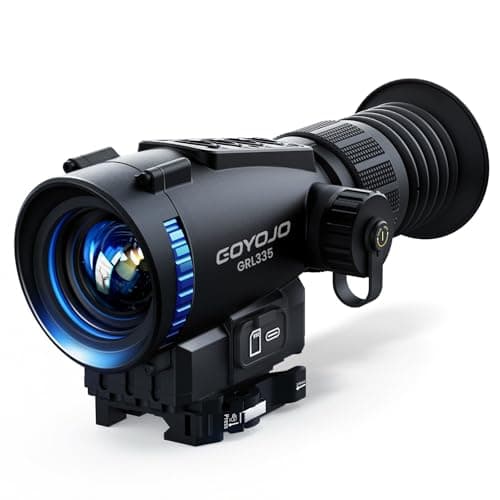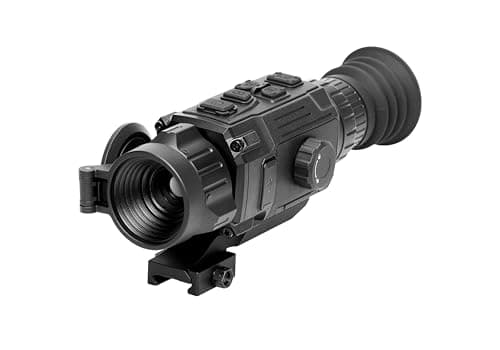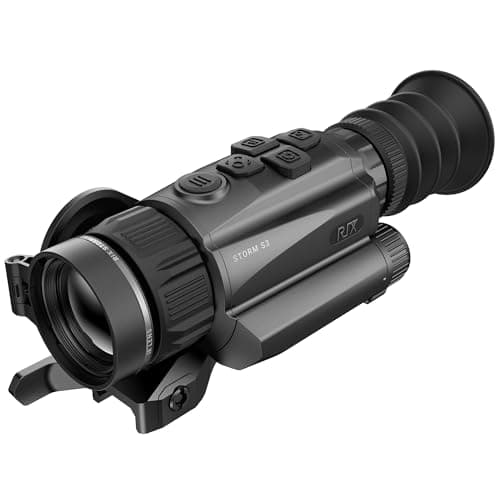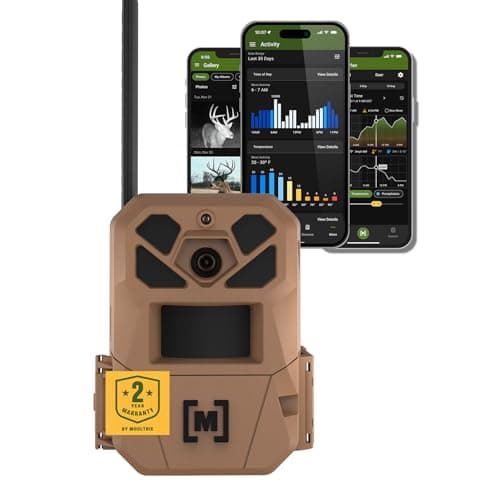
This question gets argued as if it had one answer. It has two, and which one applies to you depends almost entirely on the hogs you actually shoot and the distance you shoot them at.
What Texas law requires
Nothing, as far as caliber goes. Feral hogs are not game animals in Texas: on private land they have no closed season and no bag limit, and TPWD's means and methods rules impose no minimum caliber on them. TPWD asks night hunters to contact the local game warden as a courtesy. So the constraint here is ethical and practical, not legal — which is exactly why the debate is worth having.
Our Texas hog hunting laws page covers licensing, night hunting, suppressors and public land, where the rules do differ.
Where .223 works
In the conditions most hog hunting actually happens in, it works well:
- Hogs under about 150 lb. Which is most of a sounder. Sows and this year's shoats make up the bulk of the animals at a feeder, and they are not hard to kill with a well-placed .223.
- Inside about 100 yards. Feeder distance, trap distance, food-plot distance. Velocity and your own precision are both still intact here.
- Broadside or slightly quartering-to shots. Where the path to the vitals is short and does not cross heavy bone or shield.
- Several hogs, quickly. Light recoil in a semi-auto means you can take a second and third animal out of a group — and whole-group removal is the only thing that actually reduces hog numbers.
- Around livestock and buildings. Lighter bullets shed energy faster on a miss than a .30 caliber does. That is not a license to skip a backstop, but it is a real consideration on small acreage.
It is also, bluntly, the rifle most people own. An AR in 5.56 with a thermal on it and a rest under it kills far more hogs than a perfect cartridge sitting in a safe.
Where it does not
- Mature boars. A boar builds a thick plate of scar tissue and cartilage over its shoulders — the "shield" — and it is exactly where a broadside shot wants to go. A light, fast bullet can fail on it. Feral hogs run to five feet in length per the MDC field guide, and the big ones in Texas are heavy animals.
- Past about 150 yards. The vital zone on a hog is small and sits low and forward of where people expect. At distance the combination of a small target and a bullet losing velocity gets marginal fast.
- Quartering-away shots on anything big. The path crosses the paunch and heavy bone, and a .223 does not have energy to spare for that trip.
- Any shot you cannot place precisely. This is the real limit, and it is about you, not the cartridge.
The bullet matters more than the cartridge
This is the part of the argument that actually changes outcomes, and it is where most of the ".223 does not work on hogs" stories come from.
- A bullet built to hold together. A bonded or heavier-for-caliber hunting bullet drives through muscle, gristle and bone instead of coming apart on the surface. This is the single best upgrade available to a .223 shooter.
- Not a varmint bullet. Thin-jacketed, explosive bullets designed for coyotes and prairie dogs are built to do the opposite of what a hog needs.
- Not surplus ball ammunition. It is cheap, it is what the rifle came with, and it is built for neither expansion nor penetration on a tough animal.
- Twist rate decides your options. A faster-twist barrel stabilises heavier bullets. Check what your barrel is before you buy a case of something it cannot shoot well.
We do not publish ballistic figures we have not sourced, and Amazon does not sell ammunition — so this page will not rank loads for you. What we will say plainly is that a good hunting bullet in a .223 beats a poor bullet in a bigger cartridge, every time.
Placement is the whole argument
A hog's vitals sit lower and further forward than a deer's, roughly behind the ear and in line with the front leg, and the margin for error is smaller. A .223 does not forgive a shot that lands in the shoulder plate or back in the paunch — bigger cartridges sometimes do.
Which means the honest version of this page's answer is: .223 is enough cartridge if you are enough shooter, on the right animal, at the right distance. Work through our hog shot placement page before you decide whether that is you — it is the single most useful thing on this site for anyone shooting a smaller caliber.
What actually raises your hit rate
If you are shooting a .223 at hogs, these three things will do more for your results than changing cartridge:
- Seeing the animal properly. You cannot place a precise shot on something you can barely make out. A thermal or a well-lit feeder is the difference between a shot you should take and one you should not.
- A rest. Offhand at 100 yards in the dark is not a precision shot. A tripod or sticks takes your pulse out of the equation.
- A confirmed zero and a known distance. Zero at the range you actually shoot, and know the yardage to your feeder rather than guessing it.
Our picks for this job
What makes a .223 enough
Precision is the whole requirement with this cartridge, and these three buy more of it than a bigger caliber would.
Best rugged, lightweight thermal under $1,000
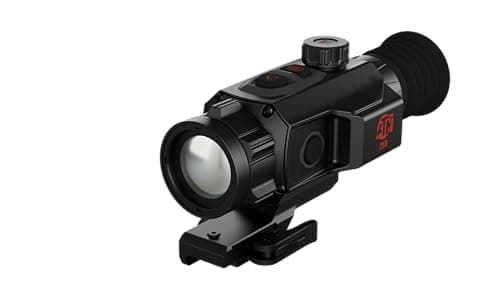
ATN ThOR 6 Mini 256 3.5-28x
$500 to $1,0007.4/10ResearchedThe toughest spec sheet under $1,000 - IP67, a 6000 J recoil rating, five years of warranty - on a 1.16 lb scope that lets you identify the animal before the shot.
$795.00Amazon#ad · Price as of November 3, 2026 · How we make money for the link to ATN ThOR 6 Mini 256 3.5-28x
 Stock photo
Best 3-color scope light
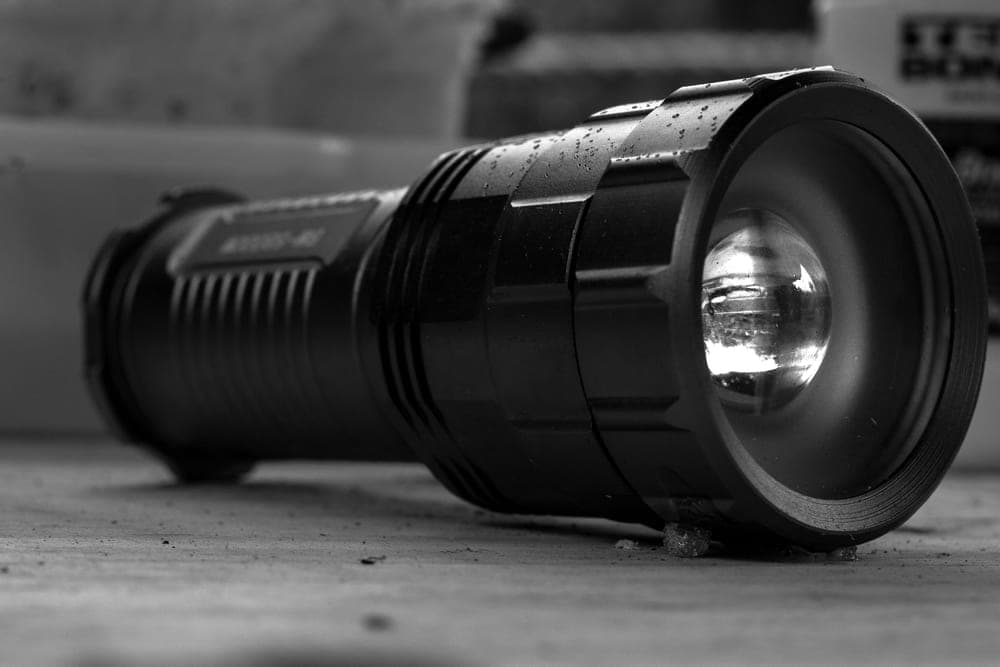
Wicked Lights A67iC 3-Color-in-1
Under $5007.8/10ResearchedIf thermal is not in the budget: red, green and white in one head with rheostat dimming, so you can light a feeder without blowing the sounder out of it.
Check price · Amazon#ad · Price as of November 3, 2026 · How we make money for the link to Wicked Lights A67iC 3-Color-in-1
Best one-hand shooting stick for stalking
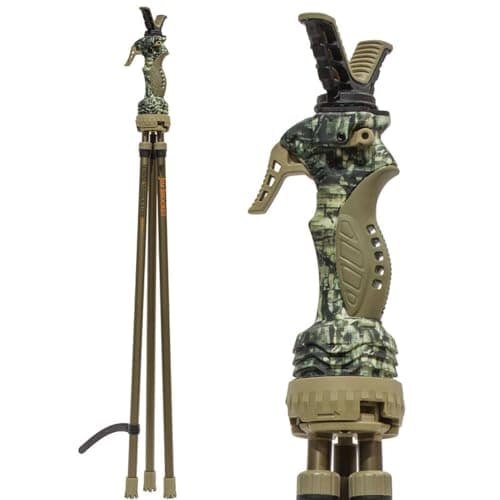
Primos Trigger Stick Gen3 Tall Tripod
Under $5007.5/10ResearchedOne-hand height change from 24 to 62 in at about 3.5 lb. Takes your pulse out of a shot that has to land in a small place.
$159.99Amazon#ad · Price as of November 3, 2026 · How we make money for the link to Primos Trigger Stick Gen3 Tall Tripod
When to step up, and to what
If you are regularly shooting big boars, taking longer shots across pasture, or finding hogs running off with hits you thought were good, step up. The two cartridges people move to from 5.56 in an AR are 300 Blackout and 6.5 Grendel, and we have taken both head to head:
- 300 Blackout vs 5.56 for hogs — heavier bullets, better suppressed, shorter effective range.
- 6.5 Grendel vs 300 Blackout — if the shots are longer rather than closer.
- Best caliber for hogs — the full comparison, with the published yardsticks we use.
And keep the scale in view: Texas A&M's Natural Resources Institute has reported that roughly two thirds of the wild pig population would need to be removed annually just to stop it growing. No cartridge fixes that. Trapping whole sounders does more than shooting single hogs with anything — see how to trap feral hogs.
Mistakes people make with a .223 on hogs
- Shooting ball ammunition. The commonest reason a .223 "does not work."
- Using a varmint bullet. Built to come apart; a hog needs the opposite.
- Taking the shoulder shot on a big boar. Straight into the shield.
- Stretching the distance because the rifle is accurate. Paper accuracy is not terminal performance.
- Shooting offhand at night. With this cartridge, precision is not optional.
- Blaming the cartridge for a placement problem. Read the shot placement page and be honest about which one it was.
How we scored this
Every score, built from the published record
Every pick here is labeled Researched: we read each maker's published specs, manuals and warranty terms, compare products only against others in the same budget tier, and score them on a public rubric. Every figure links to where it came from, and seller performance numbers are labeled “maker's claim,” so you can see exactly what you are buying.
Scores are our editorial read of that documented evidence. Commissions never set a score or decide a pick. The rubric and its weights are published.
What changed
- Published.
Questions
Frequently asked
Is .223 enough for hogs?
Is there a minimum caliber for hogs in Texas?
What bullet should I use in a .223 for hogs?
Is 5.56 the same as .223 for hog hunting?
How far can you shoot a hog with a .223?
Should I switch to 300 Blackout for hogs?
Receipts
Sources
- TPWD: Outdoor Annual, Nongame and Other Species, feral hogs - no closed season or bag limit on private land (checked 2026-10-17)
- TPWD: Outdoor Annual, General Regulations, means and methods (checked 2026-10-17)
- TPWD: Hunter education shooting safety rules (checked 2026-10-17)
- Missouri Department of Conservation: Feral Hog (Feral Swine) field guide, size (checked 2026-10-17)
- Texas A&M Natural Resources Institute, Nov. 2019: startling statistics about wild pigs, including the annual removal rate needed to halt growth (checked 2026-10-17)
- ATN: ThOR 6 Mini 256 3.5-28x product page and spec table (checked 2026-10-17)
- Wicked Lights: A67iC 3-Color-in-1 night hunting light kits page (checked 2026-10-17)
- Primos: Trigger Stick Gen3 Tall Tripod product page (checked 2026-10-17)
Specs come from each maker's own pages or the product listing (linked on every product), hog biology and trapping advice from Texas A&M AgriLife, and rules from TPWD and Texas statute. Prices are set by Amazon and change often, so we don't print them. Where a figure isn't published, we say so. Read the full method.