Not legal advice. This page summarizes Texas rules from the official sources linked in the text (TPWD Outdoor Annual, valid Sep 1, 2026 through Aug 31, 2027). Rules checked . Laws change: confirm the current rules with Texas Parks and Wildlife and your local game warden before you rely on them.
Is feral hog meat safe to eat?
It is, and people across Texas eat a great deal of it. The thing to get straight is where the risk actually sits. Texas A&M AgriLife's safe practices guidance for processing and cooking feral hogs is built around the handling stage — gloves, clean tools, thorough cooking — because that is the point at which people get sick. The pathogens that matter do not survive proper cooking. They do survive a cut on your hand.
So the useful frame is not "is wild pork dangerous" but "am I field dressing this animal the way the guidance says". Almost every documented human case in this space traces back to bare-handed dressing, not to a meal.
What feral hogs carry
Texas A&M AgriLife maintains a page specifically on feral hog diseases, and USDA APHIS covers the national picture on its feral swine program pages. Between them, the categories that matter to a hunter are:
- Swine brucellosis. The one every Texas source leads with, because it transfers to people through contact with blood, reproductive tissue and fluids. It is the single strongest argument for gloves.
- Pseudorabies. A serious concern for livestock and for dogs, which is why hunting dogs that work hogs are a separate risk conversation. Not a human disease.
- Parasites, including trichinellosis. Addressed entirely by cooking thoroughly.
- Bacterial contamination — E. coli, salmonella, leptospirosis — from gut contents, dirty water and poor field hygiene.
- Tularemia and other contact-transmitted infections.
The Texas Animal Health Commission's swine health pages are the authority on the livestock side, which matters if you run pigs, cattle or goats on the same ground — a sounder crossing your pasture is a herd-health question, not just a damage question.
How it reaches you
The transmission routes are mundane and that is what makes them avoidable:
- Blood and fluid on broken skin. A cut, a hangnail, a scratch from the brush you walked through.
- Splash to the eyes, nose or mouth. Field dressing is wetter than people expect.
- Hand to face. You touch the animal, then your phone, then your face.
- Cross-contamination at home. The cooler, the tailgate, the kitchen board, the knife you did not wash between tasks.
- Your dog. Dogs that mouth a carcass are exposed to things people are not, pseudorabies among them.
South Carolina DNR's safe handling page for wild hogs and Penn State Extension's guidance on proper field dressing and handling of wild game both work through this in detail, and the advice is consistent across agencies.
The handling rules that matter
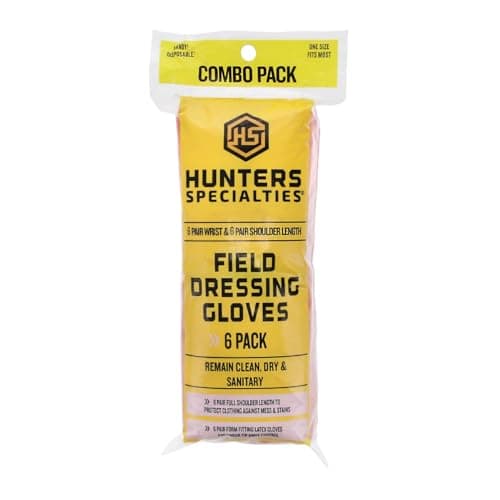
- Shoulder-length disposable gloves, every time. Not nitrile exam gloves at the wrist — the long ones. Wear a pair of fitted gloves over them for grip if you like.
- Eye protection. Any safety glasses. The splash risk is the one nobody plans for.
- Cover cuts before you start, and if you nick yourself mid-job, stop, wash it properly and re-glove.
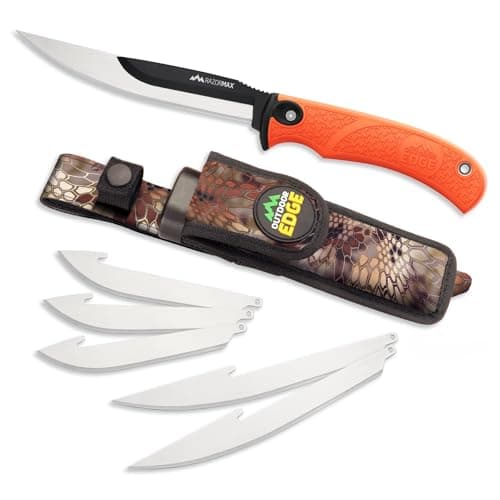
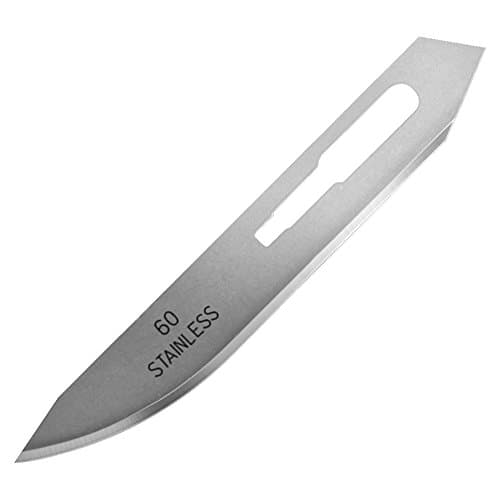
- Dedicated tools. A knife that only does hogs, washed in hot soapy water and sanitized after. Replaceable-blade knives make this easier because the cutting edge is disposable.
- Do not cut into the gut. Most contamination is gut contents on meat. Slow is clean.
- Cool it fast. Texas heat is the bigger practical enemy than any pathogen. Ice, shade, air movement, and get it to a cooler quickly.
- Wash everything afterwards — hands and forearms with soap and water, tools, the cooler, the truck bed, your knife sheath and the clothes you wore.
- Keep the dog off the carcass.
The step-by-step dressing technique itself is on how to field dress a hog.
Gloves and a kit
Our picks for this job
The four things this page is really asking you to own
Gloves first - they are the cheapest item here and the one that matters most. Then a blade system you can keep genuinely clean. Every spec is the maker's published figure; scores come from our published knife rubric.
Best cheap add-on for field dressing
Hunters Specialties Field Dressing Gloves Combo Pack
Under $5006.5/10ResearchedShoulder-length and short gloves in one pack. This is the single most important purchase on this page and it costs less than a box of ammunition.
$7.99Amazon#ad · Price as of October 11, 2026 · How we make money for the link to Hunters Specialties Field Dressing Gloves Combo Pack
Best small gift for a Havalon owner
Havalon Piranta 60XT Replacement Blades (12-Pack)
Under $5007.0/10ResearchedReplaceable blades, twelve to a pack: the edge that touches the animal is disposable, which is the easiest way to keep a hog knife clean.
Check price · Amazon#ad · Price as of October 11, 2026 · How we make money for the link to Havalon Piranta 60XT Replacement Blades (12-Pack)
Best belt-carry field-dressing kit
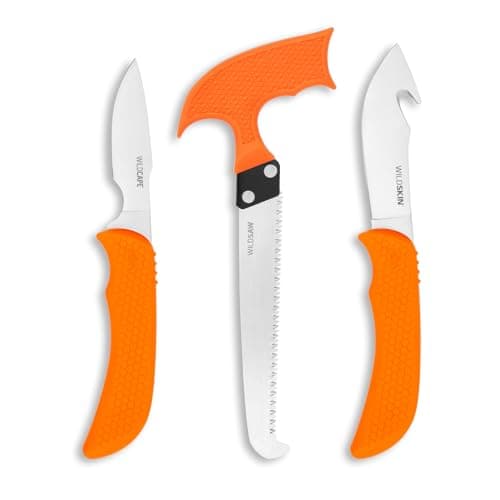
Outdoor Edge WildGuide Field Dressing Kit
Under $5007.3/10ResearchedA full field-dressing set in a case, so the tools that do hogs are the tools that only do hogs.
$39.99Amazon#ad · Price as of October 11, 2026 · How we make money for the link to Outdoor Edge WildGuide Field Dressing Kit
Best complete processing set
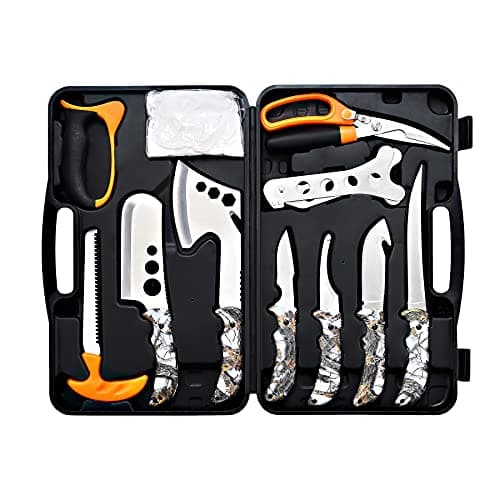
KNINE OUTDOORS Field Dressing Kit (12-Piece)
Under $5006.6/10ResearchedThe twelve-piece option if you process at home as well as in the field, including a rib spreader.
$69.97Amazon#ad · Price as of October 11, 2026 · How we make money for the link to KNINE OUTDOORS Field Dressing Kit (12-Piece)
Our full rankings are on best hog hunting knives, which covers the replaceable-blade versus fixed-blade argument properly.
Cooking and storage
AgriLife's safe-practices article and every state handling page land on the same instruction: cook wild pork thoroughly, all the way through, every time. The published food-safety guidance for wild pork sets a minimum internal temperature for exactly this reason, and a meat thermometer is the only way to know you have hit it. There is no rare wild pork; this is not a steak.
- Use a thermometer, in the thickest part, away from bone.
- Treat sausage and ground meat with extra care — grinding distributes anything present through the whole batch.
- Separate raw from cooked. Different board, different plate, different tongs.
- Freeze what you are not eating within a few days. Freezing is not a substitute for cooking — it does not make meat safe to eat undercooked.
- Label it. Date and cut. You will not remember in March.
Young hogs eat better than old boars, which is as much a flavor point as a safety one. A mature boar is strong and often best used for sausage.
When to leave an animal alone
There is no shame in walking away, and the guidance is explicit that visibly sick animals should not be processed for food. Signs worth taking seriously:
- Visible abscesses, lesions or pus in the body cavity or on the organs.
- Enlarged, discolored or oddly textured organs, especially spleen and liver.
- Joint swelling or lameness that is not obviously an injury.
- A bad smell on opening the animal, or meat that looks wrong.
- Emaciation, patchy hair loss, or behavior that was abnormal before the shot.
- Any animal you could not cool quickly enough. A hog left warm for hours in Texas heat is a spoilage question regardless of disease.
If an animal looks diseased, your county AgriLife Extension office and the Texas Animal Health Commission are the people to tell — particularly if you run livestock.
Carcass disposal
How we scored this
Every score, built from the published record
Every pick here is labeled Researched: we read each maker's published specs, manuals and warranty terms, compare products only against others in the same budget tier, and score them on a public rubric. Every figure links to where it came from, and seller performance numbers are labeled “maker's claim,” so you can see exactly what you are buying.
Scores are our editorial read of that documented evidence. Commissions never set a score or decide a pick. The rubric and its weights are published.
What changed
- Published.
Questions
Frequently asked
Is feral hog meat safe to eat?
What diseases do feral hogs carry?
Do I need gloves to field dress a hog?
How thoroughly do you have to cook wild hog?
When should you not eat a hog you shot?
Receipts
Sources
- Texas A&M AgriLife: feral hog diseases (checked 2026-10-11)
- Texas A&M AgriLife Today: experts urge safe practices when processing and cooking feral hogs (checked 2026-10-11)
- South Carolina DNR: safe handling of wild hogs (checked 2026-10-11)
- Penn State Extension: proper field dressing and handling of wild game and fish (checked 2026-10-11)
- USDA APHIS: feral swine program, disease and risk information (checked 2026-10-11)
- Texas Animal Health Commission: swine health and movement rules (checked 2026-10-11)
- Texas A&M AgriLife: feral hog carcass disposal (checked 2026-10-11)
- Havalon: Piranta replaceable blades page (checked 2026-10-11)
- Outdoor Edge: WildGuide field dressing set product page (checked 2026-10-11)
- KNINE Outdoors: 12-piece field dressing kit product page (checked 2026-10-11)
- Amazon search results for "field dressing kit hunting", used to confirm the category is currently sold (checked 2026-10-11)
- TPWD: Outdoor Annual, Nongame and Other Species, feral hogs (checked 2026-10-11)
Specs come from each maker's own pages or the product listing (linked on every product), hog biology and trapping advice from Texas A&M AgriLife, and rules from TPWD and Texas statute. Prices are set by Amazon and change often, so we don't print them. Where a figure isn't published, we say so. Read the full method.