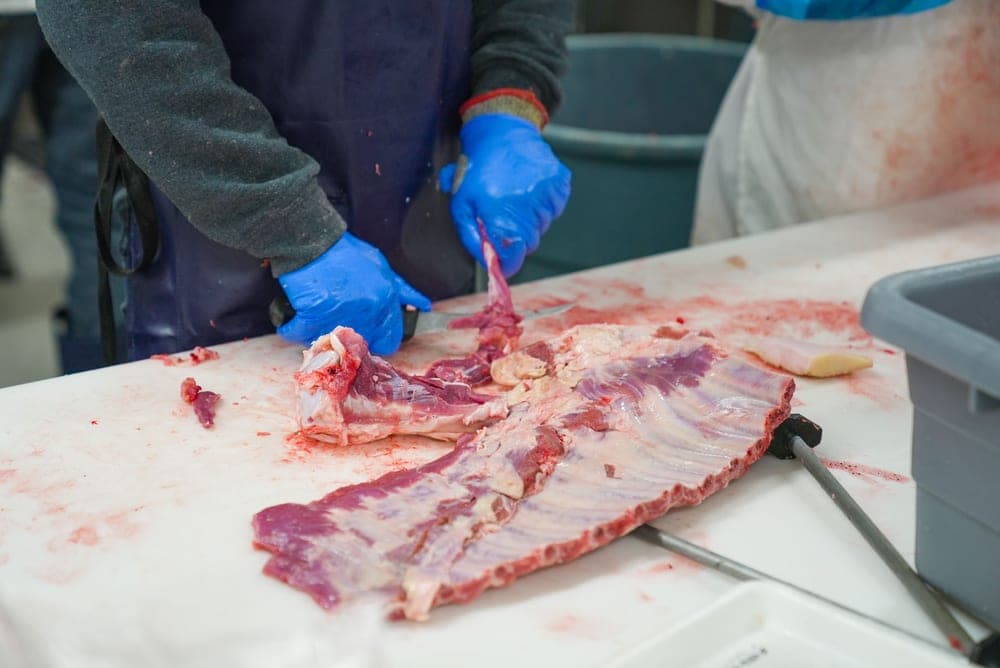
Field dressing a feral hog is the same basic job as field dressing a deer, with one big difference: feral hogs can carry diseases that people catch through handling. This guide keeps to the steps and the safety rules, in a plain, clinical order. The steps follow the big-game field dressing guides published by Penn State Extension and Oregon State University Extension; the hog-specific precautions come from the CDC, USDA APHIS and Texas A&M AgriLife. We didn't find an extension guide with a hog-only cutting sequence, so where a step comes from a deer guide, we say so.
Why a hog calls for more care
USDA APHIS lists the diseases feral swine can pass to people: leptospirosis, toxoplasmosis, brucellosis, tularemia, trichinellosis, swine influenza, salmonella, hepatitis and pathogenic E. coli. It says the most common route is handling and butchering feral swine or eating meat that hasn't been cooked thoroughly.
Brucellosis is the one hunters hear about most. The CDC says you can get it when you eat meat that isn't properly cooked or handle animal skins, tissues or fluids unsafely. A CDC brochure for hog hunters, hosted by USDA APHIS, adds that you can get sick if blood, fluid or tissue of an infected hog touches your eyes, nose, mouth or a cut, and that infected hogs carry the germs for life.
How common is it? The sources give different figures, from different data, so we list them separately. The Texas Animal Health Commission's swine page says about 10% of feral swine carry swine brucellosis, based on historical data (TAHC, page checked 2026-09-19). USDA APHIS's feral swine damage page puts the share of feral swine infected with brucellosis at 8% (APHIS, page undated). Either way, you can't tell by looking, which is why the precautions below apply to every hog.
Before you start
- Be sure the animal is dead. It's the first rule in Oregon State's field-care guide.
- Leave sick and found-dead hogs alone. The CDC hog hunter brochure says to avoid all contact with visibly ill animals or those found dead.
- Glove up, and protect your eyes. The CDC advises eye protection and latex or rubber gloves when handling carcasses. Texas A&M AgriLife's disease page goes further: gloves, glasses and a mask while handling carcasses, field dressing and handling raw meat.
- Keep dogs back. The University of Arkansas extension publication on feral hog carcasses advises avoiding bare-skin contact with hunting dogs that may have touched hunted animals.
- Decide where the hog is going. Texas A&M AgriLife lists three routes: eat it, dispose of it on the landscape, or sell live hogs to an approved buying station. If you won't eat it, you may not need to open it at all (see disposal below).
What you need
Oregon State's guide calls heavy rubber, latex or nitrile gloves a standard necessity for field dressing wild meat. The rest of this list comes from the Penn State and Oregon State guides:
- Gloves: short disposable gloves for knife work, and shoulder-length gloves if you'll reach into the body cavity.
- Eye protection: shooting glasses work.
- A sharp knife, plus a sharpener or spare blades. A 3 to 4 in blade is easier to control than a long one; our best hog hunting knives page compares fixed, folding and replaceable-blade options.
- A small saw (optional) for the pelvis or brisket.
- Rope to position or hang the hog. Oregon State suggests 20 feet of quarter-inch nylon rope.
- Rubber bands or string to tie off the anus, per Penn State.
- Clean water, wipes or alcohol swabs to clean the knife between cuts, and paper towels to wipe the cavity.
- Trash bags for used gloves and waste, and a cooler with bagged ice.
- A headlamp and spare batteries. If you hunt at night, you'll field dress in the dark. Oregon State's list includes extra flashlights or headlamps and batteries.
Our hog hunting gear list folds these into a full checklist.
Our picks for this job
A knife and gloves for the job
Two picks from our researched list that match the checklist above. We haven't tested them; scores come from published specs and our rubric.
 Stock photo
Best all-around hog field-dressing knife
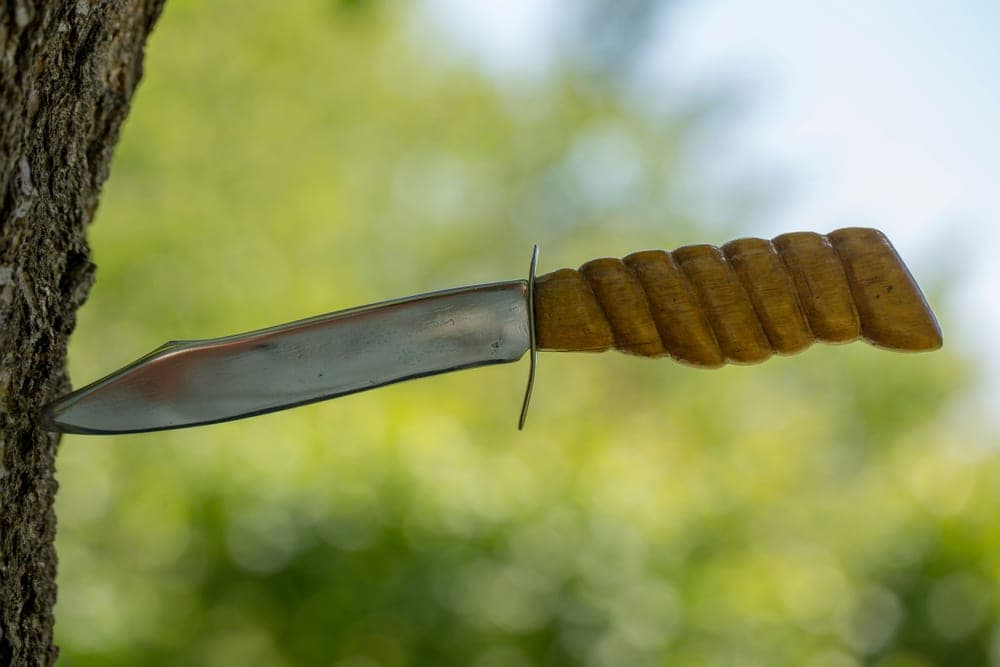
Outdoor Edge RazorMax
Under $5008.5/10ResearchedTakes a 3.5 in drop-point for opening and skinning and a 5 in boning blade for working around joints, swapped without sharpening. The rubberized handle is built for wet grip. Replaceable blades are for cutting, not prying through bone.
Check price · Amazon#ad · Price set by Amazon · How we make money for the link to Outdoor Edge RazorMax
 Stock photo
Best cheap add-on for field dressing
Hunters Specialties Field Dressing Gloves Combo Pack
Under $5006.5/10ResearchedSix pairs of short latex gloves for knife work plus six pairs of shoulder-length gloves for reaching into the cavity. Latex is a problem for anyone with a latex allergy; buy nitrile if that's you.
Check price · Amazon#ad · Price set by Amazon · How we make money for the link to Hunters Specialties Field Dressing Gloves Combo Pack
Field dressing a hog, step by step
These steps follow Penn State Extension's big-game field dressing guide, with notes from Oregon State's Big Game from Hunt to Home. Both were written with deer in mind, so treat the order as general big-game practice rather than a hog-specific procedure.
- Position the hog on its back. Penn State suggests rocks or logs to keep the carcass in place, or tying the legs off. Oregon State adds that tilting the head slightly downhill takes pressure off the belly wall, making it easier to cut without puncturing the gut.
- Remove the external reproductive organs with as small an incision as you can, to keep dirt out of the cavity (Penn State).
- Open the belly. Cut along the midline from the bottom of the breastbone to near the reproductive area, lifting skin and muscle together. Keep the blade edge facing up, and slide two fingers into the cut, one on each side of the blade, to push the intestines down and away. Penn State notes that bacteria associated with foodborne illness can be found in those organs, which is why this cut matters most. Oregon State adds that cutting from the flesh side out keeps hair off the meat and off your edge.
- Free the anus and tie it off. Cut around the anus so it comes out with the intestines, then tie it off with a rubber band or string (Penn State places a plastic bag over it first) to keep feces off the meat.
- Remove the organs. Cut through the diaphragm, reach forward to cut the windpipe and esophagus free, and roll the organs out toward the rear, cutting the points of attachment as you go (Oregon State). Penn State's list: intestines, reproductive tract, heart, lungs, windpipe and esophagus.
- Keep the heart and liver if you want them, in a separate bag. Oregon State says to take them out of a plastic bag as soon as you can so they cool.
- Drain and clean the cavity. Drain excess blood and remove visible dirt, feces, hair and bloodshot areas. Wipe the cavity with a dry cloth or paper towels; if you rinse it, dry it thoroughly. Clean your knife often between cuts so you don't drag bacteria into the meat (Penn State).
- Look before you keep it. Penn State says not to eat meat from a carcass whose organs smell offensive or show greenish discharge, black blood or blood clots in the muscle. Texas A&M AgriLife experts advise watching for abnormalities when processing hogs, noting that fighting wounds and lesions can open the way to parasites and infections. When in doubt, dispose of it.
Cool the meat fast
Heat works against the meat, so plan the cooling before you take the shot. Oregon State's guide sets the target: cool the meat to less than 40°F as quickly as possible, reaching an internal temperature of 40°F or lower within 24 hours, and in warm weather get the carcass to a meat cooler on the day of the kill or as soon as possible.
- Above 40°F air temperature: Penn State says to chill the carcass by putting resealable bags of ice in the body cavity.
- Below 40°F: prop the cavity open with sticks for air circulation and drying (Penn State).
- Don't wrap warm meat. Oregon State warns that covering meat that hasn't cooled holds in heat and speeds spoilage.
- Carry it leak-proof. USDA APHIS advises packaging harvested game in leak-proof containers so blood doesn't leak into the environment.
Clean up and dispose of the rest
- Gloves and waste: the CDC says to safely bag and throw away disposable gloves and the parts of the carcass you won't use. The University of Arkansas and South Carolina DNR guidance says to burn or bury them.
- Where remains go: Texas A&M AgriLife's carcass disposal page points to the Texas Commission on Environmental Quality's guidance, and says to place remains where they can't contaminate water and where livestock and pets can't reach them.
- Never feed raw scraps to dogs. AgriLife says uncooked bones, meat and organs should never go to pets, and the Arkansas publication notes that infected dogs can pass brucellosis to people.
- Wash and disinfect. Wash your hands with soap and warm water for 20 seconds, and clean tools and reusable gloves with a disinfectant such as dilute bleach (CDC).
- Change before you go near pigs. APHIS asks hunters to change clothes and shoes, wash hunting clothes, disinfect shoes and equipment, and stay away from domestic pigs after a hunt, because people can carry African swine fever on clothing and gear even though it doesn't make people sick.
Cooking temperature
USDA APHIS says feral hog meat should always be cooked to a safe internal temperature of 160°F, and Texas A&M AgriLife's disease page and its Extension meat specialist give the same number. AgriLife's carcass disposal page gives 165°F. Cooking to 165°F, checked with a food thermometer, meets both. The CDC adds a warning that matters for jerky and sausage makers: freezing, smoking, drying and pickling don't kill the bacteria that cause brucellosis. Only thorough cooking does.
If you get sick afterward
If the hog came from a trap
Trapped hogs raise a legal question before a knife question. In Texas, live feral swine may move only under Texas Animal Health Commission rules, such as directly to a recognized slaughter facility, an approved holding facility or an authorized hunting preserve, with up to seven days in an escape-proof cage on the vehicle or trailer (4 TAC §55.9). Relocating and releasing them isn't one of the options. Our guide to what to do with trapped hogs in Texas walks through each route, and the Texas hog hunting laws summary covers the rest. For more field gear, head back to the hog hunting gear hub.
How we scored this
Units we claim to have tested: 0
Plenty of gear sites say they field-tested everything they list. We haven't, and we say so. Every pick here is labeled Researched: we read each maker's published specs, manuals and warranty terms, compare products only against others in the same budget tier, and score them on a public rubric. Every figure links to where it came from, and seller performance numbers are labeled “maker's claim.”
Scores are editorial judgments from that documented research, not test results. Commissions never set a score or decide a pick. The rubric and its weights are published.
Questions
Frequently asked
Is feral hog meat safe to eat?
Do feral hogs carry diseases people can catch?
How soon do you need to field dress a hog?
Can you field dress a hog without gutting it?
What gloves should you wear to field dress a hog?
What knife is best for field dressing a hog?
Receipts
Sources
- CDC: Brucellosis and Animals, feral swine hunters (checked 2026-09-19)
- USDA APHIS: Feral Swine Damage, Pets and People (checked 2026-09-19)
- USDA APHIS: Hunters, protect pigs from disease (checked 2026-09-19)
- CDC: Wild Hog Hunting, Stay Healthy on Your Hunt! brochure, hosted by USDA APHIS (checked 2026-09-19)
- USDA APHIS: Feral Swine Damage (checked 2026-09-19)
- Texas Animal Health Commission: Swine (feral swine disease figures; checked 2026-09-19)
- Texas A&M AgriLife, Coping with Feral Hogs: Diseases (checked 2026-09-19)
- Texas A&M AgriLife, Coping with Feral Hogs: Carcass disposal (checked 2026-09-19)
- AgriLife Today: Experts, use safe practices when processing, cooking feral hogs, Feb. 6, 2018 (checked 2026-09-19)
- Penn State Extension: Proper Field Dressing and Handling of Wild Game and Fish, updated Sept. 14, 2022 (checked 2026-09-19)
- Oregon State University Extension: Big Game from Hunt to Home (PNW 517), revised Aug. 2022 (checked 2026-09-19)
- University of Arkansas Cooperative Extension: Carcass Disposal of Feral Hogs in the Field (FSA9112) (checked 2026-09-19)
- South Carolina DNR: Feral Hog, Safe Handling (checked 2026-09-19)
- Texas Administrative Code, 4 TAC §55.9, feral swine movement (via Cornell LII; checked 2026-09-19)
- Outdoor Edge: RazorMax product page and specifications (checked 2026-09-19)
- Amazon search results for "field dressing kit hunting" (Hunters Specialties gloves listing title; checked 2026-09-19)
We haven't tested the gear on this page and we don't pretend to. Specs come from each maker's own pages or the product listing (linked on every product), hog biology and trapping advice from Texas A&M AgriLife, and rules from TPWD and Texas statute. Prices are set by Amazon and change often, so we don't print them. Where a figure isn't published, we say so. Read the full method.