Not legal advice. This page summarizes Texas rules from the official sources linked in the text (TPWD Outdoor Annual, valid Sep 1, 2026 through Aug 31, 2027). Rules checked . Laws change: confirm the current rules with Texas Parks and Wildlife and your local game warden before you rely on them.
A thermal scope is the tool most night hog hunters want, and the price keeps plenty of landowners from buying one. The good news is that you don't need to see the whole pasture to take hogs off it. You need hogs to come to one place, a way to see them there, and a steady, legal, well-identified shot. This guide covers that setup, the three pieces of gear it runs on, and where it runs out. Every behavior claim below is cited to a wildlife agency or extension source; where the evidence is thin, we say so.
Why a light-only setup works
Hogs often feed at night already. Texas Parks and Wildlife's wild pig page puts it this way: "Wild pigs are generally active at dusk and dawn, but human activity and climatic conditions may cause them to exhibit nocturnal feeding behaviors across portions of their range." It adds that in those areas "it may be most efficient for hunters to shoot pigs at night under the cover of darkness" ( TPWD, Nuisance Wildlife in Texas: Wild Pigs, 2020). Texas A&M AgriLife notes that "in warmer conditions feral hogs can use shaded areas, feed nocturnally, or wallow in mud to maintain appropriate temperatures" (AgriLife, Feral Hog Ecology).
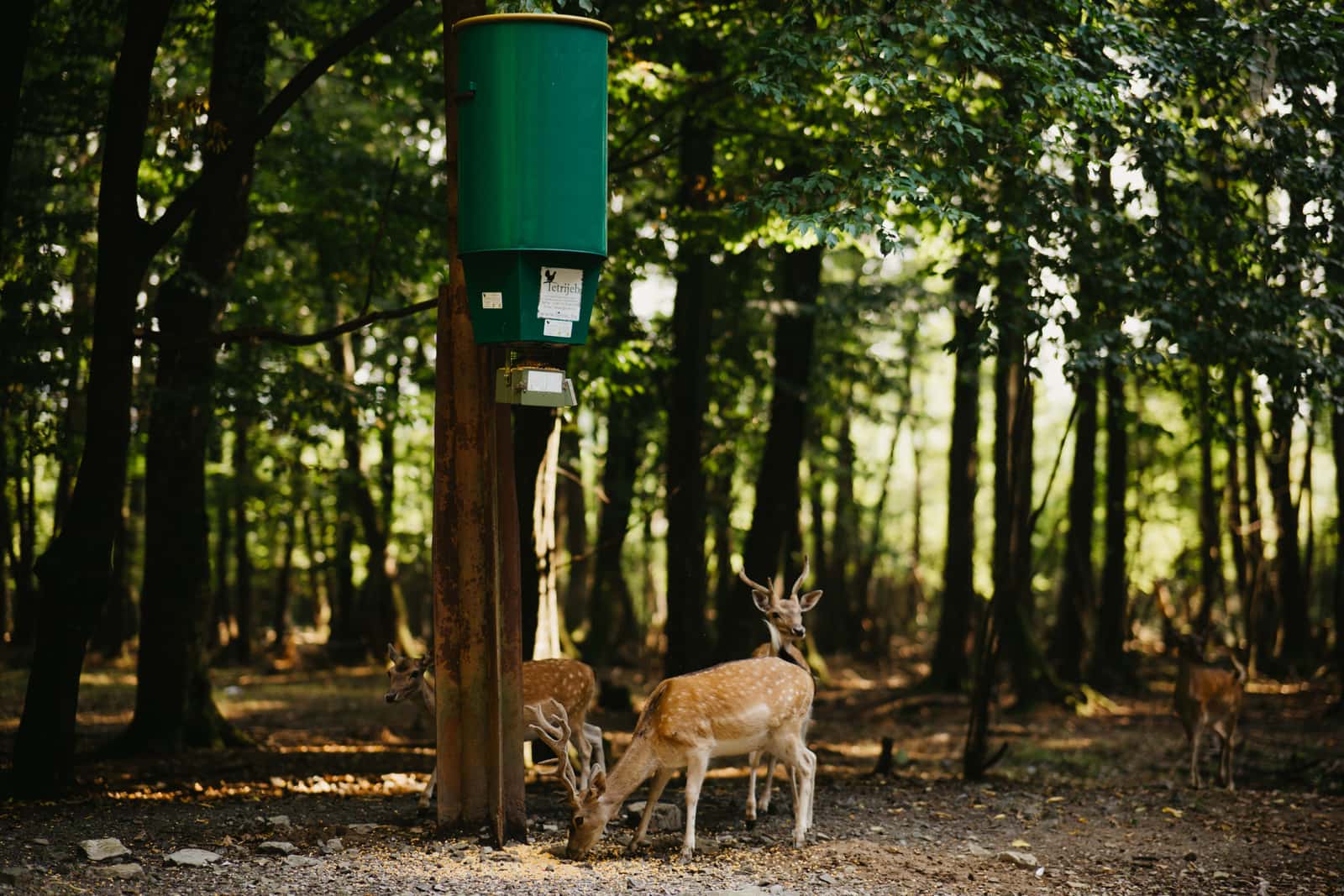
A thermal scope lets you find hogs anywhere in the dark. Without one, you flip the problem around: you choose where the hogs will be. A feeder or bait site you keep stocked puts them at a known spot, at a distance you measured in daylight, with a light already on them. At that point the light, not the optic, is doing the seeing, and a standard daytime riflescope with a scope-mounted light can do the rest.
TPWD's page also sets the limits of any night shooting: it "is highly effective in agricultural fields, but its efficacy also declines as vegetation density increases and wild pig density decreases." Open ground and a fed site favor you. Thick brush and a few scattered hogs don't.
What you give up without thermal
Be clear about the trade before you commit a season to it:
- You only see what's lit. Feeder lights cover a small circle. Moultrie claims its Feeder Hog Light lights game within a 30 ft diameter (maker's claim). A hog standing 20 yards outside that circle is invisible until it walks in.
- You can't scan. Sweeping a gun light across a pasture to look for eyes means pointing a rifle at everything you look at. A handheld or head-mounted light for scanning is safer, and it still won't show you what's standing in the brush line.
- You can't confirm what's moving in the dark. Until an animal steps into light, you don't know whether it's a hog, a deer or a neighbor's calf. That's a legal issue in Texas as well as a safety one (see the rules below).
- Brush beats you. As TPWD notes, night shooting loses effectiveness as vegetation gets thicker.
None of that stops a light-only rig from working. It means the setup, not the gear, does the heavy lifting.
The three pieces of a light-only rig
1. A feeder light that switches itself on
Look for a light that turns on by motion or by a dusk-to-dawn photocell, so you don't have to walk out and flip a switch. Brightness control lets you pick how much light the site gets, and a choice of colors lets you match the feeder light to your gun light. Power matters more than people expect: C cells, a built-in solar panel, or a cord to the 6 or 12 V battery that already runs your feeder. Our feeder light rankings compare activation modes, power and mounting across the lights we track.
2. A scope light you can dim
The gun light is how you identify each animal and see your reticle on it. Three things matter most. First, red and green, or both. Second, a dimmer, so the light can come up gradually rather than snapping on at full power. Third, a mount that fits your scope tube and holds the beam where your reticle is. Throw is less critical than it looks: over a feeder at 100 yards, almost any kit's claimed reach is more than you'll use. Our ranked hog hunting lights cover the full range.
3. A rest that holds the rifle for you
A night sit is mostly waiting. A clamping tripod holds the rifle on the feeder so you're not holding its weight for an hour, and a pan head with tension lets you follow a hog without re-setting the legs. Check the height range against how you'll sit: in a chair, on a bucket or standing in a box blind window. Our shooting sticks and tripods page compares clamping tripods with lighter one-hand sticks.
Our picks for this job
The light-only rig
One pick for each job above, chosen from published specs. Every buy button checks the current Amazon price.
 Stock photo
Best 3-color scope light
Wicked Lights A67iC 3-Color-in-1
Under $5007.8/10ResearchedRed, green and white in one head with a rheostat that turns on at any intensity, so you can try both colors in the same sit. The kit mounts to 1 in. and 30 mm scope tubes.
Check price · Amazon#ad · Price set by Amazon · How we make money for the link to Wicked Lights A67iC 3-Color-in-1
 Stock photo
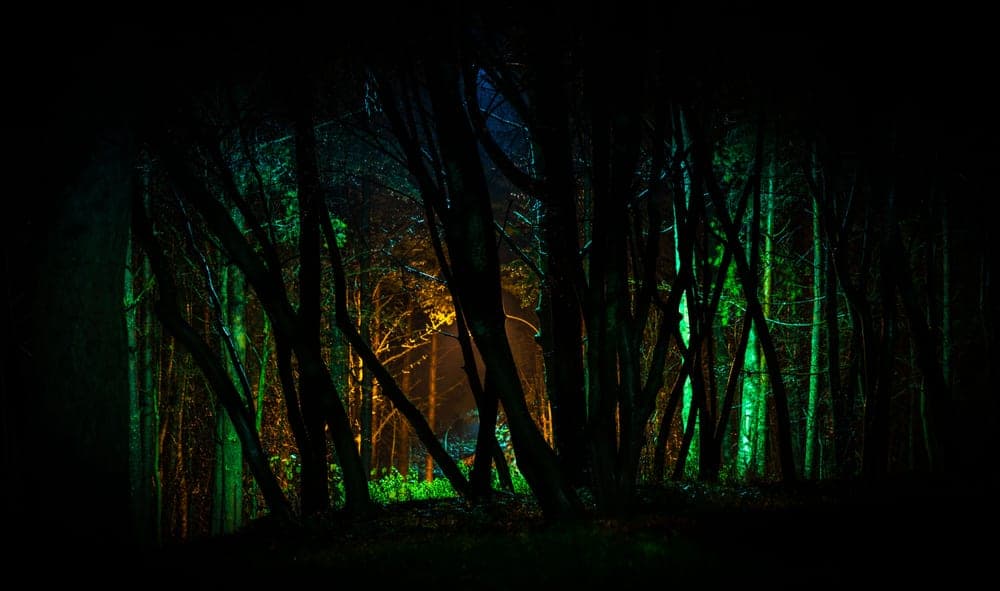
Best multi-color feeder light
Elusive Wildlife 3 Color Motion Activated Feeder Light
Under $5008.3/10ResearchedRed, green or amber; motion mode with a 1, 3 or 10 minute on-time, or dusk-to-dawn; three brightness levels. Runs on C cells or your 6/12 V feeder battery.
Check price · Amazon#ad · Price set by Amazon · How we make money for the link to Elusive Wildlife 3 Color Motion Activated Feeder Light
 Stock photo
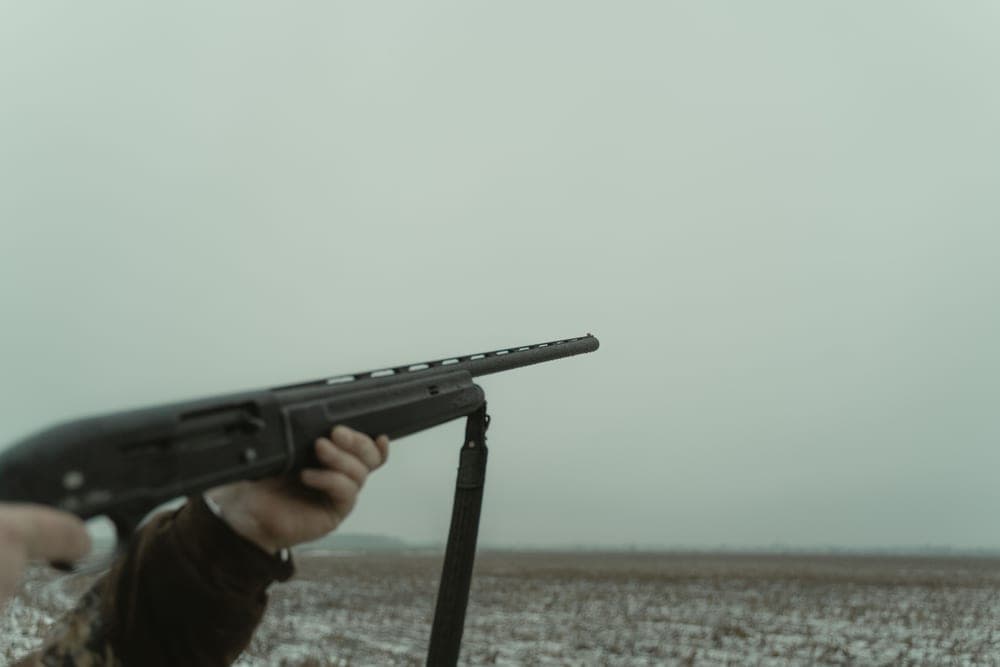
Best clamping tripod for sitting a feeder
BOG DeathGrip Tripod (Aluminum)
Under $5007.7/10ResearchedClamps the rifle hands-free from 7 to 59 in, with 360-degree pan and up to 25 degrees of tilt. At 8.5 lb it's a sitting rest, not a stalking stick.
Check price · Amazon#ad · Price set by Amazon · How we make money for the link to BOG DeathGrip Tripod (Aluminum)
Step by step: setting up a lit feeder
- Put the site where hogs already travel. Texas A&M AgriLife's trapping advice is to "identify an area frequently used by feral hogs," and lists the signs: "scat, tracks, rooting damage, and wallows" ( AgriLife, Trapping). An AgriLife trap-placement publication adds: place them "on or along hog trails linking resources such as food, cover, and water" (Placing and Baiting Feral Hog Traps). The same logic picks a good shooting feeder.
- Feed every day. For pre-baiting traps, AgriLife says bait should be "available every single day to help make that location part of the hog's regular travel pattern." A shooting site works on the same principle. A feeder on a timer keeps it consistent; see our feeder timer picks.
- Choose your shooting spot in daylight and measure the distance. Pick a spot with a safe backstop behind the feeder: rising ground, not open pasture with a road or a house beyond it. Note the range, and note which way the wind usually blows at night.
- Mount the feeder light so it lights the ground, not your blind. Aim it down onto the feed pad. Set the mode: motion if you want the light to announce arrivals, dusk-to-dawn if you want the site lit all night.
- Zero with the light on. Mount the scope light, then check where the beam sits against your reticle at your feeder distance. Do it before the season, not on the first night hogs show up.
- Set the rest for the seat you'll actually use. Set the tripod height and pan tension so the rifle already points at the feeder when you sit down.
- Make the courtesy call. TPWD recommends calling your local game warden before you hunt at night (details below).
Motion or all night? Makers sell both approaches. Elusive Wildlife's Sportsman light, for example, offers low all-night modes built on the idea of getting hogs used to the light, then brightens on motion. We haven't found research that tests whether hogs settle faster under a constant light or a motion-triggered one, so start with one mode and keep a trail camera on the site to see how your hogs react.
Red or green?
Pigs have two types of color cones, peaking in the blue and green-yellow range (Neitz & Jacobs, 1989). Hunters use red and green lights on the theory that hogs see those colors poorly; how hogs actually respond varies, and we haven't found a field study that settles it. You can read the study abstract yourself; it measured cone sensitivity in domestic pigs, not how wild hogs react to a hunting light.
The practical answer: buy a light that lets you try both. A 3-color scope light like the Wicked A67iC switches between red, green and white in one head, and a feeder light with red and green options lets you match the two. Our red vs green comparison covers the question in depth.
Wind, the walk in and the wait
Hunters who work hogs at night pay attention to the wind. In TPWD's Better Outside episode on hog hunting, the hunters profiled try to stay downwind "so their scent doesn't alert the animal," and the episode notes that hogs "don't usually come out until after sundown, once temperatures have dropped" (TPWD, Better Outside: Hog Wild, May 2025). That's field experience rather than a study, but it lines up with the agency and AgriLife notes on nocturnal feeding above.
- Pick the blind for the prevailing night wind, so it carries from the feeder to you, not the other way. If the wind is wrong on a given night, it's reasonable to sit somewhere else.
- Get in before dark if TPWD's episode is right about hogs showing after sundown. Walking in with the site already busy is the hardest way to start.
- Use a headlamp or handheld light for the walk, not the scope light, so the rifle isn't pointed wherever you need to see.
- Keep the scope light off until you need it. Let the feeder light show you what's there. Bring the gun light up, dimmed, only to identify and shoot.
Taking the shot
Identify every animal before you shoot, and know what's behind it. A feeder light doesn't care what walks into it: deer, livestock and people can all show up at a lit feeder, and in Texas shining protected game is against the law.
On shot placement, Texas A&M AgriLife is direct: "correct shot placement is important to ensure the process is quick and humane" (AgriLife, Selective Shooting). The rifle on a clamping rest and the reticle already on the feed pad are what make that possible at night.
Which hog you shoot matters for the land. TPWD notes that "removal of females and juveniles have the greatest impact on lowering production of the population," and that treating big boars as trophies undermines population reduction. If the goal is fewer hogs next year, the sow matters more than the biggest boar.
The Texas rules for night hunting
This is a summary, not legal advice. Our full guide to whether you can hunt hogs at night in Texas covers lights, thermal, vehicles and public land, with every rule cited.
When it's time to add thermal
A light-only rig works best when hogs come to one spot you control. It struggles when they don't: when they work a long creek bottom, feed along brush you can't light, or hang up just outside the feeder light. TPWD credits night-vision optics with greatly improving night shooting, and AgriLife notes that shooting paired with thermal imagery or night vision can remove the last hogs that have avoided other methods (AgriLife).
If that's where you are, the first step up doesn't have to be the most expensive scope. Our best thermal scopes under $1,000 list covers the entry tier, and nothing in the light-only rig goes to waste: you'll still want the feeder light, the rest and a scope light for identifying what the thermal finds.
Why shooting alone won't fix a hog problem
A lit feeder can take a lot of hogs off a place. It won't take enough on its own. TPWD's wild pig page says annual control efforts "would need to continuously achieve 66-70% population reduction just to hold the wild pig population at its current level," and that estimates from Texas put the current annual reduction at about 29%. Mississippi State University Extension puts it plainly: "While it's tempting to believe wild pigs can be controlled with hunting alone, their ability to reproduce quickly requires trapping for more effective population reduction" (MSU Extension).
Use night hunting to take hogs that won't trap and to finish off a sounder a trap only partly caught. AgriLife describes selective shooting as "a great way to finish off a sounder (or group of pigs) that was only partially removed through trapping." Our plan for getting rid of feral hogs shows where the light, the trap and the fence each fit. For more lights and night gear, see the hog hunting lights hub.
How we scored this
Units we claim to have tested: 0
Plenty of gear sites say they field-tested everything they list. We haven't, and we say so. Every pick here is labeled Researched: we read each maker's published specs, manuals and warranty terms, compare products only against others in the same budget tier, and score them on a public rubric. Every figure links to where it came from, and seller performance numbers are labeled “maker's claim.”
Scores are editorial judgments from that documented research, not test results. Commissions never set a score or decide a pick. The rubric and its weights are published.
Questions
Frequently asked
How do you hunt hogs at night without a thermal scope?
What time do hogs come out at night?
Can you hunt hogs at night in Texas?
Is red or green light better for hog hunting?
Can I hunt hogs at night on public land in Texas?
Do I need a special light for a hog feeder?
Receipts
Sources
- TPWD: Nuisance Wildlife in Texas, Wild Pigs (John C. Kinsey, CWB, 2020) (checked 2026-09-19)
- TPWD: Better Outside podcast, Hog Wild (May 28, 2025) (checked 2026-09-19)
- Texas A&M AgriLife, Coping with Feral Hogs: Feral Hog Ecology (checked 2026-09-19)
- Texas A&M AgriLife, Coping with Feral Hogs: Trapping (checked 2026-09-19)
- Texas A&M AgriLife, Coping with Feral Hogs: Selective Shooting (checked 2026-09-19)
- Texas A&M AgriLife: Placing and Baiting Feral Hog Traps, IRNR-PU-060 (checked 2026-09-19)
- Mississippi State University Extension: Top Tips for Hunting Wild Hogs (checked 2026-09-19)
- TPWD: Law enforcement FAQ, spotlighting coyotes and feral hogs in deer country (checked 2026-09-19)
- TPWD: Outdoor Annual 2026-27, Nongame and Other Species (checked 2026-09-19)
- TPWD: News release, feral hog license exemption, Aug. 29, 2019 (checked 2026-09-19)
- TPWD: Outdoor Annual 2026-27, Means and Methods (checked 2026-09-19)
- Texas Parks & Wildlife Code §62.004, Hunting at Night (checked 2026-09-19)
- Texas Parks & Wildlife Code §62.005, Hunting with Light (checked 2026-09-19)
- Texas Parks & Wildlife Code §62.0031, Hunting on public roads (checked 2026-09-19)
- Neitz & Jacobs: Spectral sensitivity of cones in an ungulate, Visual Neuroscience, 1989 (PubMed; checked 2026-09-19)
- Wicked Lights: A67iC 3-Color-In-1 night hunting kits page (checked 2026-09-19)
- Elusive Wildlife: Kill Light Pro 3 Color Feeder Light product page (checked 2026-09-19)
- BOG: DeathGrip Tripod product page (checked 2026-09-19)
- Moultrie: Feeder Hog Light product page (checked 2026-09-19)
We haven't tested the gear on this page and we don't pretend to. Specs come from each maker's own pages or the product listing (linked on every product), hog biology and trapping advice from Texas A&M AgriLife, and rules from TPWD and Texas statute. Prices are set by Amazon and change often, so we don't print them. Where a figure isn't published, we say so. Read the full method.