"How long will it last" is a fair question to ask about a purchase that costs as much as a rifle and a season of feed. The honest answer is that the part you are most worried about is the part least likely to fail.
What actually fails first
In rough order of how often it ends a scope's useful life:
- Batteries. Every lithium cell loses capacity with cycles. A scope rated at nine hours new will not hold nine hours in year four. On a scope with swappable 18650s or 21700s this is a shelf item; on a sealed internal cell it is the end of the optic.
- Water and dust ingress. Dew, driving rain and a truck bed full of grit. This is why a published IP rating matters more over five years than it looks on day one — and why a scope with no rating at all is a gamble you take every wet morning.
- The mount and the rail interface. Recoil works screws loose. A scope that holds zero for three seasons and then starts wandering is usually a mount problem, not a sensor problem.
- Firmware and app support. A thermal is a small computer. When the maker stops updating the app your phone just updated, you lose streaming, sometimes the ballistic features, occasionally the ability to change settings conveniently. The optic still works; it stops being modern.
- The display. OLED and AMOLED panels dim slowly over thousands of hours. Most hunters never reach the point where it matters.
- The detector. Last, and usually only from abuse — pointing it at the sun is the classic, and no warranty treats that as a defect.
What the warranties actually say
Warranty length is the clearest signal a maker gives about expected life, and it is one of the few numbers you can hold them to. Across the optics in our registry:
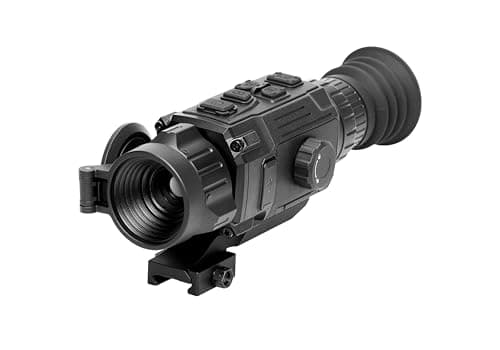
- Five years on ATN's ThOR 6 line under its published warranty terms, and five years on RIX's Storm S3 and S6R.
- Five years for US buyers under AGM's current warranty terms.
- Three years, rising to five with registration on Pulsar's Talion XQ35 Pro — registration is free and most buyers never do it.
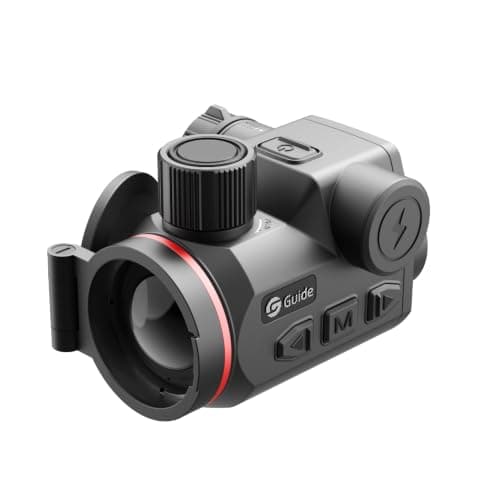
- Ten years on the thermal sensor on the Guide Orion 635 clip-on, the longest sensor cover in our registry.
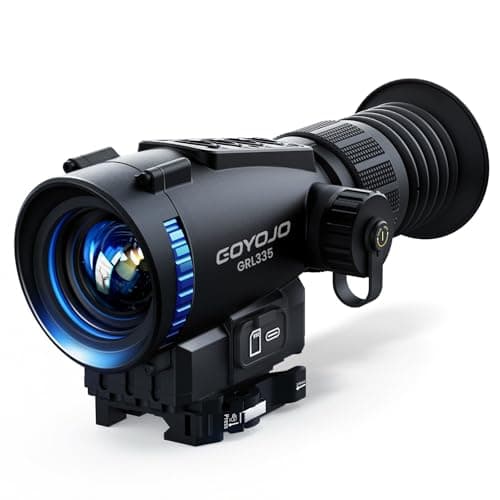
- Three years on several of the value brands, and in a few cases no published term at all — the GOYOJO GRS225 lists one year, and Holosun's DRS-TH product page lists no warranty length.
Read those as expected-life signals, not insurance policies. A five-year term on a sensor the maker expects to outlive it is cheap for them to offer; a one-year term tells you something.
Batteries: the real clock
If you want a thermal to last a decade, buy one whose power is replaceable. The pattern across our registry is consistent:
- Standard swappable cells (18650, 21700, 18500) are the best case. They are commodity parts; in year six you buy new ones for the price of a bag of corn.
- Proprietary packs are a middle case. Pulsar's APS packs are excellent and available — as long as Pulsar keeps selling them.
- A sealed internal cell is the worst case. When it will no longer hold a sit, your options are a service center or a new optic. Several budget scopes and monoculars are built this way, and it is the quietest limitation on a cheap thermal.
Store cells at partial charge rather than full or empty, keep them out of a hot truck cab in July, and replace any cell that has become noticeably shorter-lived rather than nursing it through a season.
Firmware and app support
This is the part buyers never think about and later notice. Thermal features increasingly live in software: ballistic calculators, stadiametric ranging, palettes, streaming, image detail modes. Those arrive and improve by firmware update, and the makers who ship them consistently — the ones with named apps and a support page you can find — are the ones whose five-year-old scopes still feel current.
Before you buy, check that the maker publishes firmware downloads and an app that was updated this year. A superseded line is the warning sign: ATN's own ThOR 5 pages, for instance, leave out NETD, battery, IP and recoil figures that the current ThOR 6 pages publish — the newer line is where the attention is going.
Our picks for this job
Built to still be working in five years
The three optics in our registry whose published paperwork — warranty, ingress rating, recoil rating and replaceable power — points hardest at a long life.
Best clip-on for hog ID
Guide Orion 635
$1,000 to $2,0008.3/10ResearchedA ten-year warranty on the thermal sensor, IP67, 6,000 J and two swappable 18500 cells. The longest sensor cover we list.
Check price · Amazon#ad · Price as of November 3, 2026 · How we make money for the link to Guide Orion 635
Best rugged, lightweight thermal under $1,000
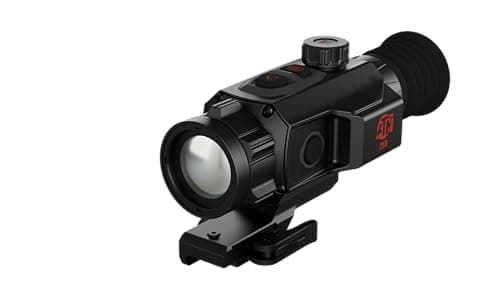
ATN ThOR 6 Mini 256 3.5-28x
$500 to $1,0007.4/10ResearchedFive years, IP67, a published 6000 J recoil rating and a -22F to 131F operating range, on swappable 18650s with USB-C power.
$795.00Amazon#ad · Price as of November 3, 2026 · How we make money for the link to ATN ThOR 6 Mini 256 3.5-28x
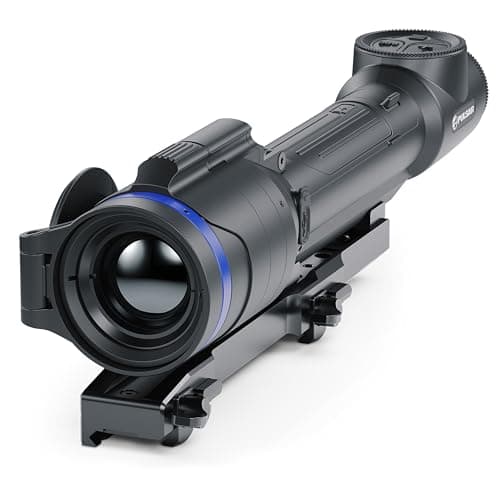
Best compact thermal for close brush hogs
Pulsar Talion XQ35 Pro
$1,000 to $2,0007.9/10ResearchedA magnesium-alloy body, IPX7 and 6000 J, with three years of cover rising to five if you register it. Replaceable APS 5T pack.
$1,767.55Amazon#ad · Price as of November 3, 2026 · How we make money for the link to Pulsar Talion XQ35 Pro
How to make one last longer
- Never point it at the sun. Not through the objective, not with the cap off on the dash of a truck. This is the one failure mode that is both permanent and uncovered.
- Cap the objective when it is not in use. A germanium lens with its coating scratched is a soft picture forever.
- Check mount screws every few outings. Torque them properly once, then verify. Most "lost zero" stories end here.
- Dry it before it goes in the case. An IP rating keeps water out of the housing; it does not dry the mount, the rail or the battery contacts.
- Clean the lens properly or not at all. Blow dust off first, then a dedicated lens cloth. A shirt sleeve on a coated lens is a mistake you only make once.
- Keep cells out of extreme heat. A summer truck cab ages lithium faster than a season of hunting does.
- Update firmware before the season, not during it. And write down your zero profiles first.
What to look for if longevity matters
- A published warranty term in years. Five is normal from the established brands. One year, or none listed, is a signal.
- Swappable, commodity batteries. 18650 and 21700 cells will still be sold in a decade.
- A published IP rating. IP67 or IPX7. Several value scopes publish none — see our Rattler vs RIX Storm comparison for how visible that gap is between two popular lines.
- A recoil rating in joules. 6000 J means the maker has committed to a figure for semi-auto use.
- A current product line. Buying last generation saves money and buys you fewer years of software support.
- A maker with a findable support page. Firmware, manuals and a warranty claim process you can read before you need it.
Mistakes that shorten a scope's life
- Sun exposure. Permanent, uncovered, and entirely avoidable with a lens cap.
- Skipping registration. Two free years of cover left on the table.
- Leaving it mounted in a truck year-round. Heat, vibration and dust, continuously.
- Buying a sealed-battery scope for long sits. You are buying a battery with an optic attached to it.
- Treating no IP rating as waterproof. It is not a claim the maker made.
- Ignoring a mount that needs re-torquing. The cheapest failure to fix and the most expensive to ignore mid-hunt.
How we scored this
Every score, built from the published record
Every pick here is labeled Researched: we read each maker's published specs, manuals and warranty terms, compare products only against others in the same budget tier, and score them on a public rubric. Every figure links to where it came from, and seller performance numbers are labeled “maker's claim,” so you can see exactly what you are buying.
Scores are our editorial read of that documented evidence. Commissions never set a score or decide a pick. The rubric and its weights are published.
What changed
- Published.
Questions
Frequently asked
How long does a thermal scope last?
Do thermal sensors wear out?
Which thermal scope has the longest warranty?
Can you replace the battery in a thermal scope?
Is it worth buying a used thermal scope?
Receipts
Sources
- ATN: ThOR 6 Mini 256 3.5-28x product page, including five-year warranty and ratings (checked 2026-10-17)
- ATN: limited warranty terms (checked 2026-10-17)
- AGM Global Vision: warranty terms, five years for US purchases (checked 2026-10-17)
- Pulsar: Talion XQ35 Pro product page, three-year warranty extending to five with registration (checked 2026-10-17)
- Guide: Orion O635CS clip-on product page, ten-year thermal sensor warranty (checked 2026-10-17)
- RIX Optics: Storm S3 product page, five-year warranty (checked 2026-10-17)
Specs come from each maker's own pages or the product listing (linked on every product), hog biology and trapping advice from Texas A&M AgriLife, and rules from TPWD and Texas statute. Prices are set by Amazon and change often, so we don't print them. Where a figure isn't published, we say so. Read the full method.