The contenders
Side by side
DNT's best night vision scope
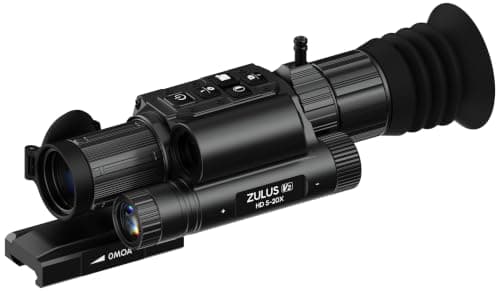
DNT Optics Zulus HD V2 LRF
$500 to $1,0008.0/10Up to 10 hours per 21700 with two included, a 1,100 yd rangefinder and ballistic calculator, a 60 Hz 1080p micro-OLED, IP67 and a .50 BMG rating. The IR wavelength is not published.
$599.99Amazon#ad · Price as of November 3, 2026 · How we make money for the link to DNT Optics Zulus HD V2 LRF
PARD's best value night vision scope
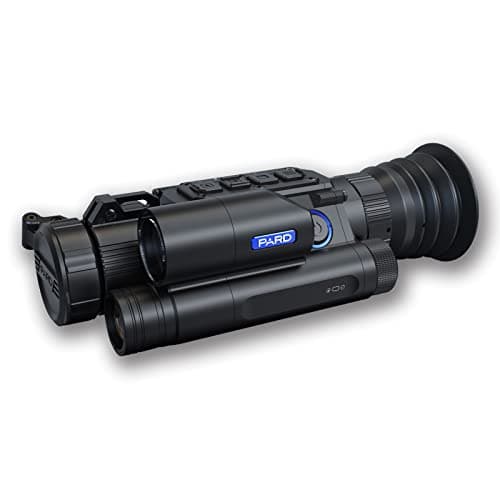
PARD NV008SP2-LRF
Under $5008.2/10A tier cheaper: 2688x1520 sensor, a choice of 850 or 940 nm VCSEL IR, a 1,200 yd rangefinder, a ballistic calculator, IP67 and 6,000 J. The 4.5x to 6.5x base is a narrow window.
$499.00Amazon#ad · Price as of November 3, 2026 · How we make money for the link to PARD NV008SP2-LRF
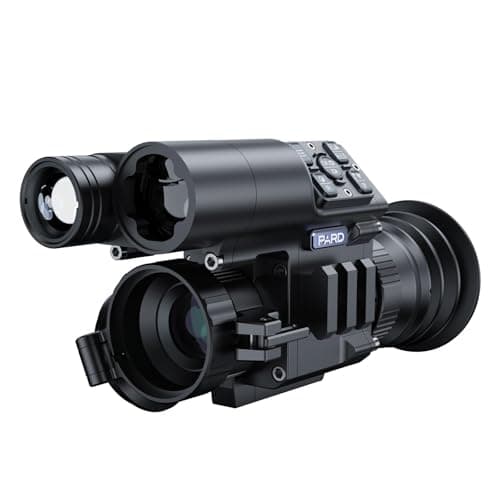
PARD's clip-on route
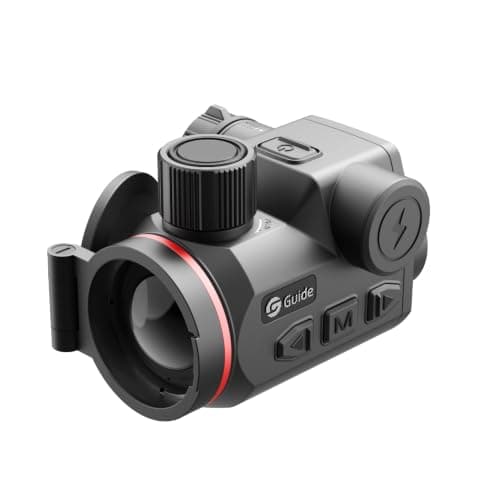
PARD FD1 LRF
$500 to $1,0007.3/10Keeps your day scope and its zero: a 1x front clip-on with a 1920x1080 sensor, 850 or 940 nm IR, a 1,200 yd laser and recoil-activated video. Check the objective adapter fit first.
$549.00Amazon#ad · Price as of November 3, 2026 · How we make money for the link to PARD FD1 LRF
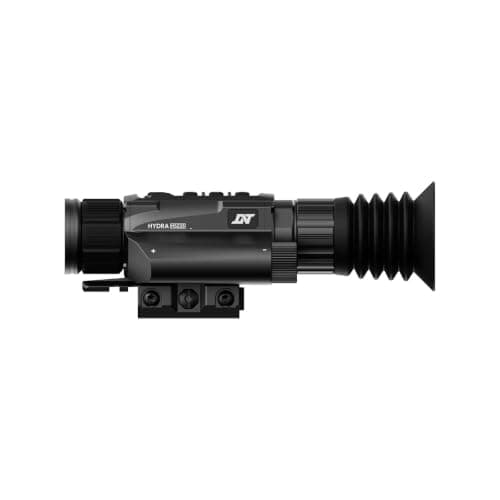
DNT's thermal, and its most flexible unit
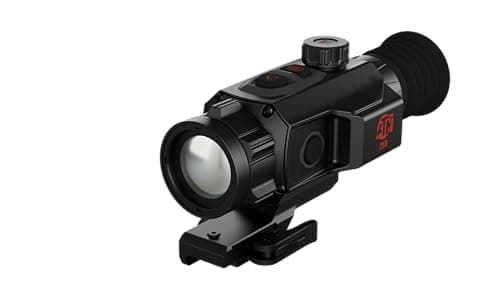
DNT Optics Hydra HS225
$500 to $1,0007.1/10A 256 thermal that works as a scope, a clip-on or a handheld, with .50 BMG, IP67 and a 1024x768 micro-OLED. The 3x base and 5.5 hours are the compromises.
$799.99Amazon#ad · Price as of November 3, 2026 · How we make money for the link to DNT Optics Hydra HS225
Who these two brands are
Both PARD and DNT Optics sell direct and through Amazon in the tiers where most hog hunters actually buy, and both publish full spec tables — which is why they end up compared against each other rather than against Pulsar or AGM. They are not identical in what they sell:
- PARD builds digital night vision, including a front clip-on, and is explicit about its infrared wavelengths. Its rangefinding models carry a laser out to 1,200 yd.
- DNT Optics builds both digital night vision and thermal, leans on battery life and recoil ratings, and puts a ballistic calculator you can tune in its app on the night vision side.
Everything below is from the makers' own published specifications on October 17, 2026. We do not test optics, and where a figure is missing from a product page we say so instead of estimating it.
The four units side by side
The wavelength question, and why it is PARD's advantage
Both of PARD's units here are sold in 850 nm and 940 nm versions, stated on the product page. DNT lists a built-in illuminator on the Zulus HD V2 but does not publish the wavelength. That gap matters on a pressured property:
- 850 nm throws further and gives a brighter picture, at the cost of a faint red glow visible at the emitter.
- 940 nm is far less visible to the naked eye and costs you range and image brightness.
If your hogs have been shot at over a lit feeder and have started arriving later each week, being able to choose 940 nm is worth real money. If you hunt a quiet property, 850 nm is the better picture and the question does not arise. Our IR illuminator page covers what each wavelength actually costs in throw.
Battery and recoil: DNT's half of the argument
DNT rates the Zulus HD V2 at up to 10 hours per 21700 cell with two cells included — the longest figure of these four, and enough to cover a full night with a spare untouched. PARD rates both its units at up to 8 hours on an 18650, which is still respectable and more than most digital night vision in this bracket.
On recoil, DNT publishes .50 BMG for both the Zulus and the Hydra; PARD publishes 6,000 J for both of its units. Those are different measures of the same reassurance, and on a 5.56 or 300 Blackout AR either is far more than you need. Both brands publish IP67 across all four units, and both warrant their optics for two years.
Thermal or night vision: only one of them sells both
This is the biggest practical difference between the brands. PARD, in our registry, is a digital night vision maker: it needs an infrared illuminator to see, it shows you a picture that looks like the world, and it works in daylight. DNT sells that and thermal — the Hydra HS225 is a 256x192 at ≤25 mK behind a 25 mm lens.
If you already know you want heat detection, DNT is the brand with a route to it at this price. If you want the cheapest capable optic for a lit feeder, PARD's NV008SP2-LRF leads our under-$500 ranking. The choice between the two technologies is worked through on thermal vs night vision for hog hunting, and it matters more than the brand does.
The clip-on difference
Both brands offer a way to keep the day scope you already own, and they do it differently:
- PARD FD1 LRF is a dedicated 1x night vision front clip-on: a 1920x1080 sensor at 2.9 µm behind a 30 mm objective, 850 or 940 nm IR rated to about 380 yd, a 1,200 yd laser, recoil-activated video and IP67. Your zero and reticle carry over unchanged.
- DNT Hydra HS225 is a thermal that can be a clip-on — it also works as a standalone scope or a handheld scanner, which is unusual value if you want one unit to do three jobs.
The trade on the Hydra is the 3x base magnification, which is narrow for close scanning, and 5.5 rated hours. Our clip-on vs thermal scope pagecovers whether the clip-on route suits your rifle at all.
Which brand to buy
Buy DNT if you want the longest battery on a night vision scope, the heaviest published recoil rating, a ballistic calculator you can tune in an app, or a single unit that works as scope, clip-on and handheld. The Zulus HD V2 LRF is the better scope of the two brands' flagships here.
Buy PARD if you want a stated IR wavelength — particularly 940 nm for pressured hogs — the cheapest capable rangefinding night vision scope on the page, or a true 1x night vision clip-on that preserves your day scope and zero.
If you are weighing DNT against the other brand people put it up against, see Sightmark Wraith vs DNT Zulus.
In detail
The contenders, in full
DNT's best night vision scope
DNT Optics Zulus HD V2 LRF
Up to 10 hours per 21700 with two included, a 1,100 yd rangefinder and ballistic calculator, a 60 Hz 1080p micro-OLED, IP67 and a .50 BMG rating. The IR wavelength is not published.
Published specsResearched · every spec sourced
| Sensor | Sony STARVIS 2; 1920x1080 at 60 Hz |
|---|---|
| Magnification | 3-12x (ZHD312R-V2; a 5-20x ZHD520R-V2 is also sold) |
| IR illuminator | Built in |
| Display | 1920x1080 micro-OLED, 60 Hz |
| Rangefinder | 5-1,100 ydMaker's claim |
| Ballistic calculator | Built in; adjustable in the DNT app |
| Recording | 1800x1080 video; 32 GB built in; Wi-Fi |
| Battery | 21700; up to 10 h; 2 included; USB-C external power |
| IP rating | IP67 |
| Recoil rating | .50 BMG |
| Weight | 18.4 oz (522 g) |
| Warranty | 2 years on night vision and thermal products |
How the 8.0 score breaks down
- Image & IR (30%)
- 7.5
- Usability (20%)
- 8.5
- Recording, LRF & ballistics (15%)
- 8.5
- Battery (15%)
- 9
- Warranty (10%)
- 6
- Value (10%)
- 8
What the specs support
- Rated up to 10 hours per 21700 battery, with two included
- 60 Hz 1920x1080 micro-OLED display
- Rangefinder plus ballistic calculator
- IP67 and a .50 BMG recoil rating
Where it falls short
- IR wavelength isn't stated on the product page
- 2-year warranty
- The Amazon title doesn't say 3-12x or 5-20x; check the listing before buying
Skip this if…
…You specifically want a 940 nm illuminator for a less visible glow; DNT doesn't publish this scope's wavelength.
#ad · Price as of November 3, 2026 · How we make money for the link to DNT Optics Zulus HD V2 LRF
PARD's best value night vision scope
PARD NV008SP2-LRF
A tier cheaper: 2688x1520 sensor, a choice of 850 or 940 nm VCSEL IR, a 1,200 yd rangefinder, a ballistic calculator, IP67 and 6,000 J. The 4.5x to 6.5x base is a narrow window.
Published specsResearched · every spec sourced
| Sensor | 2688x1520 CMOS; 0.001 lux |
|---|---|
| Objective lens | 50 mm or 70 mm |
| Magnification | 4.5x or 6.5x optical; 2x digital (4.5-9x / 6.5-13x) |
| IR illuminator | Built-in 5 W VCSEL, 3 levels, 350 mMaker's claim |
| IR wavelength | 850 nm or 940 nm (two versions) |
| Display | 1440x1080 OLED |
| Rangefinder | Up to 1,200 yd (LRF version)Maker's claim |
| Ballistic calculator | Built in |
| Recording | Self-activated (on the shot) and loop recording; microSD up to 128 GB |
| Battery | 18650; up to 8 h; USB-C external power |
| IP rating | IP67 |
| Recoil rating | 6,000 J |
| Weight | 495 g with battery |
| Warranty | 2-year limited |
How the 8.2 score breaks down
- Image & IR (30%)
- 8.5
- Usability (20%)
- 8
- Recording, LRF & ballistics (15%)
- 9
- Battery (15%)
- 7.5
- Warranty (10%)
- 6
- Value (10%)
- 9.5
What the specs support
- Sold in 850 nm and 940 nm IR versions
- Rangefinder feeds a built-in ballistic calculator
- IP67 and a 6,000 J recoil rating
- Records automatically on the shot
Where it falls short
- Narrow view: about 6.4° horizontal on the 50 mm and 4.6° on the 70 mm
- 2-year limited warranty
Skip this if…
…You need a wide view to follow hogs moving at feeder range; the 4.5x-6.5x base magnification is narrow up close.
#ad · Price as of November 3, 2026 · How we make money for the link to PARD NV008SP2-LRF
PARD's clip-on route
PARD FD1 LRF
Keeps your day scope and its zero: a 1x front clip-on with a 1920x1080 sensor, 850 or 940 nm IR, a 1,200 yd laser and recoil-activated video. Check the objective adapter fit first.
Published specsResearched · every spec sourced
| Sensor | 1920x1080 CMOS; 2.9 µm pixels |
|---|---|
| Objective lens | 30 mm |
| Magnification | 1x (clip-on) |
| IR illuminator | Built in, 3 levels; up to 380 yd (350 m)Maker's claim |
| IR wavelength | 850 nm or 940 nm (two versions) |
| Display | 1440x1080 OLED |
| Rangefinder | Up to 1,200 ydMaker's claim |
| Recording | Self-activated (on the shot) and loop recording; microSD up to 128 GB |
| Battery | 18650; up to 8 h; USB-C external power |
| IP rating | IP67 |
| Recoil rating | 6,000 J |
| Warranty | 2-year limited |
How the 7.3 score breaks down
- Image & IR (30%)
- 7.5
- Usability (20%)
- 7
- Recording, LRF & ballistics (15%)
- 7.5
- Battery (15%)
- 7.5
- Warranty (10%)
- 6
- Value (10%)
- 7.5
What the specs support
- Keeps your existing day scope on the rifle
- Sold in 850 nm and 940 nm IR versions
- Built-in laser rangefinder
- IP67 and a 6,000 J recoil rating
Where it falls short
- PARD's spec table lists the ballistic calculator for the FD1, not the FD1-LRF clip-on
- Listed as not in stock on PARD USA's own store when checked
- 2-year limited warranty
Skip this if…
…Your day scope's objective doesn't fit PARD's adapters; PARD's store lists a 63 mm adapter option, so check the fit first.
#ad · Price as of November 3, 2026 · How we make money for the link to PARD FD1 LRF
DNT's thermal, and its most flexible unit
DNT Optics Hydra HS225
A 256 thermal that works as a scope, a clip-on or a handheld, with .50 BMG, IP67 and a 1024x768 micro-OLED. The 3x base and 5.5 hours are the compromises.
Published specsResearched · every spec sourced
| Sensor | 256x192 |
|---|---|
| Pixel pitch | 12 µm |
| NETD | ≤25 mK |
| Lens | 25 mm |
| Magnification | 3x base; 3-12x digital |
| Refresh rate | 50 Hz |
| Display | 1024x768 micro-OLED |
| Battery | 18650; up to 5.5 h; USB-C external power |
| Recording | 32 GB built in; Wi-Fi (DNT app) |
| IP rating | IP67 |
| Recoil rating | .50 BMG (800 G) |
| Weight | 13.1 oz (372 g) |
| Modes | 3-in-1: standalone scope, clip-on or handheld |
| Warranty | 2 years on night vision and thermal products |
How the 7.1 score breaks down
- Sensor & lens for hog ID (30%)
- 6.2
- Usability at night (20%)
- 7.5
- Battery & power (15%)
- 6.5
- Durability (15%)
- 8.5
- Warranty & support (10%)
- 6.5
- Value within its tier (10%)
- 8
What the specs support
- Works as a scope, a clip-on or a handheld
- .50 BMG recoil rating and IP67
- 1024x768 micro-OLED display
- DNT's Super Resolution processing (the maker says a 256 image looks like a typical 384)
Where it falls short
- 3x base magnification narrows the view for close scanning
- Rated up to 5.5 hours per battery
- 2-year warranty on thermal products
Skip this if…
…You mostly need a wide, close-range view in brush; the 3x base magnification is narrow for that.
#ad · Price as of November 3, 2026 · How we make money for the link to DNT Optics Hydra HS225
Mistakes buyers make between these brands
- Comparing a thermal to a night vision unit on price. They solve different problems. Decide the technology first, then the brand.
- Assuming a bigger sensor number is a better night picture. PARD's 2688x1520 sensor is impressive on paper; the display, the lens and the illuminator decide what you actually see after dark.
- Ignoring the unpublished wavelength. If 940 nm matters to you, DNT's page does not tell you what you are getting.
- Overlooking base magnification. PARD's 4.5x to 6.5x and the Hydra's 3x are both narrow windows for hogs at feeder distance.
- Buying a clip-on without measuring the objective. PARD lists adapter options; check your day scope's bell diameter before ordering.
- Expecting either brand to find hogs in cover with night vision. Only thermal does that. Nothing else on this page will.
How we scored this
Every score, built from the published record
Every pick here is labeled Researched: we read each maker's published specs, manuals and warranty terms, compare products only against others in the same budget tier, and score them on a public rubric. Every figure links to where it came from, and seller performance numbers are labeled “maker's claim,” so you can see exactly what you are buying.
Scores are our editorial read of that documented evidence. Commissions never set a score or decide a pick. The rubric and its weights are published.
What changed
- Published.
Questions
Frequently asked
Is PARD or DNT better for hog hunting?
Does DNT publish its IR wavelength?
Does PARD make a thermal scope?
Which has the better warranty?
Can I keep my day scope with either brand?
Receipts
Sources
- PARD USA: NV008SP2 night vision rifle scope product page and spec table (checked 2026-10-17)
- PARD USA: FD1-LRF night vision front clip-on product page and spec table (checked 2026-10-17)
- DNT Optics: Zulus HD V2 3-12x digital night vision scope with LRF product page (checked 2026-10-17)
- DNT Optics: Hydra HS225 multi-function thermal product page and spec table (checked 2026-10-17)
- TPWD: Outdoor Annual, Nongame and Other Species, feral hogs (checked 2026-10-17)
- Texas Parks & Wildlife Code §62.005, Hunting with Light (texas.public.law; checked 2026-10-17)
Specs come from each maker's own pages or the product listing (linked on every product), hog biology and trapping advice from Texas A&M AgriLife, and rules from TPWD and Texas statute. Prices are set by Amazon and change often, so we don't print them. Where a figure isn't published, we say so. Read the full method.