The contenders
Side by side
The better buy for a full night
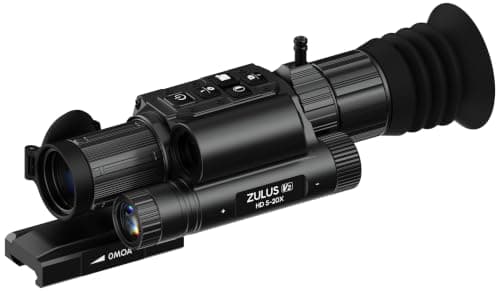
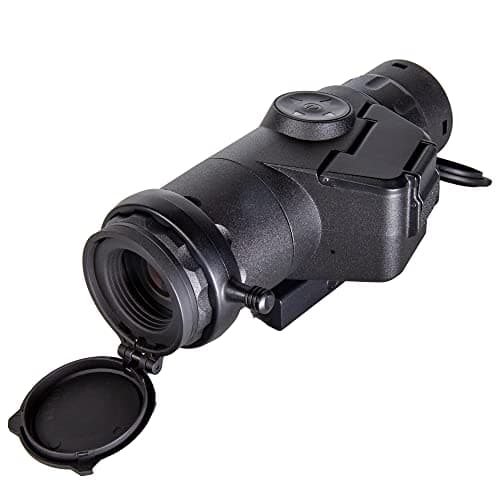
DNT Optics Zulus HD V2 LRF
$500 to $1,0008.0/10Rated up to 10 hours per 21700 with two cells included, a 1,100 yd rangefinder feeding a ballistic calculator, a 60 Hz 1080p micro-OLED, IP67 and a .50 BMG recoil rating. DNT does not publish its IR wavelength.
$599.99Amazon#ad · Price as of November 3, 2026 · How we make money for the link to DNT Optics Zulus HD V2 LRF
Buy it for the size and the reticles
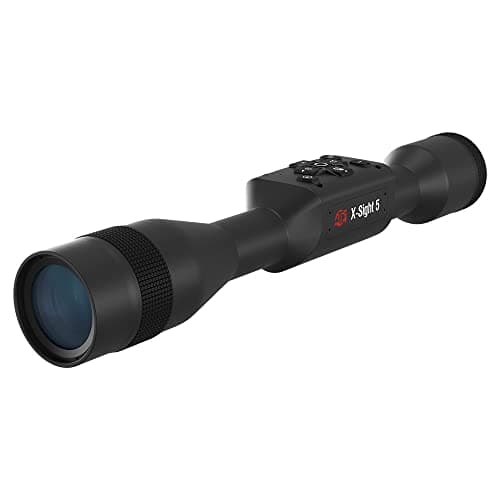
Sightmark Wraith 4K Mini
$500 to $1,0006.5/1021.6 oz, a 4K sensor, 14 reticle options including four first-focal-plane, and an 850 nm illuminator in the box. Rated 3.6 to 4.4 hours on two CR123A primaries, IPX6, and 32°F is the bottom of its range.
$759.97Amazon#ad · Price as of November 3, 2026 · How we make money for the link to Sightmark Wraith 4K Mini
If the budget is the constraint
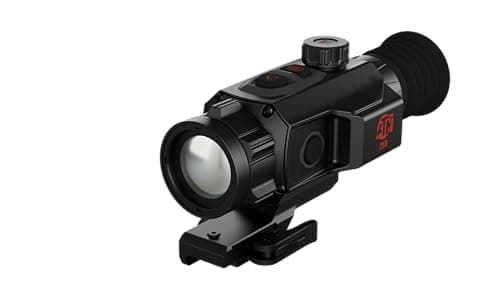
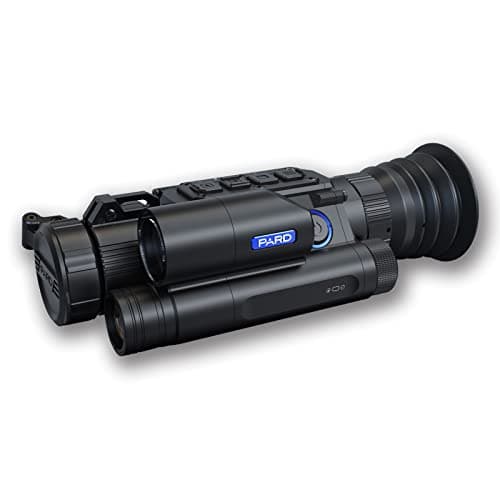
PARD NV008SP2-LRF
Under $5008.2/10A tier below both: a 2688x1520 sensor, a choice of 850 or 940 nm VCSEL IR, a 1,200 yd rangefinder, a ballistic calculator, IP67 and 6,000 J. The view is narrow at 4.5x to 6.5x base.
$499.00Amazon#ad · Price as of November 3, 2026 · How we make money for the link to PARD NV008SP2-LRF
What both of these are, and what neither is
Both are digital night vision day/night riflescopes: a low-light camera sensor behind glass, a screen in the eyepiece and an infrared illuminator to light what the sensor cannot see unaided. Both work in daylight, which thermal does not do well, and both show you a picture that looks like the world rather than a heat map — so you can read the difference between a hog, a calf and a cedar stump.
Neither detects heat. A hog bedded in brush is invisible to both and obvious to a thermal, and neither sees further than its illuminator throws. If your hogs come to a feeder or a known crossing and you want to watch it and shoot what arrives, digital night vision is the sensible, cheaper route. If you need to find animals in cover across open pasture, you want thermal — we work that through on thermal vs night vision for hog hunting.
Battery: the decisive gap, and it is not close
This is the comparison. DNT rates the Zulus HD V2 at up to 10 hours on one 21700 cell and includes two of them. Sightmark rates the Wraith 4K Mini at 3.6 hours recording and 4.4 hours in preview on two CR123A primaries — cells you buy, use and throw away.
A hog sit from last light to 2 a.m. is roughly six hours. The Zulus covers that on one cell with a spare in your pocket. The Wraith does not cover it once without a battery change or external power, and the cells it burns are not rechargeable. Sightmark does provide USB-C external power and in practice that is how people run it, which means a pack, a cable and somewhere to strap it.
Specs side by side
The rangefinder question
The Zulus carries a laser rangefinder reading from 5 to 1,100 yd, and it feeds a ballistic calculator you can adjust in DNT's app. The Wraith 4K Mini has neither. On a known feeder at a paced distance that changes nothing. On a pasture at 180 yards in the dark it changes the shot, because a digital night vision picture strips out most of the depth cues you normally judge distance with.
Sightmark's published night detection claim for the Mini is 300 yd, which is the useful ceiling to plan around: inside that, range estimation errors are small enough to live with on a hog-sized target. If most of your shooting is further out than that, you are buying the wrong class of optic rather than the wrong model — see best thermal scope for hog hunting.
The illuminator, and the one number DNT does not publish
Sightmark ships an 850 nm LED illuminator rated around 1,060 mW on high with the Wraith 4K Mini, and states the wavelength plainly. DNT lists a built-in illuminator on the Zulus but does not publish its wavelength, which is the one spec gap that could matter to you: 850 nm throws further but shows a faint red glow at the emitter, while 940 nm is far less visible and costs you range.
On pressured hogs that have been shot at over a lit feeder, people do notice the difference. If you want a confirmed 940 nm option, the PARD below is sold in both wavelengths. If you want more reach than either built-in unit gives, a separate illuminator is the usual fix — our IR illuminator rankings cover that.
Weather, cold and recoil
The Zulus publishes IP67 and a .50 BMG recoil rating at 18.4 oz. The Wraith 4K Mini publishes IPX6 — water resistant, not submersible — a .308 Win rating, and an operating range that starts at 32°F. For a Texas hog hunter that last figure is the quiet one: a January sit in the Panhandle or the Hill Country sits below freezing often enough to matter, and it is the maker's own stated limit, not ours.
On an AR in 5.56 or 300 Blackout either rating is ample. The Wraith's .308 limit only becomes a real constraint if the scope moves to a magnum rifle later.
Which to buy
Buy the DNT Zulus HD V2 LRF if you hunt whole nights, shoot past 100 yards, or want ranging and a ballistic solution in the scope. It outlasts the Wraith by a factor of two or more on paper, takes rechargeable 21700s with two included, is rated IP67 and tolerates far more recoil.
Buy the Sightmark Wraith 4K Mini if you want the smallest, lightest package, hunt short sits over a lit feeder inside 300 yards, value 14 reticle choices including four first-focal-plane options, and want the better daylight picture from a 4K sensor on a rifle that gets used in daytime too. Budget for a USB-C power pack with it, not as an upgrade.
The cheaper third option
If the budget is the real constraint, the PARD NV008SP2-LRF sits a tier below both and still publishes a 2688x1520 sensor, a 1,200 yd rangefinder, a ballistic calculator, IP67, a 6,000 J recoil rating, up to 8 hours on an 18650, and a choice of 850 or 940 nm VCSEL IR. What you give up is the view: 4.5x or 6.5x base magnification is a narrow window for hogs moving at feeder distance. It leads our under-$500 night vision ranking.
For the Wraith on its own terms rather than against the Zulus, see our Sightmark Wraith 4K Mini review.
In detail
The contenders, in full
The better buy for a full night
DNT Optics Zulus HD V2 LRF
Rated up to 10 hours per 21700 with two cells included, a 1,100 yd rangefinder feeding a ballistic calculator, a 60 Hz 1080p micro-OLED, IP67 and a .50 BMG recoil rating. DNT does not publish its IR wavelength.
Published specsResearched · every spec sourced
| Sensor | Sony STARVIS 2; 1920x1080 at 60 Hz |
|---|---|
| Magnification | 3-12x (ZHD312R-V2; a 5-20x ZHD520R-V2 is also sold) |
| IR illuminator | Built in |
| Display | 1920x1080 micro-OLED, 60 Hz |
| Rangefinder | 5-1,100 ydMaker's claim |
| Ballistic calculator | Built in; adjustable in the DNT app |
| Recording | 1800x1080 video; 32 GB built in; Wi-Fi |
| Battery | 21700; up to 10 h; 2 included; USB-C external power |
| IP rating | IP67 |
| Recoil rating | .50 BMG |
| Weight | 18.4 oz (522 g) |
| Warranty | 2 years on night vision and thermal products |
How the 8.0 score breaks down
- Image & IR (30%)
- 7.5
- Usability (20%)
- 8.5
- Recording, LRF & ballistics (15%)
- 8.5
- Battery (15%)
- 9
- Warranty (10%)
- 6
- Value (10%)
- 8
What the specs support
- Rated up to 10 hours per 21700 battery, with two included
- 60 Hz 1920x1080 micro-OLED display
- Rangefinder plus ballistic calculator
- IP67 and a .50 BMG recoil rating
Where it falls short
- IR wavelength isn't stated on the product page
- 2-year warranty
- The Amazon title doesn't say 3-12x or 5-20x; check the listing before buying
Skip this if…
…You specifically want a 940 nm illuminator for a less visible glow; DNT doesn't publish this scope's wavelength.
#ad · Price as of November 3, 2026 · How we make money for the link to DNT Optics Zulus HD V2 LRF
Buy it for the size and the reticles
Sightmark Wraith 4K Mini
21.6 oz, a 4K sensor, 14 reticle options including four first-focal-plane, and an 850 nm illuminator in the box. Rated 3.6 to 4.4 hours on two CR123A primaries, IPX6, and 32°F is the bottom of its range.
Published specsResearched · every spec sourced
| Sensor | 4K (3840x2160) CMOS |
|---|---|
| Magnification | 2-16x32 or 4-32x32 (two models) |
| IR illuminator | Included LED unit; about 1,060 mW on high |
| IR wavelength | 850 nm |
| Night detection range | 300 yd (274 m)Maker's claim |
| Display | 1280x720 FLCOS |
| Recording | 1080p or 4K video with audio; microSD up to 256 GB |
| Reticle | 14 options (10 second focal plane, 4 first focal plane) in 9 colors |
| Battery | 2x CR123A; 3.6 h video / 4.4 h preview; USB-C external power |
| IP rating | IPX6 (water resistant) |
| Recoil rating | .308 Win |
| Weight | 21.6 oz with batteries |
How the 6.5 score breaks down
- Image & IR (30%)
- 7
- Usability (20%)
- 8
- Recording, LRF & ballistics (15%)
- 6.5
- Battery (15%)
- 4.5
- Warranty (10%)
- 5
- Value (10%)
- 6.5
What the specs support
- 4K sensor with an 850 nm illuminator included
- First-focal-plane reticle options
- USB-C external power input
- Rated for recoil up to .308 Win
Where it falls short
- Rated 3.6-4.4 hours on 2x CR123A
- IPX6 water resistant, not waterproof
- Operating range starts at 32°F
Skip this if…
…You hunt on nights below freezing; Sightmark rates the operating range from 32°F up.
#ad · Price as of November 3, 2026 · How we make money for the link to Sightmark Wraith 4K Mini
If the budget is the constraint
PARD NV008SP2-LRF
A tier below both: a 2688x1520 sensor, a choice of 850 or 940 nm VCSEL IR, a 1,200 yd rangefinder, a ballistic calculator, IP67 and 6,000 J. The view is narrow at 4.5x to 6.5x base.
Published specsResearched · every spec sourced
| Sensor | 2688x1520 CMOS; 0.001 lux |
|---|---|
| Objective lens | 50 mm or 70 mm |
| Magnification | 4.5x or 6.5x optical; 2x digital (4.5-9x / 6.5-13x) |
| IR illuminator | Built-in 5 W VCSEL, 3 levels, 350 mMaker's claim |
| IR wavelength | 850 nm or 940 nm (two versions) |
| Display | 1440x1080 OLED |
| Rangefinder | Up to 1,200 yd (LRF version)Maker's claim |
| Ballistic calculator | Built in |
| Recording | Self-activated (on the shot) and loop recording; microSD up to 128 GB |
| Battery | 18650; up to 8 h; USB-C external power |
| IP rating | IP67 |
| Recoil rating | 6,000 J |
| Weight | 495 g with battery |
| Warranty | 2-year limited |
How the 8.2 score breaks down
- Image & IR (30%)
- 8.5
- Usability (20%)
- 8
- Recording, LRF & ballistics (15%)
- 9
- Battery (15%)
- 7.5
- Warranty (10%)
- 6
- Value (10%)
- 9.5
What the specs support
- Sold in 850 nm and 940 nm IR versions
- Rangefinder feeds a built-in ballistic calculator
- IP67 and a 6,000 J recoil rating
- Records automatically on the shot
Where it falls short
- Narrow view: about 6.4° horizontal on the 50 mm and 4.6° on the 70 mm
- 2-year limited warranty
Skip this if…
…You need a wide view to follow hogs moving at feeder range; the 4.5x-6.5x base magnification is narrow up close.
#ad · Price as of November 3, 2026 · How we make money for the link to PARD NV008SP2-LRF
Mistakes buyers make between these two
- Buying on sensor resolution. 4K sounds decisive and is not: the display, the lens and the illuminator set what you see at night. The Zulus' 60 Hz 1080p micro-OLED is a better night picture than a 4K sensor behind a 1280x720 FLCOS screen.
- Ignoring what the batteries cost to run. Two CR123A primaries per 4 hours, across a season, is a real line item against two rechargeable 21700s.
- Missing the 32°F floor. It is on Sightmark's own spec sheet, and winter is when hogs move in daylight-cold.
- Assuming a rangefinder is a luxury. Past 150 yards in the dark it is the difference between a hold and a guess.
- Expecting either to find hogs in cover. Neither sees heat. If finding is the problem, add a thermal monocular to scan with and keep the night vision on the rifle.
How we scored this
Every score, built from the published record
Every pick here is labeled Researched: we read each maker's published specs, manuals and warranty terms, compare products only against others in the same budget tier, and score them on a public rubric. Every figure links to where it came from, and seller performance numbers are labeled “maker's claim,” so you can see exactly what you are buying.
Scores are our editorial read of that documented evidence. Commissions never set a score or decide a pick. The rubric and its weights are published.
What changed
- Published.
Questions
Frequently asked
Is the Sightmark Wraith or the DNT Zulus better for hog hunting?
How long does the Sightmark Wraith 4K Mini run on a set of batteries?
What IR wavelength does the DNT Zulus use?
Can either scope be used in daylight?
Do I still need a separate IR light?
Receipts
Sources
- Sightmark: Wraith 4K Mini 2-16x32 digital riflescope product page and spec table (checked 2026-10-17)
- DNT Optics: Zulus HD V2 3-12x digital night vision scope with LRF product page and specifications (checked 2026-10-17)
- PARD USA: NV008SP2 night vision rifle scope product page and spec table (checked 2026-10-17)
- TPWD: Outdoor Annual, Nongame and Other Species, feral hogs (checked 2026-10-17)
- Texas Parks & Wildlife Code §62.005, Hunting with Light (texas.public.law; checked 2026-10-17)
Specs come from each maker's own pages or the product listing (linked on every product), hog biology and trapping advice from Texas A&M AgriLife, and rules from TPWD and Texas statute. Prices are set by Amazon and change often, so we don't print them. Where a figure isn't published, we say so. Read the full method.