Not legal advice. This page summarizes Texas rules from the official sources linked in the text (TPWD Outdoor Annual, valid Sep 1, 2026 through Aug 31, 2027). Rules checked . Laws change: confirm the current rules with Texas Parks and Wildlife and your local game warden before you rely on them.
Why they are in your yard, and why that is the useful question
Feral hogs in neighborhoods are not an accident or a one-off. Texas A&M has been documenting the pattern for years — its own reporting on feral hogs increasing their urban and suburban sprawl describes animals moving into developed areas, and AgriLife has since published a whole guide focused on urban and suburban feral hog management. If hogs are rooting your lawn, you are part of a documented trend, not an outlier.
They are there for a reason and the reason is almost always food. Work down this list honestly:
- A wildlife feeder — yours or a neighbor's. Corn on the ground is the strongest hog attractant there is.
- Fruit and nut trees dropping into the yard: pecans, acorns, persimmons, peaches, figs.
- Pet food and water bowls left out overnight.
- Garbage in a bin they can tip, or bags set out the night before.
- Grubs and earthworms in irrigated turf. This is the one people miss: a watered lawn in a dry month is the softest, richest digging for a mile, and the rooting is the feeding behavior.
- A garden or compost heap.
- Water — a pond, a leaking line, a low spot that holds after rain.
That last group is why a yard problem is often a neighborhood problem. One house with a feeder brings a sounder onto the whole street. The ICWDM wild pig damage prevention summary and AgriLife's preventative options page both treat attractant removal as the first and cheapest control.
Step 1: take the food away, properly
Do this before you spend a dollar on anything else, because every other measure fails while the food is still there.
- Stop feeding wildlife entirely for the duration. Deer feeders, bird feeders that spill, corn piles — all of it.
- Pick up fallen fruit and nuts daily. Tedious, and the single most effective thing on this list in autumn.
- Feed pets indoors and bring bowls in at dusk.
- Secure garbage in a bin with a latching lid, kept in a garage or behind a gate, and put it out in the morning rather than the night before.
- Fence or remove compost.
- Reduce irrigation if you can live with a browner lawn for a few weeks. Dry, hard turf is poor digging.
- Talk to the neighbors. Awkward, necessary. If the house behind you is running a feeder, your yard is the overflow.
Give it two weeks. A sounder with no food reward usually shifts its routine, and you may not need step two at all.
Step 2: a two-strand electric fence around what you are protecting
If they keep coming, this is the measure with evidence behind it. AgriLife's preventative guidance and the wider exclusion-fencing literature consistently land on the same shape for hogs:
- Two strands, roughly 8 in and 16 in off the ground. Hogs push under and through, not over, so low wires are what matter. A tall fence with nothing at nose height is a doorway.
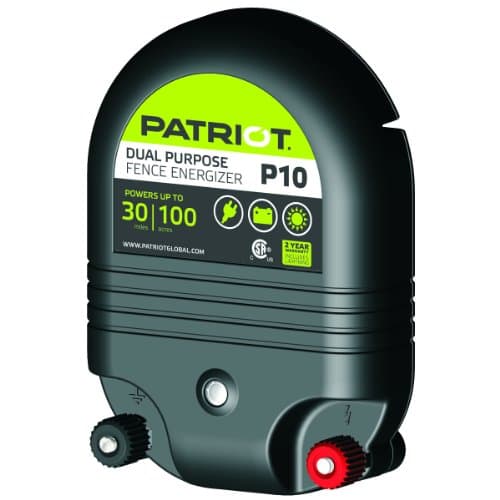
- A low-impedance charger rated in joules, not in "miles". Joules is the number that means something; the mile figure assumes a clean fence with nothing touching it, which no real fence is.
- Proper grounding. This is where most home fences fail. Zareba's own ground rod installation guide is worth following exactly — an under-grounded charger delivers a fraction of its rated output no matter what the box says.
- Keep the wire line clear. Grass and weeds touching a hot wire bleed it to earth.
- Fence the target, not the property. A 60 ft perimeter around a garden is cheap and holds. A fence around three acres is a project.
One honest caveat: hogs are smart and a fence is a training device as much as a barrier. The first contact is what teaches them, so the fence needs to be hot the first night it is up, not two weeks later when you get around to the ground rod.
What to buy for a yard fence
Our picks for this job
A charger, and wire to run from it
For a yard or garden you want a small plug-in charger with a published joule rating, or a solar unit if there is no outlet. Every figure is the maker's published output; scores come from our published fence rubric.
Best AC charger for a short garden fence
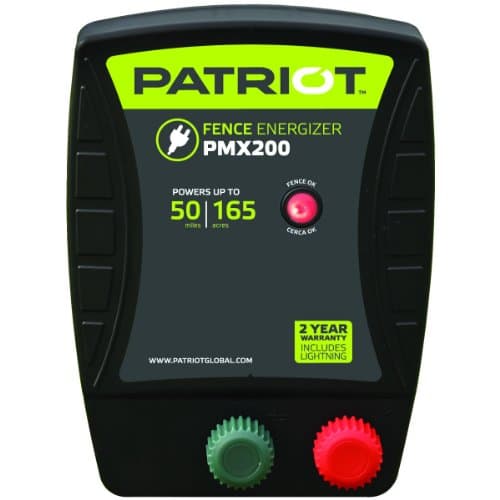
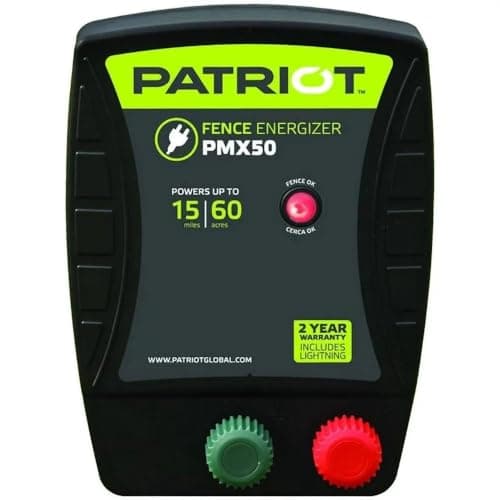
Patriot PMX50 Fence Energizer
Under $5006.1/10ResearchedThe pick for a short garden fence: a published joule output from a plug-in unit, sized for a run you can walk in a minute.
$104.99Amazon#ad · Price as of October 11, 2026 · How we make money for the link to Patriot PMX50 Fence Energizer
Budget plug-in charger for a backyard garden
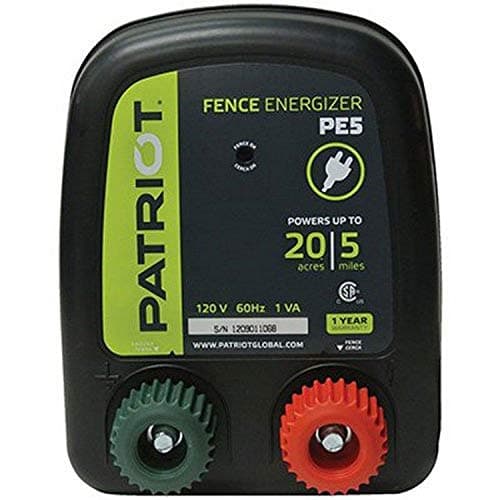
Patriot PE5 Fence Energizer
Under $5005.1/10ResearchedThe budget plug-in option for a small backyard enclosure where the run is short and clean.
Check price · Amazon#ad · Price as of October 11, 2026 · How we make money for the link to Patriot PE5 Fence Energizer
Best portable solar charger for a small plot
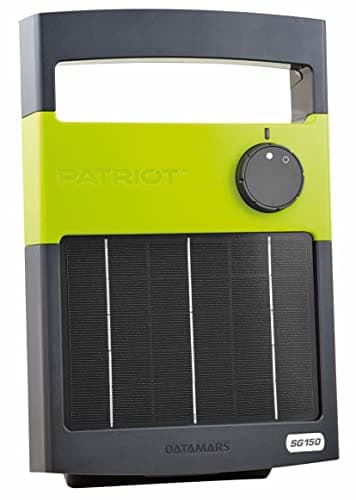
Patriot SolarGuard 150 Fence Energizer
Under $5006.1/10ResearchedIf there is no outlet near the garden. Portable, solar, and honest about being a small-plot unit.
$209.00Amazon#ad · Price as of October 11, 2026 · How we make money for the link to Patriot SolarGuard 150 Fence Energizer
Best budget wire for a short fence
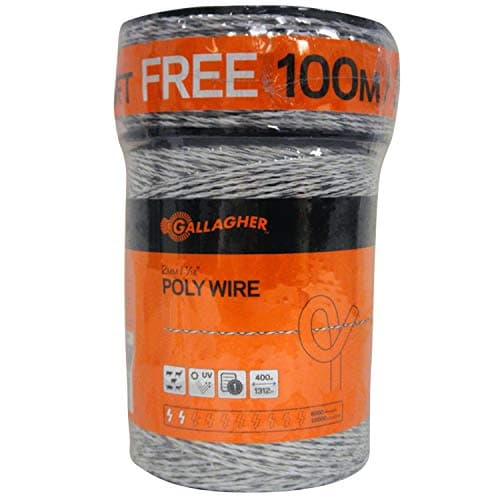
Gallagher Polywire 6-Strand (1,640 ft)
Under $5005.1/10ResearchedThe wire itself: cheap, visible, easy to re-tension, and plenty for two low strands around a garden.
$45.00Amazon#ad · Price as of October 11, 2026 · How we make money for the link to Gallagher Polywire 6-Strand (1,640 ft)
If the area is bigger than a garden, read our full ranking on best electric fence for hogs — it ranks chargers on published output joules rather than the mileage claim on the box.
Step 3: who to call, in Texas
This is the step people skip, and it is free. Two numbers worth having:
- Your county AgriLife Extension office. Directory at counties.agrilife.org. County agents deal with this constantly, know what the local ordinance allows, and will tell you plainly what is and is not worth trying where you live.
- Texas Wildlife Services. Their who-to-contact page lists regional contacts for wildlife damage management. For a neighborhood problem involving someone else's property or a sounder nobody can legally remove, this is the route.
- Your city animal control or police non-emergency line, if hogs are in a street, a school yard, or anywhere there is a public-safety angle. A boar on a sidewalk is their problem, not yours.
- A licensed nuisance wildlife trapper, if you want it handled and have no way to do it yourself. Ask what they do with the animals and whether they are permitted.
What not to do in a neighborhood
Also do not bother with the things that get sold for this and do not work: ultrasonic emitters, scent repellents, lights left on, radios in the garden. We go through the evidence on does hog repellent work, and the short version is that nothing in that category has published evidence of holding hogs off a food source.
And do not relocate a hog. Moving feral swine spreads them and, in Texas, moving live hogs is governed by animal health rules — it is how a yard problem becomes someone else's county problem.
Repairing the damage
Rooted turf looks catastrophic and recovers better than you expect if you act before it dries out. Tread the sod back down while the soil is still moist, roll or firm it, water it, and reseed or patch the bare spots. Anything deeper than surface rooting — a wallow, a collapsed bed — needs filling and compacting rather than just raking over.
We cover the agricultural-scale version, including why you fix the soil before you fix the grass, on how to repair hog damage in pastures, and what the damage costs across Texas on feral hog damage. If the yard is the leading edge of a property-wide problem, the whole system is on how to get rid of feral hogs.
How we scored this
Every score, built from the published record
Every pick here is labeled Researched: we read each maker's published specs, manuals and warranty terms, compare products only against others in the same budget tier, and score them on a public rubric. Every figure links to where it came from, and seller performance numbers are labeled “maker's claim,” so you can see exactly what you are buying.
Scores are our editorial read of that documented evidence. Commissions never set a score or decide a pick. The rubric and its weights are published.
What changed
- Published.
Questions
Frequently asked
What keeps wild hogs out of a yard?
Why are hogs digging up my lawn?
Can I shoot hogs in my yard in Texas?
Do hog repellents work on a yard?
Who do I call about hogs in my neighborhood in Texas?
Receipts
Sources
- Texas A&M AgriLife Today: AgriLife publication focused on urban and suburban feral hog management (checked 2026-10-11)
- Texas A&M Today: feral hogs increase their urban and suburban sprawl (checked 2026-10-11)
- Texas A&M AgriLife: preventative options for feral hog damage, including exclusion (checked 2026-10-11)
- Internet Center for Wildlife Damage Management: wild pig damage prevention and control methods (checked 2026-10-11)
- Zareba: ground rod installation guide for electric fence chargers (checked 2026-10-11)
- Texas A&M AgriLife Extension: county office directory (checked 2026-10-11)
- Texas Wildlife Services: who to contact for wildlife damage management (checked 2026-10-11)
- Patriot: PMX50 AC fence energizer product page and output specification (checked 2026-10-11)
- Patriot: PE5 AC fence energizer product page (checked 2026-10-11)
- Patriot: SolarGuard 150 6V fence energizer product page (checked 2026-10-11)
- Gallagher United States: 1/16 in Poly Wire product page (checked 2026-10-11)
- TPWD: Outdoor Annual, Nongame and Other Species, feral hogs (checked 2026-10-11)
Specs come from each maker's own pages or the product listing (linked on every product), hog biology and trapping advice from Texas A&M AgriLife, and rules from TPWD and Texas statute. Prices are set by Amazon and change often, so we don't print them. Where a figure isn't published, we say so. Read the full method.