Not legal advice. This page summarizes Texas rules from the official sources linked in the text (TPWD Outdoor Annual, valid Sep 1, 2026 through Aug 31, 2027). Rules checked . Laws change: confirm the current rules with Texas Parks and Wildlife and your local game warden before you rely on them.
The short version
We get asked this constantly and the honest answer is not the one people want. Look at what the agencies that actually study this recommend. Texas A&M AgriLife's feral hog management guidance describes an integrated approach — "a variety of tools used together" — and the tools it names are trapping, snaring, shooting, exclusion and, where lawful and appropriate, a registered toxicant. Its preventative options page leads with exclusion. The ICWDM summary of wild pig damage prevention and control methods reads the same way.
What you will not find in any of them is a recommended repellent product. That absence is the finding. These are organizations whose job is to tell landowners what works; if a spray, a granule or a device reliably kept hogs off a food plot, it would be in the publication.
What gets sold as hog repellent
| Product type | The claim | What we can say about it |
|---|---|---|
| Scent / taste repellent sprays and granules | Hogs avoid the treated area or feed | No published extension recommendation; washes off, and hogs eat a very wide range of things |
| Ultrasonic and sonic emitters | Sound drives animals away | Not in the published guidance for feral swine; animals habituate to a constant stimulus |
| Flashing or strobe deterrent lights | Startles animals off the site | Works briefly on a novel stimulus, then stops; hogs feed under feeder lights routinely |
| Predator urine / "big cat" scents | Fear response | No feral-swine evidence we can cite; adult hogs have few predators in Texas |
| Radios, motion sprinklers, scarecrows | Human or activity presence | Classic novelty deterrents; the literature on habituation applies in full |
| Mothballs, ammonia, bleach, diesel | Folk repellents | No evidence, and several are environmental contamination on your own ground |
We are not claiming every one of these has been formally tested and failed. We are saying something narrower and more useful: nobody whose job is to advise landowners recommends them, and the vendors do not publish the kind of evidence that would change that.
Why none of it holds
Three reasons, and they are structural rather than product-specific.
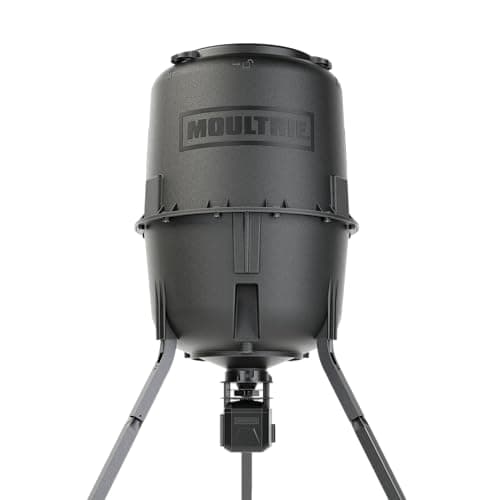
1. The motivation is food, and the food is right there. A deterrent has to be unpleasant enough to beat the reward. A feeder throwing corn, a ripening food plot, or soft irrigated turf full of grubs is a very large reward for an animal that eats almost anything. A smell is not a match for that.
2. Hogs habituate fast. Anything that does not actually hurt becomes background within a few nights. A strobe is terrifying on night one, ignored by night four. This is the single most reliable thing you can predict about any novelty deterrent.
3. They are a group animal with no real predator pressure. A sounder that has learned a site is safe does not abandon it over a scent. Where hogs do shift behavior, Texas A&M's own research summaries describe them shifting when they feed — further into the night — rather than giving up the site. Which is to say: pressure changes their timetable, not their address.
What the literature recommends instead
- Remove the attractant. Free, and it is the first thing on AgriLife's preventative list. Feed, fruit, garbage, water.
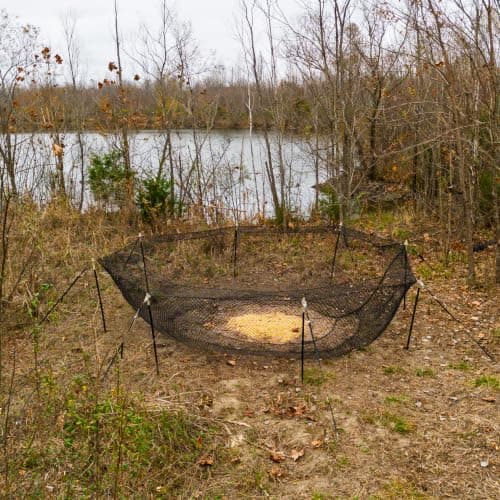
- Exclude with a low electric fence. Two strands at roughly 8 and 16 inches around what you are protecting. Hogs go under and through, not over.
- Trap the whole sounder. The only measure that actually reduces numbers. Pre-bait until the entire group feeds inside, then drop the gate on all of them — how to trap feral hogs.
- Shoot the survivors. Follow-up, not a strategy on its own.
- Do all of it together, continuously. That is what "integrated" means, and it is why the one-product answer people come looking for does not exist.
The whole plan in order is on how to get rid of feral hogs. If the problem is a yard rather than a pasture, start at how to get rid of wild hogs in your yard.
What to spend the money on
Our picks for this job
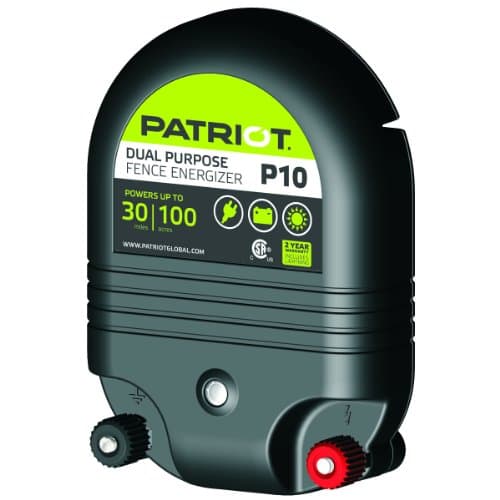
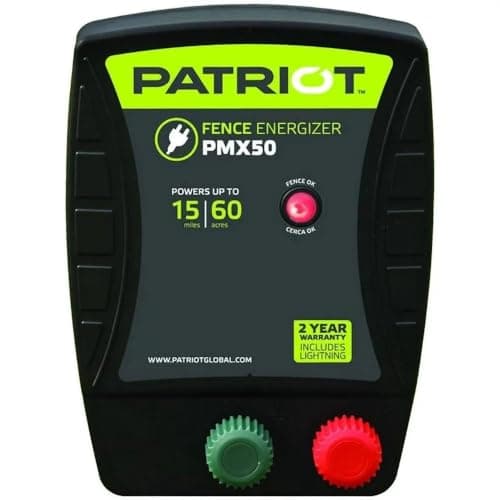
A charger with a real joule rating, and braid to run from it
If you were about to spend money on a repellent, spend it here instead. We rank chargers on published output energy in joules rather than the mileage figure on the box. Scores come from our published fence rubric.
Best AC charger for heavy hog pressure
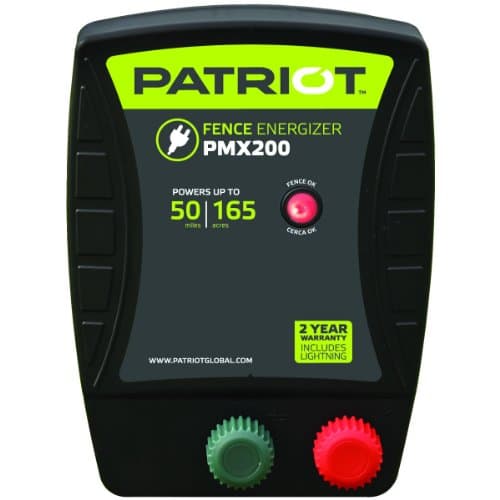
Patriot PMX200 Fence Energizer
Under $5007.4/10ResearchedThe pick for heavy hog pressure on a long run: a published output in joules from a plug-in low-impedance unit.
$150.08Amazon#ad · Price as of October 11, 2026 · How we make money for the link to Patriot PMX200 Fence Energizer
Best-documented AC charger
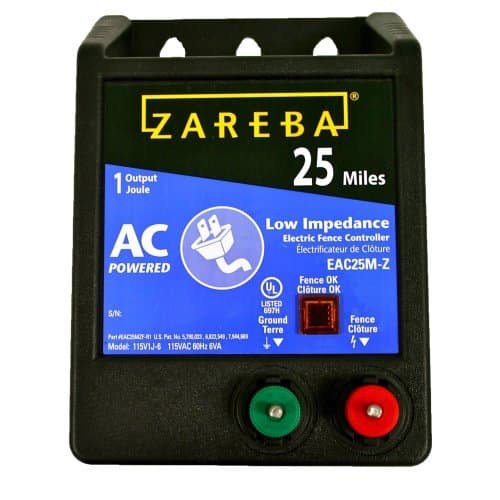
Zareba 25 Mile AC Low Impedance Charger (EAC25M-Z)
Under $5006.7/10ResearchedThe best-documented AC charger in our registry - Zareba publishes stored and output energy, which most of this category does not.
$121.97Amazon#ad · Price as of October 11, 2026 · How we make money for the link to Zareba 25 Mile AC Low Impedance Charger (EAC25M-Z)
Best all-in-one solar charger
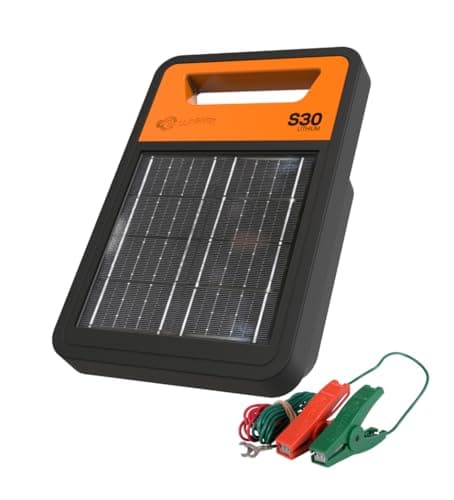
Gallagher S30 Lithium Solar Fence Energizer
Under $5006.6/10ResearchedThe all-in-one solar option for a plot with no power, with the panel, battery and energizer in one case.
$339.99Amazon#ad · Price as of October 11, 2026 · How we make money for the link to Gallagher S30 Lithium Solar Fence Energizer
Best durable braid for a permanent fence
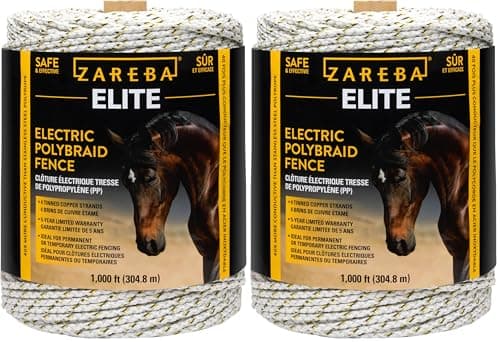
Zareba Elite Electric Polybraid (1,000 ft, 2-pack)
Under $5007.0/10ResearchedDurable braid for a fence you intend to leave up, in a 2-pack that covers a real perimeter.
$399.98Amazon#ad · Price as of October 11, 2026 · How we make money for the link to Zareba Elite Electric Polybraid (1,000 ft, 2-pack)
Full ranking and the grounding argument on best electric fence for hogs. One thing worth repeating: an ungrounded charger delivers a fraction of its rated output, and bad grounding is the commonest reason a fence "does not work on hogs".
The habituation problem, stated plainly
If you do want to try a deterrent — and plenty of people will, because it is cheap and the fence is work — do it with your eyes open and plan around habituation:
- Expect it to work for a few nights. That initial effect is real and it is novelty, not deterrence.
- Change it constantly. Move it, swap the stimulus, vary the timing. A static deterrent is a decoration.
- Put a camera on it. This is the important one. Most people believe a deterrent worked because they stopped seeing damage in daylight. A trail camera will tell you the truth in a week — see best cellular trail cameras.
- Do not let it delay the trap. Every week spent testing sprays is a week the sounder is breeding. Our page on how fast feral hogs reproduce explains what that costs.
Where a deterrent does have a job
To be fair to the category, there are two narrow cases where something short of a fence is the right call.
Buying time. A novelty deterrent might get you through the last ten days before harvest on a small plot. That is a legitimate use of a few nights of novelty, and nobody should pretend it is management.
Where you cannot fence or trap. A rented property, a city lot, a right-of-way. If exclusion and trapping are both off the table, cycling deterrents while you work on the attractant and talk to whoever can act is better than nothing. It is still not a solution.
A word on poison, because people ask next
How we scored this
Every score, built from the published record
Every pick here is labeled Researched: we read each maker's published specs, manuals and warranty terms, compare products only against others in the same budget tier, and score them on a public rubric. Every figure links to where it came from, and seller performance numbers are labeled “maker's claim,” so you can see exactly what you are buying.
Scores are our editorial read of that documented evidence. Commissions never set a score or decide a pick. The rubric and its weights are published.
What changed
- Published.
Questions
Frequently asked
Is there a hog repellent that actually works?
Do ultrasonic hog repellers work?
Will lights keep hogs away?
What is the best way to keep hogs out of a food plot?
Can I use poison on feral hogs in Texas?
Receipts
Sources
- Texas A&M AgriLife: feral hog management, integrated approach (checked 2026-10-11)
- Texas A&M AgriLife: preventative options for feral hog damage (checked 2026-10-11)
- Internet Center for Wildlife Damage Management: wild pig damage prevention and control methods (checked 2026-10-11)
- Texas A&M Natural Resources Institute: using exclusion fencing to prevent feral hog access at feeding stations (checked 2026-10-11)
- Texas A&M AgriLife: using fences to exclude feral hogs from wildlife feeding stations (checked 2026-10-11)
- Zareba: feral hogs fencing guidance, learning center animal selector (checked 2026-10-11)
- Texas A&M AgriLife: chemical control of feral hogs (checked 2026-10-11)
- Texas Department of Agriculture: Feral Hog Pesticide regulatory program (checked 2026-10-11)
- Patriot: PMX200 AC fence energizer product page and output specification (checked 2026-10-11)
- Zareba: 25 Mile AC Low Impedance Charger EAC25M-Z product page (checked 2026-10-11)
- Gallagher United States: S30 Lithium Solar Fence Energizer product page (checked 2026-10-11)
- Zareba: Elite Electric Polybraid Fence 1,000 ft product page (checked 2026-10-11)
- TPWD: Outdoor Annual, Nongame and Other Species, feral hogs (checked 2026-10-11)
Specs come from each maker's own pages or the product listing (linked on every product), hog biology and trapping advice from Texas A&M AgriLife, and rules from TPWD and Texas statute. Prices are set by Amazon and change often, so we don't print them. Where a figure isn't published, we say so. Read the full method.