The appeal is obvious: the hogs are rooting a food plot half a mile from the nearest outlet, and a charger with its own panel means no extension cord, no generator and no battery to haul. The catch is in the numbers the makers publish, and they are easy to check.
Output joules, as published
Output energy in joules is the figure that tells you how much punch reaches an animal through grass and wet growth. Mileage claims do not — they assume clean wire and nothing touching it. Here is what each maker publishes for the units in our registry:
| Charger | Power source | Published output | Maker's distance claim |
|---|---|---|---|
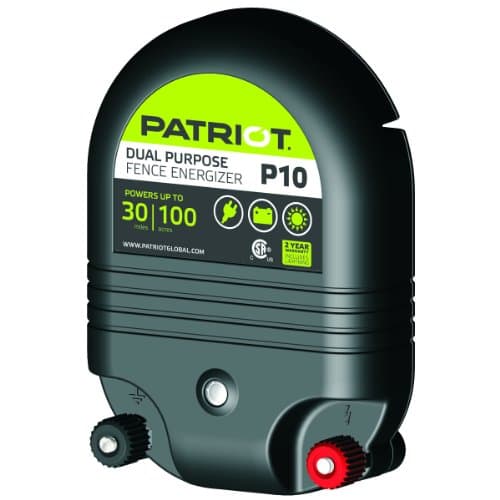
| Patriot P10 Dual Purpose | 12 V battery or 110 V; solar compatible | 1.0 J | Up to 30 miles, 100 acres |
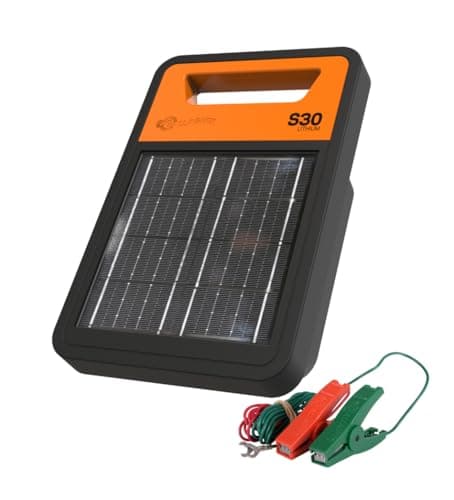
| Gallagher S30 Lithium Solar | All-in-one: 3.8 W panel, lithium iron phosphate battery | 0.21 J | 4 miles typical; 20 miles of clean wire |
| Patriot SolarGuard 150 | All-in-one: 3 W panel, 6 V battery | 0.15 J | Up to 12 miles, 40 acres |
| Zareba 5 Mile Solar (ESP5M-Z) | All-in-one: panel with 6 V battery | 0.10 J | Steel 5 mi clean / 2.5 mi light weeds; not rated for heavy weeds |
The gap is roughly fivefold between the best all-in-one solar unit and a single 12 V charger. And note what Zareba says plainly about its own unit: not rated for heavy weeds, and positioned for small animals and pets. That is a maker being honest about a limit, and it applies to this whole class of product.
Our electric fence ranking explains why joules rather than miles is the number to shop on, across both AC and battery chargers.
The two solar routes
Route 1: an all-in-one solar energizer
One box on a T-post with the panel, battery and leads built in. Mount it, clip the fence and earth leads on, and walk away. Gallagher's S30 is the strongest of these in our registry at 0.21 J with a 3.8 W panel and a lithium iron phosphate battery, a 3-year warranty, 3.54 lb, and a maker note that it suits wildlife exclusion — it also slows its pulse at night to hold voltage.
Route 2: a 12 V charger plus a separate panel
A proper energizer running off a deep-cycle 12 V battery, with a solar panel keeping that battery charged. The Patriot P10 publishes 1.0 J, runs on 12 V or 110 V, is explicitly solar compatible, and includes the AC adapter and battery leads — the panel and battery are the parts you add. It is more to buy and more to carry out to the plot, and it is the route we would take for a hog line of any length.
When an all-in-one solar unit is genuinely enough
Four cases where we would use one without hesitation:
- A garden, orchard or yard plot. Short, clean, visible, and you walk past it daily. This is the Patriot SolarGuard 150's job.
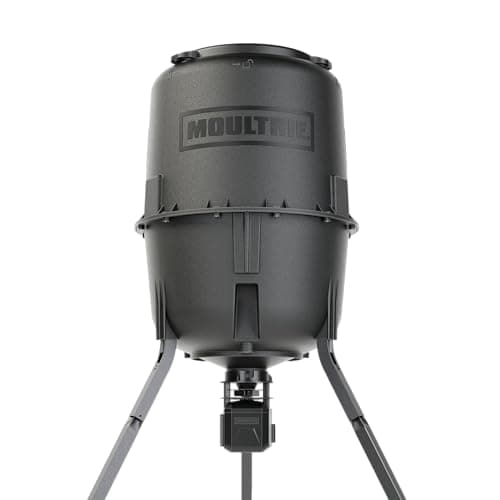
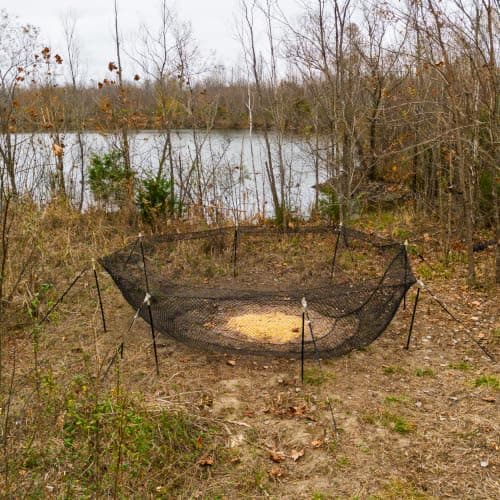
- A feeder exclusion pen. A small ring of wire around a feeder leg is a tiny run. Texas A&M's Natural Resources Institute has published on exclusion fencing at feeding stations — and our deer feeder page covers that build.
- A temporary line while you set a trap. Push hogs toward a gap you have chosen rather than fencing them out entirely.
- A clean, mowed line you maintain. The weed load is most of what drains a low-output charger.
Outside those, a solar all-in-one on a long weedy perimeter is the setup people are describing when they say electric fence does not stop hogs.
Fence design for hogs, solar or not
- Low wires are the whole point. Hogs go under, not over. The bottom wire wants to be close to the ground — roughly 6 to 8 inches — with a second at about 12 to 14.
- Two or three strands, not five. Height above knee level does nothing against a hog and adds load.
- Keep the line mowed. Every blade of wet grass touching a wire is current going to earth instead of into a snout. On a 0.15 J charger that is the difference between working and not.
- Train them at a bait pile. Set a short hot line across a spot hogs already use, so the first contact happens when they are focused on food and the lesson sticks.
- Walk the line weekly with a tester. Not by feel, and not by looking at an LED.
If the goal is removal rather than exclusion, a fence is the wrong primary tool — see how to trap feral hogs. TPWD's wild pig management overview treats exclusion as one piece of a program, not a solution on its own.
Grounding is where solar fences actually fail
A charger can only deliver what the ground system can complete. On an all-in-one unit mounted on a T-post this gets skipped constantly, and it is the most common reason a fence tests weak.
- Use real ground rods. Galvanised, driven deep, more than one on dry ground. The post the charger is clipped to is not a ground system.
- Keep the ground rods away from utility grounds. Well casings, building grounds, water lines.
- Dry soil needs more rods. West Texas caliche and summer drought both cut conductivity badly.
- Check that the mounting kit is included. Gallagher sells the S30's wood-post and ground-rod mount separately.
Our picks for this job
What to buy for a solar hog line
The 12V charger we would pair with a panel, the strongest all-in-one solar unit, and the small-plot option - in the order we would spend.
Best charger for a food plot without power
Patriot P10 Dual Purpose Fence Energizer
Under $5007.6/10Researched1.0 published output joule on a 12V battery or 110V, solar compatible, with a 3-year lightning-inclusive warranty. Add a deep-cycle battery and a panel.
$159.00Amazon#ad · Price as of November 3, 2026 · How we make money for the link to Patriot P10 Dual Purpose Fence Energizer
Best all-in-one solar charger
Gallagher S30 Lithium Solar Fence Energizer
Under $5006.6/10ResearchedThe best all-in-one here: 0.21 J from a 3.8 W panel and a lithium iron phosphate battery, mounts on a T-post, 3 years of warranty. Keep the run short and mowed.
$339.99Amazon#ad · Price as of November 3, 2026 · How we make money for the link to Gallagher S30 Lithium Solar Fence Energizer
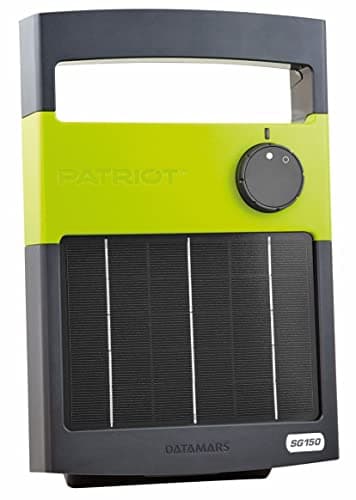
Best portable solar charger for a small plot
Patriot SolarGuard 150 Fence Energizer
Under $5006.1/10Researched0.15 J, fully weatherproof, with panel, battery and fence leads in the box - the right answer for a garden plot or a feeder pen, not a perimeter.
$209.00Amazon#ad · Price as of November 3, 2026 · How we make money for the link to Patriot SolarGuard 150 Fence Energizer
What to look for in a solar fence setup for hogs
- Published output joules, not miles. Miles assume clean wire. Joules survive grass.
- A weed rating, or an honest absence of one. Zareba stating "not rated for heavy weeds" is more useful than a bigger mileage claim.
- A real battery, charged by the panel. Lithium iron phosphate on the S30; a deep-cycle 12 V on the P10 route.
- Leads and a mounting kit included — or priced in. Several of these sell the mount separately.
- A lightning-inclusive warranty. Patriot publishes three years including lightning on both of its units here.
- Somewhere sunny to mount it. A panel in the shade of the brush line you are fencing is a flat battery by August.
Mistakes that let hogs through
- Buying on mileage. A 12-mile claim at 0.15 J is 12 miles of bare wire in a field with no grass in it.
- Running the bottom wire too high. Hogs go under. Six to eight inches, and keep it there.
- Letting the line grow in. The fastest way to drain a small solar charger.
- Treating the mounting post as a ground. Drive proper rods, more than one in dry soil.
- Mounting the panel in shade. Including the shade that arrives when the brush leafs out.
- Expecting a fence to fix a hog problem. It protects an acre. Trapping reduces the population.
How we scored this
Every score, built from the published record
Every pick here is labeled Researched: we read each maker's published specs, manuals and warranty terms, compare products only against others in the same budget tier, and score them on a public rubric. Every figure links to where it came from, and seller performance numbers are labeled “maker's claim,” so you can see exactly what you are buying.
Scores are our editorial read of that documented evidence. Commissions never set a score or decide a pick. The rubric and its weights are published.
What changed
- Published.
Questions
Frequently asked
Does a solar electric fence work for hogs?
How many joules do you need for a hog fence?
How high should the wires be for hogs?
Can I add a solar panel to a fence charger I already have?
Will an electric fence keep hogs out of a food plot?
Receipts
Sources
- Patriot: P10 Dual Purpose Fence Energizer product page, 1.0 J output and solar compatibility (checked 2026-10-17)
- Gallagher United States: S30 Lithium Solar Fence Energizer product page and specifications (checked 2026-10-17)
- Patriot: SolarGuard 150 Fence Energizer (6V) product page (checked 2026-10-17)
- Zareba: 5 Mile Solar Low Impedance Charger ESP5M-Z product page, output and weed rating (checked 2026-10-17)
- Texas A&M Natural Resources Institute, Dec. 2025: using exclusion fencing to prevent feral hog access at feeding stations (checked 2026-10-17)
- TPWD: Feral hogs / wild pigs in Texas, management overview (checked 2026-10-17)
Specs come from each maker's own pages or the product listing (linked on every product), hog biology and trapping advice from Texas A&M AgriLife, and rules from TPWD and Texas statute. Prices are set by Amazon and change often, so we don't print them. Where a figure isn't published, we say so. Read the full method.