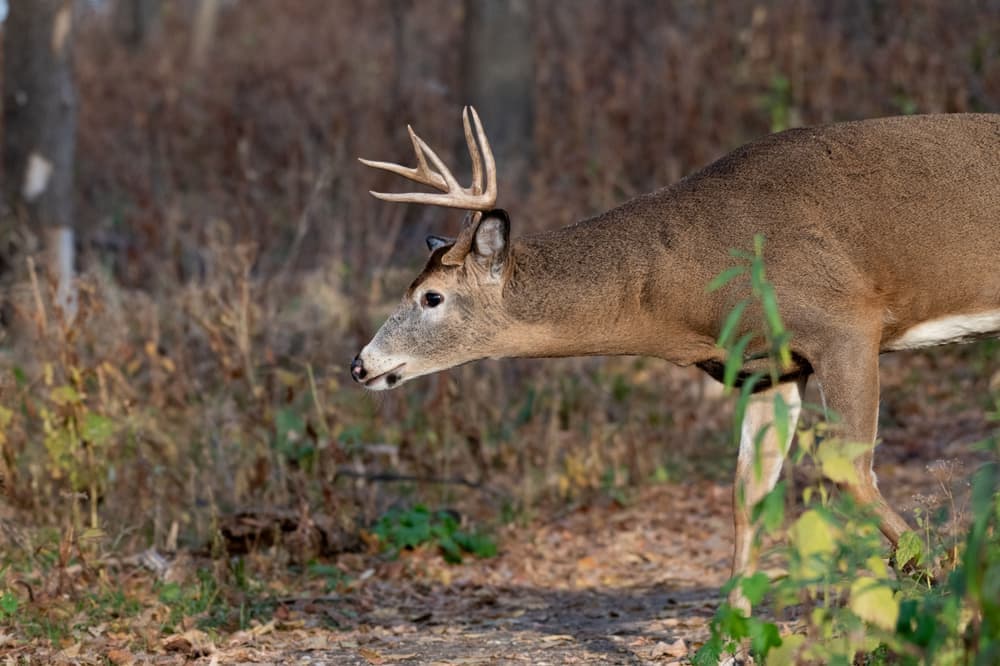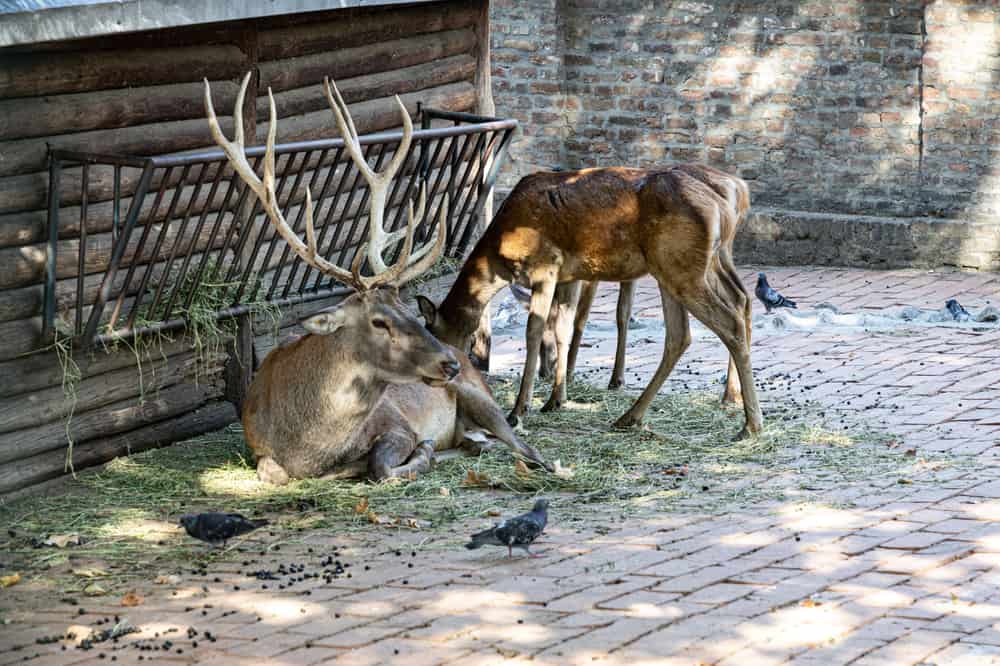
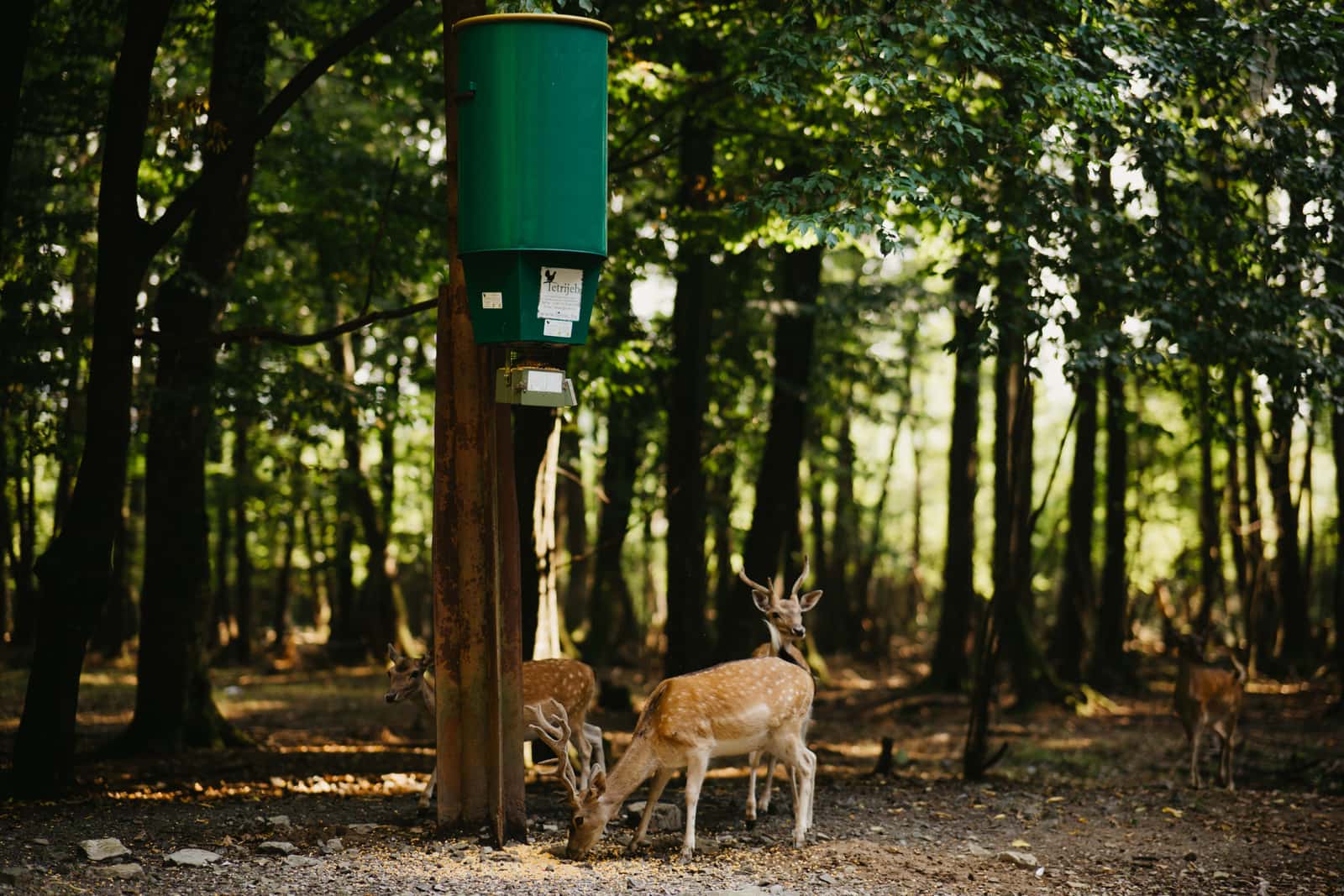
A deer feeder in hog country ends up feeding the hogs. The corn goes, the ground around the tripod gets rooted and wallowed, and sometimes the feeder ends up on its side. This guide is for the landowner or lease hunter who wants the corn going to deer again. It leans on the one fix that has been measured at deer feeders, a short panel fence, and is honest about everything else. There's no hog-proof feeder you can order on Amazon: every feeder we cover in our feeders and trail cameras hub still leaves the corn open to hogs, and the pen that works is built from farm-store panels, not bought in a box.
Why hogs take over deer feeders
Researchers from Texas A&M University-Kingsville, AgriLife Extension and USDA APHIS Wildlife Services put it plainly: "much of the feed placed into deer feeders is consumed by non-target species," and feral hogs and raccoons are the main culprits (Rattan et al., 2010). The same paper lists the damage at feeders as "consuming feed, turning feeders over, and creating wallows at feeders." AgriLife's follow-up publication adds that hunters and land managers put out thousands of tons of corn each year and that hogs "consume a substantial portion of it" ( AgriLife Extension L-5533).
Timing is part of why feeders suffer. Texas Parks and Wildlife says wild pigs are "generally active at dusk and dawn, but human activity and climatic conditions may cause them to exhibit nocturnal feeding behaviors" (TPWD). A feeder that throws corn at dusk is serving it right when hogs are moving. Our guide to when hogs are most active goes deeper on the pattern.
Confirm it's hogs first
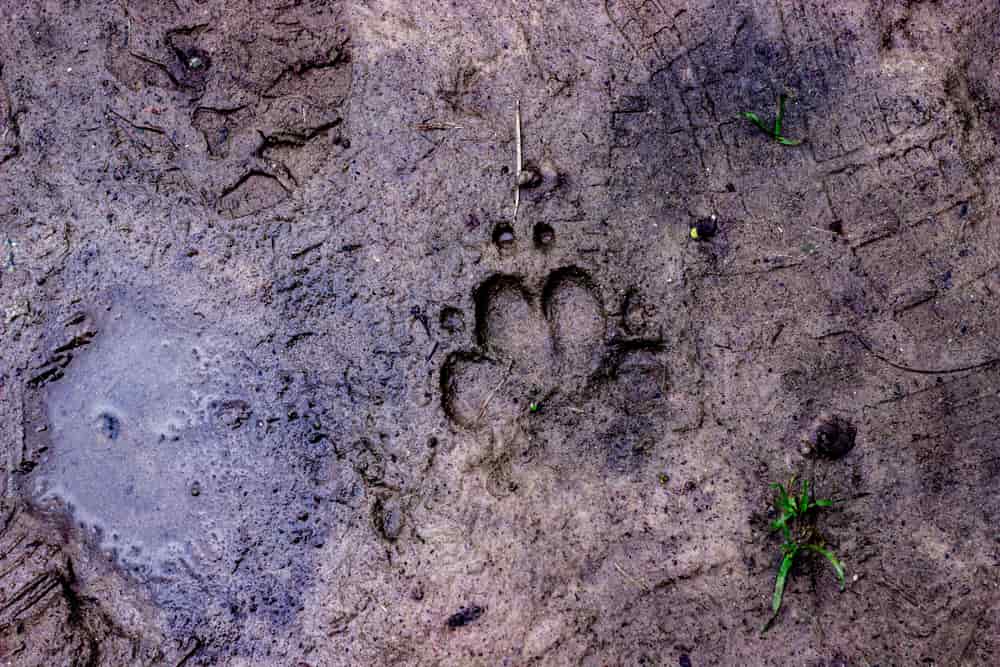
Raccoons empty feeders too, and the fix for raccoons (a cage around the spinner) does nothing for hogs. AgriLife's advice is to confirm before you build: infrared trail cameras "can confirm if feral hogs are visiting your bait or feed stations," and you can check the area for hog tracks, rooting, rubs and wallows (L-5533). A cellular camera that sends photos to your phone saves the walk-in; see our best cellular trail cameras. If you want cameras built around night images at the feeder, our night trail camera picks rank the no-glow options.
What works, ranked by evidence
AgriLife's own fencing page starts with a warning worth keeping in mind: "There are few fences that can be considered truly 'hog proof' to a determined pig" (Coping with Feral Hogs, Preventative Options). With that said, here is what the sources we checked support, strongest first.
| Method | What the evidence shows | Source |
|---|---|---|
| Low panel pen, 28 to 34 in | Kept hogs out completely in two-week summer and winter trials; adult deer kept feeding | Rattan et al. 2010; AgriLife L-5533 |
| Two-strand electric wire | Useful for exclusion, but may not be permanent; hogs can become desensitized | AgriLife Preventative Options; USDA APHIS |
| Feed hogs avoid (whole cottonseed) | Unpalatable to feral pigs and raccoons in a lab and field study; deer ate it readily | Taylor et al. 2013 |
| Feeding times | No study we found tests timing as a deterrent; hogs used feeders set to morning and evening throws | Rattan et al. 2010 (study design) |
| Lights and noise | "Limited success"; hogs become habituated | USDA APHIS |
Step by step: build the panel pen
The pen comes from a 2009 study on the Welder Wildlife Refuge in San Patricio County. Researchers circled deer feeders with welded panels at three heights (20, 28 and 34 inches), watched each feeder with motion cameras for two weeks before and two weeks after building the fence, and ran the trial once in summer and once in winter. The 20-inch fence only reduced hog visits. After the 28- and 34-inch fences went up, "no feral hogs gained access to the deer feeders," and deer kept coming in (Rattan et al., 2010). AgriLife turned the result into a build sheet, and the steps below follow it (L-5533).
Materials for a 28-inch pen (per AgriLife)
- Three 60-inch by 16-foot utility panels (4-inch squares)
- Twelve 5-foot T-posts
- Wire clips
- A T-post driver, fencing pliers and bolt cutters
For a 34-inch pen, the study used graduated hog panel (the kind with smaller openings toward the bottom) instead of cut utility panels. AgriLife reported that the 2011 materials cost for each pen came in under $200.
The build
- Cut the panels in half lengthwise. Use the bolt cutters to cut each 16-foot utility panel exactly in half along its length, which gives you six long, low panels.
- Lay them out end to end in a circle about 28 feet across, with the feeder in the middle. Overlap each joint by one 4-inch square and push the cut end into the ground.
- Clip the joints together with wire clips.
- Drive T-posts on the outside of the circle, one in the middle of each panel and one at each overlap, then clip the panels to the posts.
- Close every gap at the bottom. AgriLife's instruction is to make sure the panels are flush to the ground and leave no gaps hogs might dig under.
- Check the throw. Run the feeder once and walk the ring. The study pens were built around broadcast feeders, and the pen only protects what lands inside it. Corn thrown past the panels is corn served to hogs, so turn the throw down if it lands outside the fence.
28 or 34 inches?
Both heights kept hogs out in the trial. Pick by your deer. AgriLife notes that fencing 34 inches high "may be too tall for fawns," and a separate Caesar Kleberg Wildlife Research Institute study it cites found that fences taller than 33 inches limited fawn access to feeding stations (L-5533). If fawns use the feeder, build 28 inches. If you build 34 inches, AgriLife suggests cutting at least two slots, 6 inches deep by 3 feet wide, into the top of the fence for fawns, and setting the graduated panel with its smaller openings at the ground.
One more size note from the same publication: for protein feeders, the Kingsville group suggested exclosures of 80 by 80 feet or larger so deer don't crowd each other while feeding. A 28-foot ring suits a broadcast corn feeder; a protein feeder needs a much bigger pen.
Adding electric wire
Electric fence is the other exclusion tool AgriLife lists. Its guidance is specific: "At least two strand should be used and the lower strand should be placed low enough to hit juvenile and adult pigs on the nose (approximately 8 inches and 18 inches respectively)," with all vegetation cleared so the fence isn't grounded (AgriLife). USDA APHIS says a 2-strand polywire fence at 8 and 18 inches "has been shown to temporarily protect agricultural resources," and that fence effectiveness "often depends on the motivational level of feral swine" (USDA APHIS Wildlife Services, 2020).
Two cautions come with it. AgriLife says the charge has to be strong enough that electric fence is inadvisable where people are around, and that it "may not a permanent solution" [sic]: used too often, or when food is scarce, hogs can become desensitized to the shock. So treat hot wire as a second layer or a quick first step, not a substitute for the pen.
Two strands around the 28-foot ring is roughly 176 feet of wire (2 x 88 ft). That's a short, low-load line, which is why a small all-in-one solar charger can cover it. Mount the wire on insulators so it never touches the steel panels, since anything touching the wire grounds it just as weeds do. For longer lines around a food plot or pasture, see our electric fence chargers for hogs, ranked on output in joules rather than "miles."
Deer feed that hogs won't eat
One feed has published research behind it: whole cottonseed. In a study in the journal Human-Wildlife Interactions, researchers tested it in the lab and at field feeders. Video monitoring showed "cottonseed was unpalatable to feral pigs and raccoons, whereas white-tailed deer consumed" it readily, and in lab trials pigs sorted cottonseed out of their feed ration. The authors concluded that whole cottonseed "merits further consideration as a supplement for free-ranging deer" (Taylor et al., 2013). The Rattan paper also cites earlier work finding that hog activity at deer feeders may be reduced with feed types hogs find unpalatable.
Read those results for what they are:
- It's one study, and a cautious one. "Merits further consideration" is not "solves the problem." Talk to your county Extension agent or a wildlife biologist before you change what your deer eat.
- Protein pellets aren't the answer. AgriLife's fence publication describes the pens as protecting both corn and protein pellets from feral hogs, which tells you hogs eat pellets too.
- Check your feeder. The feeders in our registry list corn or protein pellets as their feeds. None lists whole cottonseed, so ask the maker before you pour it into a hopper.
Feeder height and feeding times
Height. A spin feeder puts its corn on the ground whatever its height, so raising the hopper doesn't keep the corn from hogs. The study feeders were 2.4-meter (about 8-foot) tripods, and hogs ate their corn freely until the fences went up (Rattan et al.). We found no published port height for gravity feeders that hogs can't reach. Where hogs knock feeders over, a feeder you can anchor helps; the tested answer is still the pen.
Timing. We found no study that tests feeding times as a hog deterrent, and the one feeder study we did find cuts against relying on it. Its feeders were programmed to throw corn for 10 seconds at 6 a.m. and 5 p.m., and hogs still came before the fences were built (Rattan et al.). Hogs that are pressured also shift toward night: USDA APHIS says feral swine subject to repeated control or recreational hunting "are usually more nocturnal." A programmable feeder is still worth having. A predictable feeding time makes a predictable hog visit, and that is what you want once you move from keeping hogs out to trapping the whole sounder.
What doesn't keep hogs away
- Lights and noisemakers. USDA APHIS says blinking or bright lights and loud noises "have been tested with limited success," and that feral swine "eventually become habituated to these devices." A feeder light helps you see hogs; it won't scare them off for long.
- Repellents. APHIS says repellents "have yet to be developed for operational use" and most work only for a short time before animals habituate.
- Varmint cages. Every varmint cage in our Amazon research is sold against raccoons, squirrels and birds, and none claims to stop hogs. A cage protects the spinner motor, not the corn on the ground.
- A 20-inch fence. In the Rattan trial it only reduced hog visits. Go to 28 inches or more.
- "Hog-proof" in a product title. We found no feeder, guard or pen on Amazon sold as hog-proof. Our hog-proof deer feeder rankings score the features that help (guarding, programmability, build) and say plainly that none of them keeps a sounder off the corn by itself.
Gear for a hog-pressured feeder
With the pen and the plan in place, three pieces of gear earn their spot: a feeder whose throw and schedule you can control, a light that mounts on the pen's own T-posts, and a small charger for a hot wire around the ring. None of them is hog-proof and none claims to be. The panels, posts and clips for the pen come from a farm store, not Amazon.
Our picks for this job
Gear that works with a panel pen
Picked for how each fits the pen design above: a controllable throw that keeps corn inside the ring, a light that clamps to a T-post, and a post-mounted solar charger for a short two-strand line. Researched from maker specs, not tested by us.
 Stock photo
Best programmable tripod feeder
Moultrie 250 lb Pro Hunter III Tripod Feeder
Under $5006.5/10ResearchedAdjustable throw (high, medium or low RPM) helps keep corn inside a 28-foot ring, and sunrise/sunset sync plus 10 feed times let you schedule it. Nothing on it keeps hogs off: that's the pen's job.
Check price · Amazon#ad · Price set by Amazon · How we make money for the link to Moultrie 250 lb Pro Hunter III Tripod Feeder
 Stock photo
Best high-output solar feeder light
Elusive Wildlife Kill Light Outfitter
Under $5008.3/10ResearchedTool-less bracket fits a T-post, so it mounts on the pen itself. From the fence line, the feeder at the center of a 28-foot ring is about 14 feet away, inside the maker's 25 ft detection claim.
Check price · Amazon#ad · Price set by Amazon · How we make money for the link to Elusive Wildlife Kill Light Outfitter
 Stock photo
Best all-in-one solar charger
Gallagher S30 Lithium Solar Fence Energizer
Under $5006.6/10ResearchedMounts on a steel T-post with leads included, and Gallagher lists it for wildlife exclusion. Its 0.21 J suits a short line like a 176-foot two-strand ring, not a long perimeter.
Check price · Amazon#ad · Price set by Amazon · How we make money for the link to Gallagher S30 Lithium Solar Fence Energizer
If a T-post light doesn't suit your setup, the best hog feeder lights roundup compares more colors, power options and mounts. And if you're still choosing a feeder, our spin feeder vs gravity feeder comparison weighs which type is easier to protect.
Fence the feeder, then remove the sounder
A pen protects the corn. It doesn't reduce the number of hogs on the place; they just eat somewhere else. The feeder is still useful for that second job. Hogs already come to it on a schedule, which is exactly the habit AgriLife's trapping guidance builds with daily pre-baiting. Our step-by-step guide to trapping feral hogs starts from a site like this. If you plan to shoot over the feeder at night in Texas, read what Texas allows at night first, and for the whole plan (pattern, trap, shoot, exclude), start with how to get rid of feral hogs.
Keeping the pen working
- Walk the bottom edge. Rooting along the base is how hogs get under. Re-set any lifted panel flush to the ground.
- Keep the wire clean. If you run hot wire, clear weeds off it; AgriLife's guidance hinges on the fence not being grounded.
- Watch the camera for testing. The Rattan paper cautions that its results come from short seasonal trials and "may not apply to situations in which year round supplemental feeding is practiced," and that over time "feral hogs will likely challenge even the 86 cm high exclusion fencing." NRI adds that adult hogs have been recorded jumping much higher when motivated to escape corral traps, "so occasional breaches may occur."
- Don't stop there. If hogs start getting in, add the hot wire, and start removing the sounder.
How we scored this
Units we claim to have tested: 0
Plenty of gear sites say they field-tested everything they list. We haven't, and we say so. Every pick here is labeled Researched: we read each maker's published specs, manuals and warranty terms, compare products only against others in the same budget tier, and score them on a public rubric. Every figure links to where it came from, and seller performance numbers are labeled “maker's claim.”
Scores are editorial judgments from that documented research, not test results. Commissions never set a score or decide a pick. The rubric and its weights are published.
Questions
Frequently asked
How do you hog-proof a deer feeder?
What height fence keeps hogs out of a deer feeder?
What deer feed will hogs not eat?
Will a feeder light keep hogs away?
Does a varmint cage stop hogs?
Can deer get over a hog fence around a feeder?
Receipts
Sources
- Texas A&M AgriLife Extension, L-5533 Using Fences to Exclude Feral Hogs from Wildlife Feeding Stations (Timmons et al., Oct. 2011), PDF (checked 2026-09-19)
- Texas A&M AgriLife, Using Fences to Exclude Feral Hogs from Wildlife Feeding Stations, publication page IRNR-PU-072 (checked 2026-09-19)
- Rattan, Higginbotham, Long and Campbell, Exclusion Fencing for Feral Hogs at White-tailed Deer Feeders, Texas Journal of Agriculture and Natural Resources 23:83-89 (2010) (checked 2026-09-19)
- Texas A&M Natural Resources Institute, Using exclusion fencing to prevent feral hog access at feeding stations (Ryland Wieding, Dec. 16, 2025) (checked 2026-09-19)
- Texas A&M AgriLife, Coping with Feral Hogs: Preventative Options (checked 2026-09-19)
- USDA APHIS Wildlife Services, Feral Swine, Wildlife Damage Management Technical Series (Glow, Snow and VerCauteren, Aug. 2020) (checked 2026-09-19)
- Taylor et al., Consumption of Whole Cottonseed by White-Tailed Deer and Nontarget Species, Human-Wildlife Interactions 7(1), 2013 (checked 2026-09-19)
- Texas Parks and Wildlife, Nuisance Wildlife in Texas: Wild Pigs (checked 2026-09-19)
- Moultrie: 250LB Deer Feeder Pro III product page and spec table (checked 2026-09-19)
- Elusive Wildlife: Kill Light Outfitter Solar Feeder Light product page (checked 2026-09-19)
- Gallagher United States, S30 Lithium Solar Fence Energizer product page (checked 2026-09-19)
We haven't tested the gear on this page and we don't pretend to. Specs come from each maker's own pages or the product listing (linked on every product), hog biology and trapping advice from Texas A&M AgriLife, and rules from TPWD and Texas statute. Prices are set by Amazon and change often, so we don't print them. Where a figure isn't published, we say so. Read the full method.