It starts and ends with corn
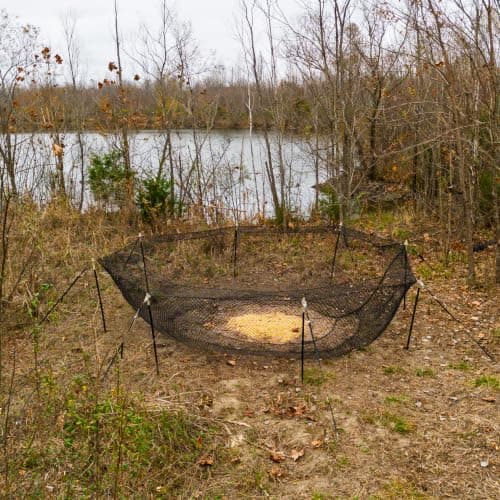
Before any recipe: hogs come to whole shelled corn, and Texas A&M AgriLife's own publication on placing and baiting feral hog traps is built around it. There is no secret ingredient that outperforms a pile of corn in the right place, pre-baited for long enough that the whole sounder is comfortable feeding there.
What recipes do buy you is two things. First, reach: a soured or sweetened bait smells further, so hogs that have not found the site yet do. Second, selectivity: a fermented, sour mix is less attractive to deer and more attractive to pigs, which keeps non-targets out of your trap. Those are real advantages and they are the honest case for mixing anything at all.
What recipes do not buy you is speed. AgriLife's trapping guidance is explicit that pre-baiting until the entire group feeds inside the trap is the part that determines success. No bait shortcuts that.
Recipe 1: soured corn (the baseline)
The one recipe you need. We cover this in depth, including the fermentation timeline and the container problem, on sour corn for hogs — this is the short version.
- 50 lb whole shelled corn in a sealed container with a loose or vented lid.
- Water to cover, a few inches over the top of the corn.
- Let it sit several days to a week in the heat, longer when it is cool. It will smell strongly sour and alcoholic. That smell is the point.
- Vent it. Fermentation produces gas. A fully sealed bucket can swell and burst, and a 5-gallon bucket of soured corn is not something you want to clean up.
Why it works: the smell travels far further than dry corn, and the fermentation makes it less palatable to deer. Why it is a nuisance: it is heavy, it stinks, and the container lives somewhere you will regret.
Recipe 2: soured corn with a sweetener
The commonest field variation, and the one most often described online with brand names in it. The structure is always the same:
- 50 lb corn, water to cover.
- A sugar source — a few pounds of raw or brown sugar, molasses, or a fruit-flavoured drink powder. The sugar feeds the fermentation and the flavouring carries the scent.
- Optional: a packet of yeast to start the ferment faster in cool weather.
- Three to seven days.
We will be straight with you about the evidence here: there is no extension publication we can cite that tests strawberry drink powder against molasses against plain sour corn. What is documented is that hogs are strongly attracted to fermented grain and to sweet, high-energy foods. The specific flavour is folk knowledge, and it is cheap folk knowledge, so if you enjoy the experiment, run it. Just do not let anyone tell you a flavour is the difference between catching a sounder and not.
Recipe 3: the dry pre-bait mix
For pre-baiting a trap over weeks, a dry mix is far easier to handle than buckets of slop, and it travels in the back of a truck without incident.
- Corn as the base, by volume, 90% or more.
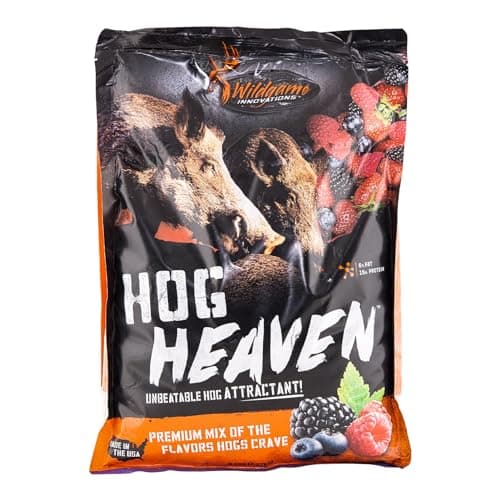
- A granular or powdered commercial attractant mixed through it — Wildgame Hog Heaven, Evolved Hog Wild and Pork Police Cherry Dynamite are all sold for exactly this, and all three publish their intended use and application on the maker's page.
- Spread, do not pile, during pre-baiting. A thin scatter inside the trap footprint makes the whole group spend time inside; a single pile lets the biggest animal own it.
Wildgame publishes Hog Heaven as a granular hog attractant; Evolved publishes Hog Wild with a label nutrient analysis, which is more than most of this category does; and Pork Police publishes Cherry Dynamite as a mix designed to be worked through a large corn pile. Read our full ranking on best hog trap bait.
Recipe 4: the scent post
Not a bait at all — a signpost. Liquids go on a stump, a post or a rub rather than on the ground, to pull hogs that are moving past towards the site.
- A liquid attractant poured over a post, a stump or a sprayed tree at hog nose height.
- Downwind of the trap or the stand, so the scent trail leads in.
- Refreshed after rain. This is the ingredient that disappears fastest.
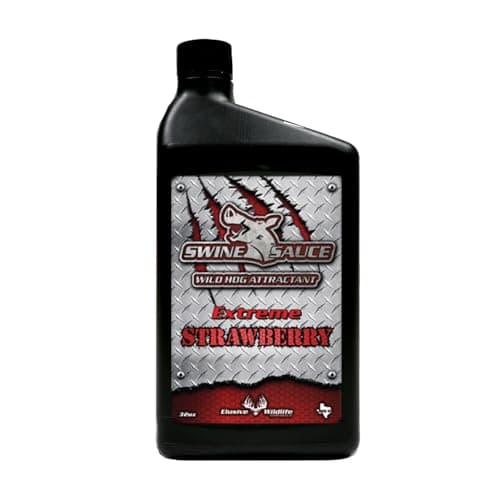
Elusive Wildlife publishes Swine Sauce for this and for boosting corn in a trap. The sow-in-heat scents in our registry are a different tool again — those target a mature boar rather than a feeding group, which is a hunting approach, not a trapping one.
What to buy instead of mixing
Our picks for this job
Four attractants that do the job of a recipe
None of these replaces corn — all four are things you add to corn. Every spec is the maker's published figure; we have not tested any of them. Scores come from our published attractant rubric.
Best granular bait for pre-baiting a trap
Wildgame Innovations Hog Heaven 5 lb
Under $5007.4/10ResearchedGranular, mixes straight through a pre-bait pile, and the easiest of the four to handle over weeks of pre-baiting.
$12.87Amazon#ad · Price as of October 11, 2026 · How we make money for the link to Wildgame Innovations Hog Heaven 5 lb
Best liquid to boost corn in a trap
Elusive Wildlife Swine Sauce (32 oz)
Under $5007.6/10ResearchedThe liquid: pour it on a post for a scent trail, or over corn in the trap to boost what is already there.
$19.99Amazon#ad · Price as of October 11, 2026 · How we make money for the link to Elusive Wildlife Swine Sauce (32 oz)
Best value bait additive for big corn piles
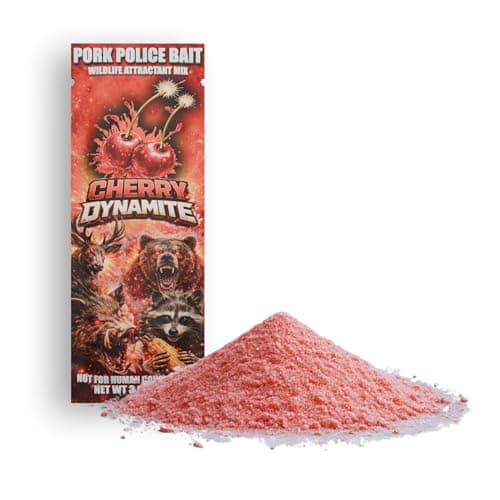
Pork Police Cherry Dynamite Wildlife Attractant Mix
Under $5007.4/10ResearchedThe value option for big corn piles, which is what a corral trap needs during pre-baiting.
$9.99Amazon#ad · Price as of October 11, 2026 · How we make money for the link to Pork Police Cherry Dynamite Wildlife Attractant Mix
Best labeled powder attractant
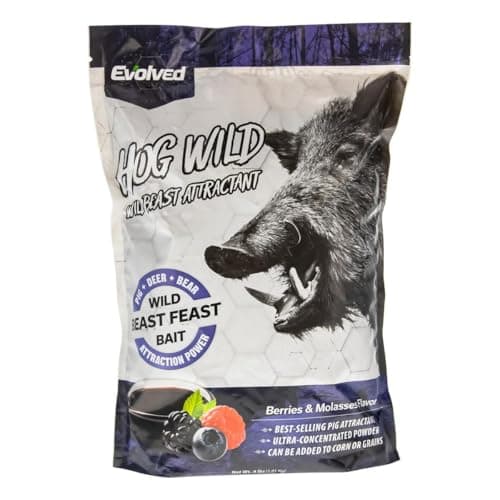
Evolved Hog Wild 4 lb
Under $5007.2/10ResearchedThe one with a published label nutrient analysis - rarer in this category than it should be.
$22.29Amazon#ad · Price as of October 11, 2026 · How we make money for the link to Evolved Hog Wild 4 lb
Ingredients to leave out, and one that is illegal
- Diesel, used motor oil and tar. These circulate as recipes for scent posts and wallows. They are environmental contamination on your own ground, they foul meat you might want to eat, and nothing in the extension literature supports them. Pig oil sold for the purpose is a labelled product; a drum of drained engine oil is not.
- Anything containing a pesticide or toxicant. This is the serious one. Feral hog toxicants are regulated in Texas by the Department of Agriculture (TDA feral hog pesticide programme), and AgriLife's own coverage of the registered bait describes a regulated product with conditions attached. Mixing a rodenticide or any other poison into corn is not a recipe, it is an offence, and it kills everything that eats it.
- Spoiled meat or animal protein. Attracts non-targets you do not want in a trap, and raises disease-transmission questions that corn simply does not.
- Antifreeze, ever. We should not have to list it. It is on recipe forums.
Placement matters more than the recipe
AgriLife's placing and baiting publication spends more words on where than on what, and that ordering is correct. The short version:
- Put it where the hogs already are — on sign, on a trail, near water and cover, not where it is convenient to drive.
- Start the bait outside the trap, then move it in. Bait the approach, then the door, then the back.
- Scatter during pre-baiting, concentrate at the back when you set. You want the whole group deep inside before the gate drops.
- Feed it every day at the same time. Hogs are creatures of routine, and routine is what you are building.
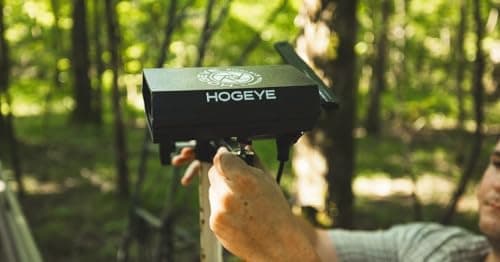
- Count on camera before you fire. See best hog trap cameras and best hog trap triggers.
Reading sign first makes all of this easier; so does knowing when the group is moving, which we cover on when are hogs most active.
Keeping deer and everything else out of it
Texas Wildlife Services' publication on reducing non-targets while trapping is the source worth reading here. Two practical levers: sour your bait, because fermented grain is markedly less attractive to deer than fresh corn; and control the trigger yourself, so you look before the gate drops. A bait recipe can reduce non-target interest. A human finger on the trigger eliminates non-target catches.
How we scored this
Every score, built from the published record
Every pick here is labeled Researched: we read each maker's published specs, manuals and warranty terms, compare products only against others in the same budget tier, and score them on a public rubric. Every figure links to where it came from, and seller performance numbers are labeled “maker's claim,” so you can see exactly what you are buying.
Scores are our editorial read of that documented evidence. Commissions never set a score or decide a pick. The rubric and its weights are published.
What changed
- Published.
Questions
Frequently asked
What is the best hog bait recipe?
How long does corn need to sour for hogs?
Does soured corn keep deer away?
Can you use diesel or used motor oil as hog bait?
Is it legal to bait feral hogs in Texas?
Receipts
Sources
- Texas A&M AgriLife: Placing and Baiting Feral Hog Traps (checked 2026-10-11)
- Texas A&M AgriLife: feral hog trapping guidance, pre-baiting and whole-sounder removal (checked 2026-10-11)
- Texas Wildlife Services: Reducing Non-Targets While Trapping (checked 2026-10-11)
- PestSmart (Australia): NATSOP-PIG001, ground baiting of feral pigs standard operating procedure (checked 2026-10-11)
- Texas Department of Agriculture: Feral Hog Pesticide regulatory programme (checked 2026-10-11)
- Texas A&M AgriLife Today: coverage of the registered feral hog toxicant (checked 2026-10-11)
- Wildgame Innovations: Hog Heaven granular attractant product page (checked 2026-10-11)
- Evolved: Hog Wild product page and label nutrient analysis (checked 2026-10-11)
- Pork Police Bait: Cherry Dynamite Wildlife Attractant Mix product page (checked 2026-10-11)
- Elusive Wildlife: Swine Sauce liquid hog attractant product page (checked 2026-10-11)
- TPWD: Outdoor Annual, Nongame and Other Species, feral hogs (checked 2026-10-11)
Specs come from each maker's own pages or the product listing (linked on every product), hog biology and trapping advice from Texas A&M AgriLife, and rules from TPWD and Texas statute. Prices are set by Amazon and change often, so we don't print them. Where a figure isn't published, we say so. Read the full method.