This page uses only figures each maker publishes, plus geometry applied to those figures. We don't test optics; our method and rubric are on the How We Choose page.
Three distances, and only one gets printed
Thermal performance has been described in terms of three tasks since long before hunting optics existed: can you tell something is there, can you tell what kind of thing it is, and can you tell which individual it is. Detection, recognition, identification. They happen at three very different distances through the same scope, and the number on the box is the first one.
The yardstick comes from work John Johnson did in 1958 in what Sandia's history calls the Night Vision Equipment Branch. He measured how many cycles — a cycle being one light-and-dark line pair — an observer needed across a target to perform each task with a 50 percent chance of success. Sandia National Laboratories' history of the Johnson criteria summarizes his figures as about 1.0 cycle for detection, 4.0 for recognition and 6.4 for identification (Sandia, SAND2015-6368).
It takes at least two pixels to draw one cycle. So at the theoretical floor, Johnson's numbers come out as roughly 2 pixels to detect something, 8 to recognize it as a pig-shaped animal, and 13 to identify it — sow or boar, shoat or yearling, hog or somebody's calf. That ratio, 2 against 13, is why detection claims are six to thirteen times longer than the distance you can actually make a decision at.
Sandia is careful about this, and so should you be. The report stresses that Johnson's figures were a simplification that "would change based on viewing angles and the contrast transfer function" of the optics, and that "the implications and required conditions of the criteria are often forgotten." A 50 percent success rate for an average observer is not a standard anybody should accept before a shot. Treat the numbers below as a floor and add margin.
What the makers actually publish
Here is every detection figure published on the maker pages behind the 20 thermal riflescopes in our registry, sorted by the claim. Nothing here is estimated; a blank means the maker publishes no detection figure at all.
| Scope | Sensor / pitch / lens | Published detection claim |
|---|---|---|
| ATN ThOR 5 640 | 640x480, 12 µm | 2,700 yd (2-16x) to 3,500 yd (5-40x) |
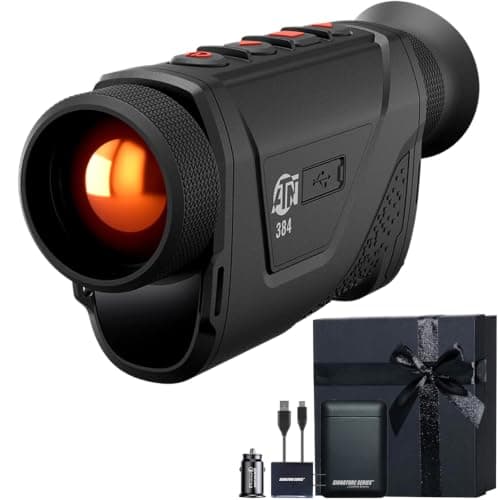
| ATN ThOR 6 Elite LRF 384 | 384x288, 12 µm, 35 mm | 2,750 m (about 3,008 yd) |
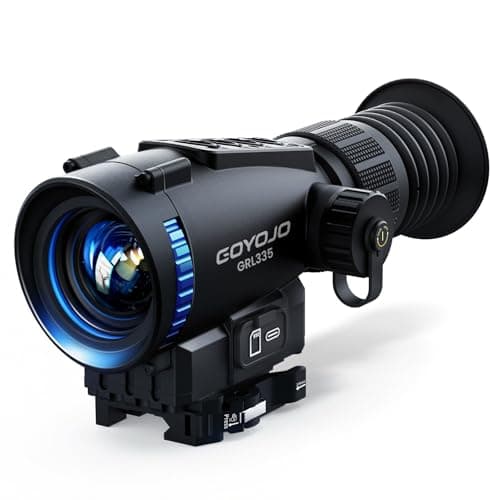
| GOYOJO GRL335 | 384x288, 12 µm, 35 mm | 2,647 m, stated for a human-size target |
| AGM Clarion 384 Dual Focus | 384x288, 12 µm, 25/50 mm | 1,200 (25 mm) / 2,600 (50 mm), listed as "m/yd" |
| Pulsar Thermion 2 XQ50 Pro and 2 LRF XQ50 Pro | 384x288, 17 µm, 50 mm | 1,800 m (about 1,969 yd) |
| oneleaf.ai Mars MT1000LRF | 640x512, 12 µm, 35 mm | 1,800 m / 1,969 yd |
| RIX Storm S3 384 and Storm S6R 640 | 384 or 640, 12 µm, 35 mm | About 1,969 yd |
| InfiRay RICO G 384 | 384x288, 12 µm, 35 mm | 1,750 yd |
| ATN ThOR 6 Mini 256 | 256x192, 12 µm, 25 mm | 1,500 m (about 1,640 yd) |
| RIX Storm S2 256 | 256x192, 25 mm | About 1,422 yd |
| Sightmark Wraith Mini 2-16x35 Thermal | 384x288, 17 µm, 35 mm | 1,400 yd (1,280 m) |
| Pulsar Talion XQ35 Pro | 384x288, 17 µm, 35 mm | 1,350 m (about 1,475 yd) |
| GOYOJO GRS225 | 256x192, 12 µm, 25 mm | 1,300 m, stated for a 1.8 m x 0.5 m target |
| ATN ThOR LTV 256 | 256x192, 12 µm | 1,000 yd |
| AGM Rattler V2 19-256 | 256x192, 12 µm, 19 mm | Up to 950 yd |
| Athlon Cronus ATS PRO 25P-250 | 256x192, 12 µm, 25 mm | Not published |
| DNT Optics Hydra 256 19 mm | 256x192, 19 mm | Not published |
| Holosun DRS-TH | 256x192, 25 mm | Not published |
Three of the scopes we rank publish no detection range at all, and we don't hold that against them. A number with no stated target and no stated conditions tells a buyer less than an honest blank does.
The giveaway: same optics, very different claims
Look at three scopes in that table with effectively the same front end — a 384x288 sensor with 12 µm pixels behind a 35 mm lens:
- ATN ThOR 6 Elite LRF 384: 2,750 m (ATN)
- GOYOJO GRL335: 2,647 m (GOYOJO)
- RIX Storm S3 384: about 1,969 yd, which is about 1,800 m (RIX)
Same sensor size, same pixel pitch, same focal length, and the top claim is more than half again the bottom one. The optics cannot be producing that difference. The measurement is. Each maker chose its own target, its own atmospheric assumption and its own definition of "detected," and none of the three publishes which.
The same thing happens in the other direction. The Pulsar Thermion 2 XQ50 Pro uses larger 17 µm pixels behind a 50 mm lens and claims 1,800 m (Pulsar) — less than the ThOR 6 Elite's 35 mm claim, even though the Pulsar's longer lens resolves about the same detail per animal. Conservative numbers from one brand read as worse optics next to optimistic numbers from another. That is the trap, and it is the reason we rank on sensor, pitch, lens, runtime and warranty rather than on detection claims. The full sensor-size argument is in our 256 vs 384 vs 640 guide.
The target nobody names
Detection range is meaningless without a target size, because the whole calculation is about how many pixels land on the thing you're looking at. One maker in our registry says what it measured against: GOYOJO states the GRS225's 1,300 m figure for a 1.8 m by 0.5 m target (GOYOJO), and describes the GRL335's figure as being for a human-size target (GOYOJO). That is the standard shape the industry uses: a standing human, tall and narrow.
A hog is neither. Texas A&M AgriLife's Feral Hogs in Texas puts the largest adults at about 5 feet long and 3 feet tall at the shoulder — long and low, roughly the same critical dimension as a standing person laid on its side. So the standard target is not wildly off for a big boar broadside. It is badly off for a shoat, which is the animal you most need to tell apart from the sow next to it when you're deciding what to shoot.
Two more things the published claims almost never state: atmospheric conditions and temperature difference. Thermal sees heat contrast, so a hog in wet brush on a mild, humid night shows far less contrast than the same hog on bare dirt after a cold front. No maker in our registry publishes the humidity or the delta-T behind its number.
Your real identification distance, worked out
You can compute the distance that matters from two specs every serious maker publishes: pixel pitch and lens focal length. The inches of ground covered by one sensor pixel equal distance in yards multiplied by 0.036, multiplied by pixel pitch in micrometers, divided by lens focal length in millimeters.
Use a hog's 3-foot shoulder height rather than its 5-foot length — that's the conservative dimension, and it's what you're looking at when the animal faces you. Solve for the distance where 36 inches spans about 13 pixels, and you get the identification distance for each optical combination we track:
| Pitch and lens | Scopes in our registry | About 13 px on a 3 ft hog | Typical published detection claim |
|---|---|---|---|
| 12 µm, 19 mm | AGM Rattler V2, DNT Hydra 256 | About 120 yd | 950 yd (about 8x the ID distance) |
| 12 µm, 25 mm | ATN ThOR 6 Mini, GOYOJO GRS225, RIX Storm S2, Athlon Cronus, Holosun DRS-TH | About 160 yd | 1,300 to 1,500 m (about 9-10x) |
| 17 µm, 35 mm | Pulsar Talion XQ35 Pro, Sightmark Wraith Mini | About 160 yd | 1,280 to 1,350 m (about 8-9x) |
| 12 µm, 35 mm | ATN ThOR 6 Elite LRF, RIX Storm S3 and S6R, GOYOJO GRL335, InfiRay RICO G, oneleaf.ai Mars | About 225 yd | 1,800 to 2,750 m (about 9-13x) |
| 17 µm, 50 mm | Pulsar Thermion 2 XQ50 Pro, Thermion 2 LRF XQ50 Pro | About 225 yd | 1,800 m (about 9x) |
| 12 µm, 50 mm | AGM Clarion 384 on its 50 mm setting | About 320 yd | 2,600 "m/yd" (about 8x, if meters) |
Two checks say the geometry is sound rather than invented. AGM publishes the Rattler V2's field of view as 49 by 36 feet at 100 yards (AGM), which is exactly what 256 pixels at 12 µm behind a 19 mm lens gives. Pulsar publishes 13.1 m at 100 m for the Thermion 2 XQ50 Pro, which works out to about 39 feet across 100 yards — again what the formula returns for 384 pixels at 17 µm behind 50 mm.
The rangefinder reality check
Here is the cleanest illustration that detection claims live in a different world from field use. The ATN ThOR 6 Elite LRF 384 claims 2,750 m detection and carries a built-in laser rangefinder rated to 1,000 m, plus or minus 1 m (ATN). The maker's own instrument for measuring distance reaches barely a third as far as the scope's claimed detection distance. The RIX Storm S6R is the same story in different numbers: about 1,969 yd detection claimed, 1,312 yd of rangefinder (RIX).
That is not a criticism of either scope — both are good units, and both are on this page's picks. It is a measure of where the useful part of the envelope stops. If a maker builds a rangefinder to a third of its own detection claim, that tells you where the maker expects you to be shooting. Our best thermal scopes with a ballistic calculator page ranks the units that measure the distance rather than leaving you to guess it, and best thermal monoculars with a rangefinder covers doing the ranging with a handheld instead.
What to buy for the distance you actually shoot
Pick the optic from your longest realistic shot, not from the box. Measure the far fence, the far side of the feeder clearing or the end of the sendero, then buy the pitch-and-lens combination whose identification distance clears it with margin.
Our picks for this job
Scopes by identification distance, not by claim
Chosen from the thermal scope registry on published pixel pitch, lens and runtime. The distances below come from the geometry above, not from any maker's detection figure.
Best all-around thermal for hogs at field distance
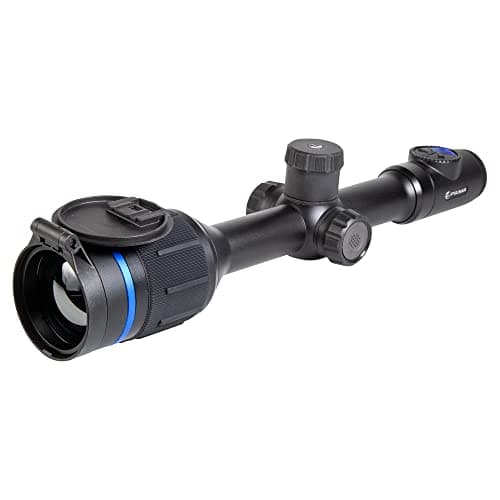
Pulsar Thermion 2 XQ50 Pro
$1,000 to $2,0008.6/10ResearchedAbout 225 yd of identification distance from a 50 mm F/1.0 lens, with up to 10 hours on dual batteries. Our top all-around hog scope, and the most conservative detection claim of any 384 here.
$1,999.97Amazon#ad · Price as of October 5, 2026 · How we make money for the link to Pulsar Thermion 2 XQ50 Pro
Best rangefinding thermal under $2,000
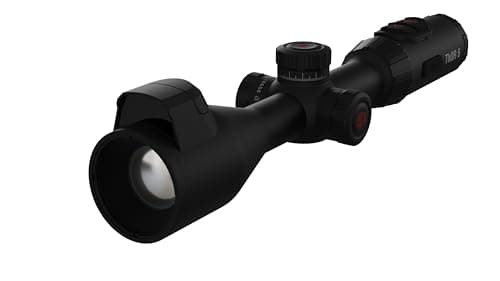
ATN ThOR 6 Elite LRF 384 3.5-28x
$1,000 to $2,0008.5/10ResearchedThe same 225 yd of identification distance, plus a rangefinder and ballistic calculator so the distance is measured. Its 3.5x base is tight inside about 75 yards.
$1,895.00Amazon#ad · Price as of October 5, 2026 · How we make money for the link to ATN ThOR 6 Elite LRF 384 3.5-28x
Best lightweight 640 with a rangefinder
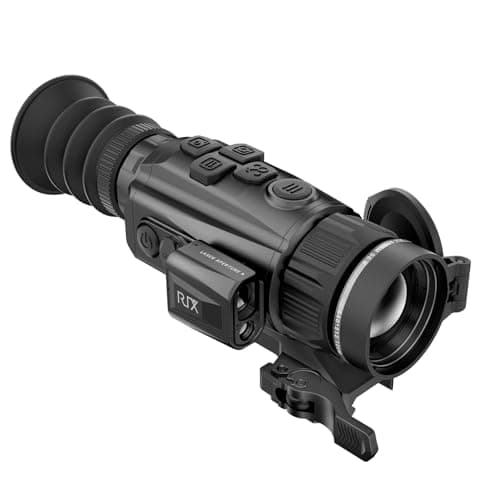
RIX Storm S6R 640 (35 mm)
$2,000 and up7.8/10Researched640x512 at a wide 2x base: the same 225 yd identification distance with far more ground in view for a moving sounder. About 4 hours per battery is the cost.
$2,599.00Amazon#ad · Price as of October 5, 2026 · How we make money for the link to RIX Storm S6R 640 (35 mm)
Best entry thermal for feeder distances
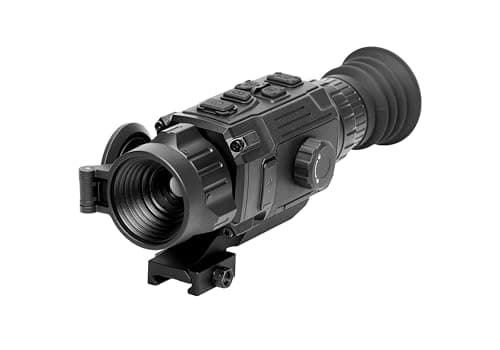
AGM Rattler V2 19-256
$500 to $1,0007.1/10ResearchedAbout 120 yd of identification distance, which is honestly enough for a lit feeder at 80 yards and not enough for open pasture. Up to 11.5 hours per battery, two included.
$695.00Amazon#ad · Price as of October 5, 2026 · How we make money for the link to AGM Rattler V2 19-256
What actually limits you, and it usually isn't the optic
Work through a night hunt and the optic is rarely the first thing to run out:
- The backstop. On most Texas properties the longest safe shot is set by what's behind the animal — a county road, a fence line, a neighbor's pasture — long before the scope runs out of detail.
- The cartridge. A hog is a tough, heavy-boned animal and the honest effective range of the popular hog calibers is well short of 300 yards. Our best caliber for hogs page works through what each one holds together at distance.
- Your rest. A 225-yard shot at night off sticks is a different proposition from the same shot off a bag in a box blind. See best shooting sticks and best box blinds.
- The zero. A scope that can resolve a hog at 225 yards still needs a confirmed zero and a known holdover. Our how to zero a thermal scope guide covers the routine.
- Finding them at all. No rifle-mounted optic should be your search tool. Scan with a handheld; our thermal monocular vs thermal scope page explains why, and clip-on thermal vs thermal scope covers the other rifle-mounted route.
And before any of it: the rules. Our summary of whether you can hunt hogs at night in Texas covers what's allowed and what notification is required.
Reading a detection claim in 30 seconds
- Find the pitch and the lens, not the claim. Those two specs set your detail. A 12 µm sensor behind 35 mm beats a 17 µm sensor behind 35 mm, whatever either box says.
- Check the units. The AGM Clarion's figures are listed as "m/yd," which is a 44 percent difference between the two readings (AGM). If a maker won't commit to meters or yards, the number isn't precise enough to compare.
- See whether a target size is stated. GOYOJO states 1.8 m x 0.5 m. Most don't. An unstated target means an uncomparable number.
- Watch for claims that vary by model variant. ATN publishes 2,700 yd for the ThOR 5 640 2-16x and 3,500 yd for the 5-40x (ATN) — same sensor, longer lens. That at least tracks the physics.
- Divide by about 10. As a rough sanity check on any 256 or 384 hog scope, a tenth of the published detection claim is close to its identification distance. Then confirm it with the pitch-and-lens math above.
- Compare the rangefinder, if there is one. A maker's own LRF range is a better guide to the intended envelope than its detection claim.
For the rest of the category, including the roundups at every budget, see the thermal and night vision hub, or start with best thermal scope for hog hunting.
How we scored this
Every score, built from the published record
Every pick here is labeled Researched: we read each maker's published specs, manuals and warranty terms, compare products only against others in the same budget tier, and score them on a public rubric. Every figure links to where it came from, and seller performance numbers are labeled “maker's claim,” so you can see exactly what you are buying.
Scores are our editorial read of that documented evidence. Commissions never set a score or decide a pick. The rubric and its weights are published.
What changed
- Published.
Questions
Frequently asked
How far can a thermal scope really see a hog?
Why do two thermal scopes with the same sensor claim very different ranges?
Is detection range the same as shooting range?
Does a bigger sensor see further?
Do weather and temperature change how far a thermal scope sees?
What detection range do I need for a feeder at 100 yards?
Receipts
Sources
- Sandia National Laboratories: History and Evolution of the Johnson Criteria (SAND2015-6368, 2015; via OSTI, checked 2026-09-19)
- Pulsar: Thermal vs Night Vision: Full Comparison Guide, including the detection-claim caution (checked 2026-09-19)
- GOYOJO Optics: GRS Series (GRS225 / GRS225RF) product page, detection range stated for a 1.8 m x 0.5 m target (checked 2026-09-19)
- GOYOJO Optics: GRL Series (GRL325 / GRL335 / GRL635) product page and spec table (checked 2026-09-19)
- ATN: ThOR 6 LRF 384x288 3.5-28x (Elite series) product page: 2,750 m detection and 1,000 m rangefinder (checked 2026-09-19)
- ATN: ThOR 6 Mini 256x192 3.5-28x product page and spec table (checked 2026-10-04)
- ATN: ThOR 5 640 product page with per-variant detection claims (checked 2026-09-19)
- Pulsar: Thermion 2 XQ50 PRO product page and full specification, including 13.1 m at 100 m (checked 2026-09-19)
- RIX Optics: STORM S3 product page and FAQ (checked 2026-09-19)
- RIX Optics: STORM S6R product page and FAQ, including the 1,312 yd rangefinder (checked 2026-09-19)
- AGM Global Vision: Rattler V2 19-256 product page, including the 49 x 36 ft field of view at 100 yd (checked 2026-09-19)
- AGM Global Vision: Clarion 384 Dual Focus product page and spec table (checked 2026-09-19)
- Texas A&M AgriLife Extension: Feral Hogs in Texas, B-6149 (2004; PDF, checked 2026-09-19)
- TPWD: Hunter Education, Shooting Safety Rules (checked 2026-09-19)
Specs come from each maker's own pages or the product listing (linked on every product), hog biology and trapping advice from Texas A&M AgriLife, and rules from TPWD and Texas statute. Prices are set by Amazon and change often, so we don't print them. Where a figure isn't published, we say so. Read the full method.