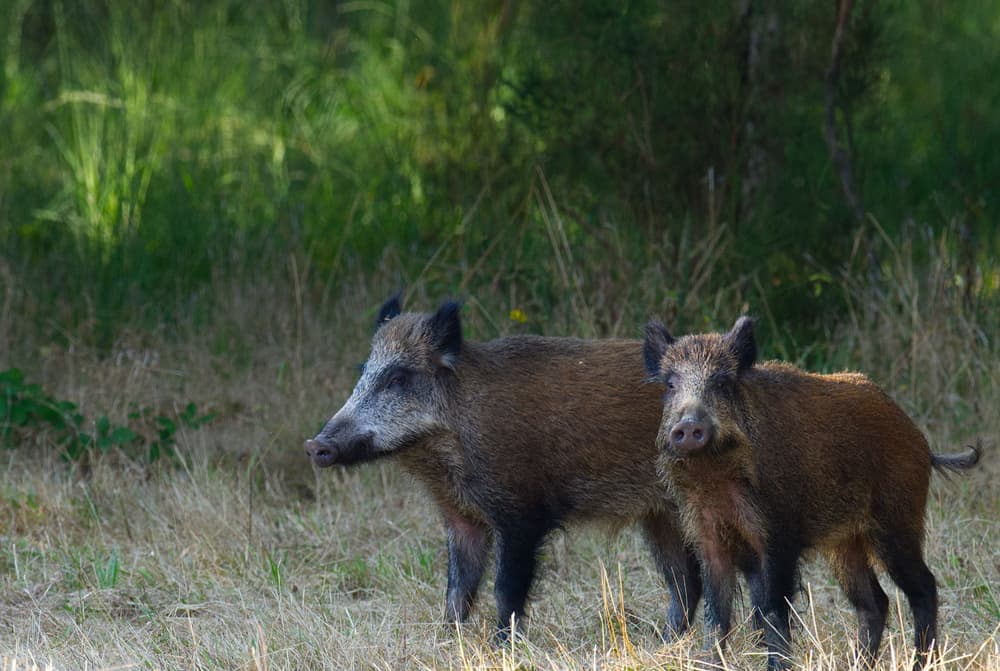
The contenders
Side by side
 Stock photo
Top monocular: find, identify and range
Pulsar Oryx LRF XG35
$2,000 and up8.5/10A 640x480 sensor behind a 35 mm lens with a built-in rangefinder: as much detail per hog as the Thermion scope, in a handheld you can glass with all night.
Check price · Amazon#ad · Price set by Amazon · How we make money for the link to Pulsar Oryx LRF XG35
 Stock photo
Top scope: the one that aims
Pulsar Thermion 2 XQ50 Pro
$1,000 to $2,0008.6/10Our top-ranked thermal riflescope for hogs: 50 mm lens, up to 10 hours with a swappable external pack, IPX7 and a 6000 J recoil rating.
Check price · Amazon#ad · Price set by Amazon · How we make money for the link to Pulsar Thermion 2 XQ50 Pro
- Stock photo
The monocular most people need
Pulsar Axion Compact XQ19
$500 to $1,0007.6/10A pocket 384 scanner at 8.8 oz with a wide view for sweeping feeders and field edges; less detail per hog than the scope, which is fine for finding them.
Check price · Amazon#ad · Price set by Amazon · How we make money for the link to Pulsar Axion Compact XQ19
- Stock photo
Budget scanner
AGM Taipan V2 10-256
Under $5007.1/10The cheapest way to add a thermal scanner to any rifle setup: under $500, swappable 18650s and a five-year transferable warranty. Built for close cover.
Check price · Amazon#ad · Price set by Amazon · How we make money for the link to AGM Taipan V2 10-256
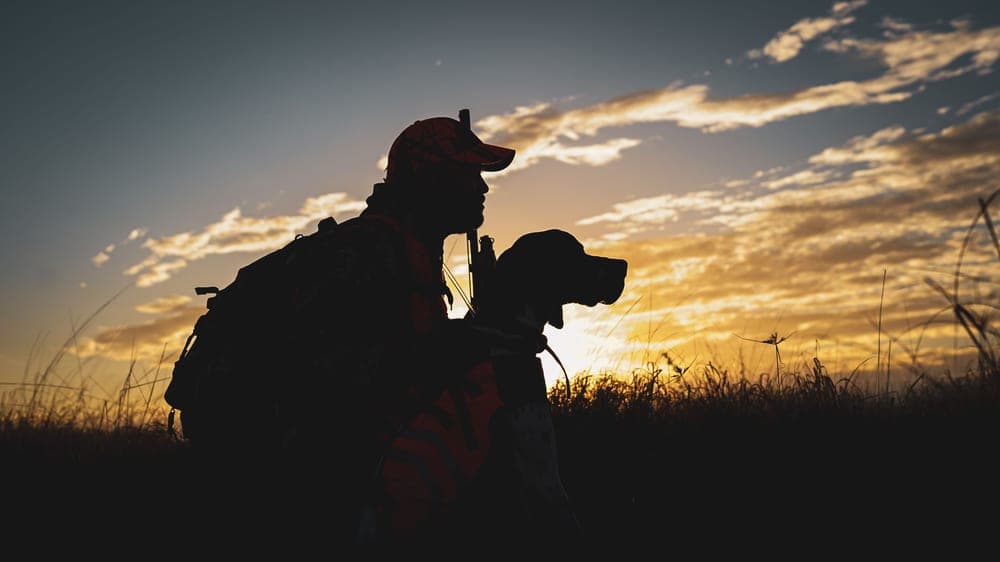
We haven't tested these units; scores come from published specs and the rubric on our How We Choose page. Every figure in the table below links to the maker's page, and the pixel math further down is geometry from those published specs, not a field test.
Two tools, two jobs
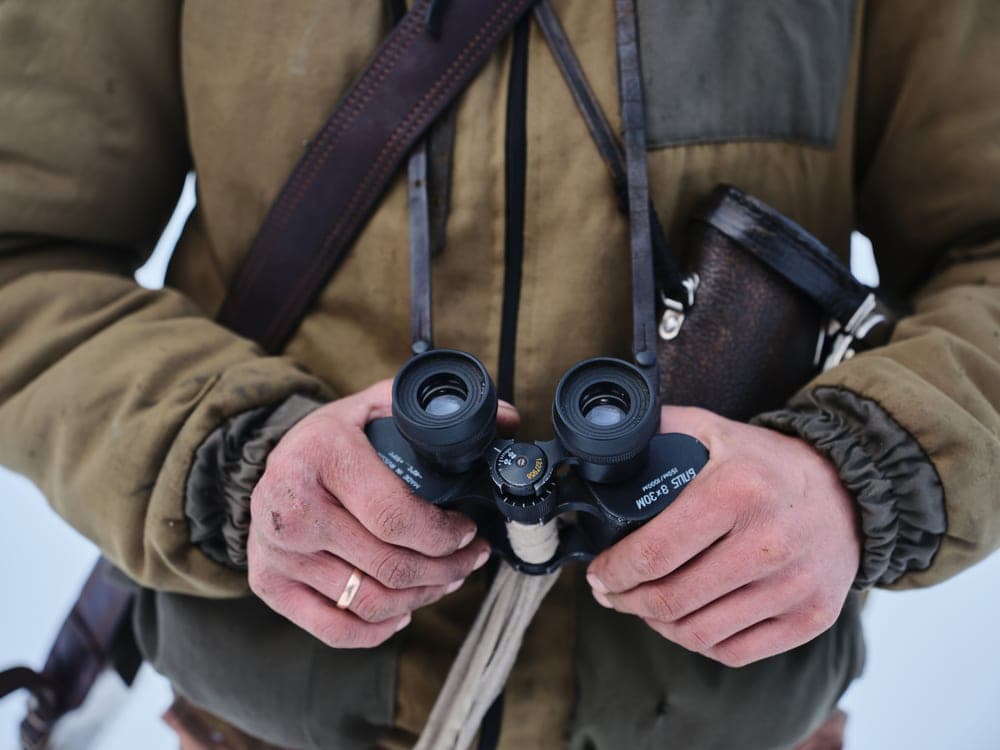
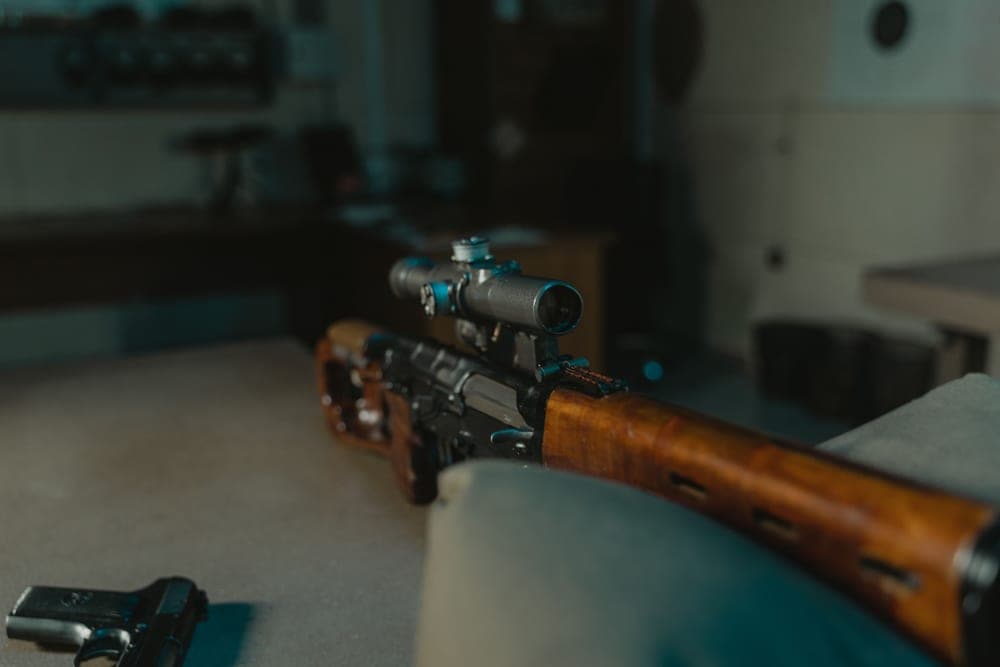
A thermal monocular is a handheld viewer. You carry it on a lanyard or in a pocket and hold it to your eye to look. A thermal scope is mounted on the rifle, zeroed, and wears a reticle. Both use the same kind of sensor, but they do different jobs in the sequence of a night hunt: one finds and identifies, the other aims.
The reason that split matters is safety, and Texas hunter education says it plainly. TPWD's shooting safety rules begin with "Always point the muzzle in a safe direction" and "Do not point a firearm or bow at anything you do not intend to shoot." On identification, the same page says: "Until your target is fully visible and in good light, do not even raise your scope to see it. Use binoculars!" That rule was written for daylight hunting, but the principle carries straight into the dark: identify with something that isn't attached to the rifle. At night, a thermal monocular is those binoculars.
If you scan a tree line with only a riflescope, the muzzle sweeps across everything you look at: cattle, a neighbor's dog, a truck on the county road, a person walking a fence. With a monocular, the rifle stays on the rest, pointed somewhere safe, until you know what you're looking at and what's behind it.
Thermal monocular vs thermal scope at a glance
| Thermal monocular | Thermal scope | |
|---|---|---|
| Main job | Find, count and identify hogs; check traps and feeders | Aim and shoot, after the hog is identified |
| Muzzle while scanning | Rifle stays on the rest, pointed safely | The rifle points wherever you look |
| Weight (our picks) | 8.8 oz (Axion XQ19), 0.60 lb (Taipan V2), 17.64 oz (Oryx), per the makers | 31.7 oz on the rifle (Thermion 2 XQ50 Pro), per Pulsar |
| View | Wide on compact models: about 20° across on the Axion XQ19 by the sensor-and-lens geometry | Narrower: 7.5° published for the Thermion 2 XQ50 Pro |
| Recoil rating | Not needed; none listed on our monocular picks | Essential; the Thermion lists 6000 J |
| Rangefinder | On some models (the Oryx LRF XG35) | On some models (not the Thermion 2 XQ50 Pro) |
| Cheapest tier in our registry | Under $500 (Taipan V2, BlazeSeeker 6, TOPDON TS004) | $500 to $1,000 |
The picks side by side
The Oryx LRF XG35 is our top-ranked thermal monocular, and the Thermion 2 XQ50 Pro is our top-ranked thermal riflescope for hogs. The Axion Compact XQ19 and Taipan V2 are the scanners most landowners can justify next to a scope.
| Published spec | Pulsar Oryx LRF XG35 | Pulsar Thermion 2 XQ50 Pro | Pulsar Axion Compact XQ19 | AGM Taipan V2 10-256 |
|---|---|---|---|---|
| Budget tier | $2,000 and up | $1,000 to $2,000 | $500 to $1,000 | Under $500 |
| Sensor | 640x480 | 384x288 (uncooled) | 384x288 | 256x192 |
| Pixel pitch | 12 µm | 17 µm | 17 µm | 12 µm |
| NETD | <40 mK (sensor sNETD <20 mK) | <25 mK (sNETD <18 mK) | <18 mK | Sub-35 mK |
| Lens | 35 mm, F1.0 | 50 mm, F/1.0 | 19 mm, F1.0 | 10 mm, F1.0 |
| Magnification | 2.5-20x | 3-12x | 1.5-6x | 1x base; 1.5-12x digital |
| Rangefinder | Built in, up to 1,640 yd (1,500 m), with SCAN mode (maker's claim) | — | — | — |
| Battery | Up to 12 h; accepts an external APS 5 pack | Internal APS5 plus external APS2, up to 10 h at 22°C; USB-C (5 V/9 V) external power | Up to 8 h on a removable APS3 pack; USB-C charging | Up to 7 h per replaceable 18650; 2 included; USB-C external power |
| IP rating | IP67 | IPX7 | IPX7 | IP67 |
| Weight | 17.64 oz with battery | 0.9 kg (31.7 oz) | 8.8 oz with battery | 0.60 lb |
| Warranty | 3 years; 5 years with registration | 3 years; 5 years with registration | 3 years; 5 years with registration | 5 years, transferable |
| Score | 8.5/10 | 8.6/10 | 7.6/10 | 7.1/10 |
How scan-then-shoot works from a stand
- Set the rifle first. Rifle on its rest or sticks, pointed at the lane or feeder, safety on. Everything else happens with the monocular.
- Sweep wide. Scan the brush line, the field edge and the trail in. A compact monocular's wide view covers ground quickly. Pulsar's comparison guide lists "rapid detection across large or broken terrain" as a thermal strength (Pulsar).
- Identify and count. Once something warm shows up, zoom in and confirm it's a hog. Count the sounder and note any small ones. Look past it, too: TPWD says to "know what is in front of and behind your target" and to make sure you have "a safe backstop or background."
- Range it if you can. A monocular with a rangefinder, like the Oryx (1,640 yd, maker's claim), gives you the distance before you touch the rifle.
- Move to the scope. Only now does the rifle come into it. You already know where the animal is, what it is and what's behind it.
- Watch after the shot. Use the monocular again to watch where the hogs go.
TPWD's hunting-safety chapter adds one more line worth keeping in mind at night: "always use binoculars to identify your target" ( TPWD hunter education, hunting safety).
Detail per hog: a finder vs an aimer
Compact monoculars trade detail for a wide view, and that's the right trade for finding hogs. The geometry shows it. The inches of ground one sensor pixel covers equal distance in yards × 0.036 × pixel pitch in µm ÷ lens in mm. The same geometry reproduces the published fields of view on most of the scopes we track, and on the Oryx (12.5° published). Applied to a 5-foot hog, the size Texas A&M AgriLife gives for the largest adults, at 100 yards:
- Taipan V2 10-256 (12 µm, 10 mm): about 4.3 in per pixel, so about 14 pixels across the hog.
- Axion Compact XQ19 (17 µm, 19 mm): about 3.2 in per pixel, about 19 pixels.
- Oryx LRF XG35 (12 µm, 35 mm): about 1.2 in per pixel, about 49 pixels.
- Thermion 2 XQ50 Pro (17 µm, 50 mm): about 1.2 in per pixel, about 49 pixels.
Two takeaways. A compact scanner like the Axion or Taipan shows you the sounder and roughly how many there are, but at 100 yards the scope shows each hog in more detail than the scanner does. That's fine: the scanner's job is to find, and you confirm through the scope before you shoot. The Oryx is the exception: with 640 pixels across a 35 mm lens, it matches the Thermion's detail per hog and still shows a wider 12.5° view, which is why it tops our monocular rankings. The full method, with a table for every sensor size, is in our thermal resolution guide.
Weight: in your pocket or on your rifle
The weight you carry lands in different places. The Axion XQ19 weighs 8.8 oz with its battery and the Taipan V2 0.60 lb, pocket weights (Pulsar; AGM). The Oryx is 17.64 oz, closer to a pair of binoculars. The Thermion 2 XQ50 Pro adds 31.7 oz to the rifle (Pulsar). If you walk to a feeder and back, a pocket scanner costs you almost nothing to bring. If you hold a scoped rifle up to scan, you're holding the scope's weight plus the rifle's the whole time, which is one more reason to scan with the handheld.
Battery life is similar across the good ones: Pulsar rates the Axion up to 8 hours on a removable pack, the Oryx up to 12 hours, and the Thermion up to 10. The Taipan runs up to 7 hours per 18650, with two included, and AGM adds a tilt sensor that turns the display off when you lower it.
The cost of owning both
Here's what a scan-and-shoot pair costs, using the budget tiers we recorded from Amazon (prices change, so treat these as bands, not quotes):
| Pair | Monocular tier | Scope tier | Combined, by tier |
|---|---|---|---|
| Budget: Taipan V2 + a 256 scope such as the ATN ThOR 6 Mini | Under $500 | $500 to $1,000 | Under $1,500 |
| Middle: Axion Compact XQ19 + Thermion 2 XQ50 Pro | $500 to $1,000 | $1,000 to $2,000 | About $1,500 to $3,000 |
| Top: Oryx LRF XG35 + Thermion 2 XQ50 Pro | $2,000 and up | $1,000 to $2,000 | Over $3,000 |
The budget pair is the interesting one. For less than the top of the $1,000-to-$2,000 scope tier, you get a scanner and a scope. The scope in that pair is a close-range tool: our best thermal scopes under $1,000 covers which budget scope fits your distances. And if a thermal scope isn't in the budget at all, a thermal scanner paired with a digital night vision scope or a hunting light is a legitimate setup; our thermal vs night vision comparison walks through it.
If you can only buy one
Buy the monocular first if you're still figuring out the hogs. It's the tool for checking where they enter a field, how big the sounder is and whether all of them are coming to bait. That last one matters if you trap: Texas A&M AgriLife's trap-placement publication says to keep pre-baiting inside the trap "to ensure the entire sounder (group) is comfortable entering the trap" (Placing and Baiting Feral Hog Traps). A handheld thermal lets you look without walking up on the trap. It also pairs with whatever you shoot with now, a light or a night vision scope.
Buy the scope first if you're ready to shoot and have a separate way to identify, or you can add even a budget scanner soon after. The thermal scope is the harder, more expensive piece to get right, so some buyers put the money there and add a scanner later. Just don't let the scope become your scanner in the meantime.
Our best thermal monoculars for hunting ranks the scanners, and our best thermal scopes for hog hunting ranks the scopes at every budget.
Where a clip-on thermal fits
A clip-on thermal sits in front of the day scope you already own, so the rifle keeps its daytime zero. It's a good answer to "one rifle for deer season and night hogs," but it's still mounted on the rifle, so it doesn't replace a handheld for scanning. Our best clip-on thermal picks cover that route.
Before a night hunt with any of these, check the rules in our summary of whether you can hunt hogs at night in Texas, and see the thermal and night vision hub for the rest of the category.
In detail
The contenders, in full
Stock photoTop monocular: find, identify and range
Pulsar Oryx LRF XG35
A 640x480 sensor behind a 35 mm lens with a built-in rangefinder: as much detail per hog as the Thermion scope, in a handheld you can glass with all night.
Published specsResearched · not tested by us
| Sensor | 640x480 |
|---|---|
| Pixel pitch | 12 µm |
| NETD | <40 mK (sensor sNETD <20 mK) |
| Lens | 35 mm, F1.0 |
| Magnification | 2.5-20x |
| Refresh rate | 50 Hz |
| Detection range | 1,950+ ydMaker's claim |
| Rangefinder | Built in, up to 1,640 yd (1,500 m), with SCAN modeMaker's claim |
| Display | 1024x768 AMOLED |
| Battery | Up to 12 h; accepts an external APS 5 pack |
| Recording | Photo and video to 64 GB; dual-band Wi-Fi (Stream Vision 2) |
| IP rating | IP67 |
| Weight | 17.64 oz with battery |
| Warranty | 3 years; 5 years with registration |
How the 8.5 score breaks down
- Sensor & lens for hog ID (30%)
- 9.3
- Usability at night (20%)
- 8.5
- Battery & power (15%)
- 8.5
- Durability (15%)
- 8
- Warranty & support (10%)
- 8.5
- Value within its tier (10%)
- 6.5
What the specs support
- 640x480 sensor and a 35 mm F1.0 lens: the most published detail in this group for sizing hogs at distance
- Built-in laser rangefinder with a continuous SCAN mode for moving animals
- Up to 12 hours rated, plus an external battery pack option
- IP67 and a warranty that extends to 5 years with registration
Where it falls short
- Heaviest monocular here at about 17.6 oz
- Standard NETD is listed as <40 mK (sensor-level sNETD <20 mK), so compare sensitivity figures carefully
- Top budget tier; more than most landowners need for feeder checks
Skip this if…
…You only scan feeders and brush lines inside 200 yards; a compact 384 monocular does that job from a much lower budget tier.
#ad · Price set by Amazon · How we make money for the link to Pulsar Oryx LRF XG35
Stock photoTop scope: the one that aims
Pulsar Thermion 2 XQ50 Pro
Our top-ranked thermal riflescope for hogs: 50 mm lens, up to 10 hours with a swappable external pack, IPX7 and a 6000 J recoil rating.
Published specsResearched · not tested by us
| Sensor | 384x288 (uncooled) |
|---|---|
| Pixel pitch | 17 µm |
| NETD | <25 mK (sNETD <18 mK) |
| Lens | 50 mm, F/1.0 |
| Magnification | 3-12x |
| Refresh rate | 50 Hz |
| Field of view | 7.5° horizontal (13.1 m at 100 m) |
| Detection range | 1,800 m (about 1,969 yd)Maker's claim |
| Display | 1024x768 AMOLED |
| Battery | Internal APS5 plus external APS2, up to 10 h at 22°C; USB-C (5 V/9 V) external power |
| Recording | 16 GB internal; Wi-Fi (2.4/5 GHz) to Stream Vision 2 app |
| IP rating | IPX7 |
| Recoil rating | 6000 J on rifled weapons; 12 gauge on smoothbores |
| Operating temperature | -25°C to +50°C |
| Weight | 0.9 kg (31.7 oz) |
| Mount | Standard 30 mm rings |
| Warranty | 3 years; 5 years with registration |
How the 8.6 score breaks down
- Sensor & lens for hog ID (30%)
- 8.5
- Usability at night (20%)
- 8.5
- Battery & power (15%)
- 9
- Durability (15%)
- 9
- Warranty & support (10%)
- 8.5
- Value within its tier (10%)
- 7.5
What the specs support
- Big 50 mm F/1.0 lens with a 3x base: more detail on a hog at field distance than 25-35 mm scopes
- Swappable external APS2 pack on top of the internal battery, up to 10 h, plus USB-C power
- IPX7, 6000 J recoil rating and a -25°C to +50°C operating range, all published
- Mounts in standard 30 mm rings; five zero profiles and 10 reticles
Where it falls short
- 17 µm pixels versus 12 µm on newer 384 scopes; field of view at 3x is narrower than a 35 mm scope
- Heaviest scope in its tier at 31.7 oz
- No built-in rangefinder (that's the Thermion 2 LRF)
Skip this if…
…Your hogs come to a feeder inside 60 yards in thick brush; a 3x base on a 50 mm lens is slower to pick up close movement than a 2x, 25-35 mm scope.
#ad · Price set by Amazon · How we make money for the link to Pulsar Thermion 2 XQ50 Pro
Stock photoThe monocular most people need
Pulsar Axion Compact XQ19
A pocket 384 scanner at 8.8 oz with a wide view for sweeping feeders and field edges; less detail per hog than the scope, which is fine for finding them.
Published specsResearched · not tested by us
| Sensor | 384x288 |
|---|---|
| Pixel pitch | 17 µm |
| NETD | <18 mK |
| Lens | 19 mm, F1.0 |
| Magnification | 1.5-6x |
| Refresh rate | 50 Hz |
| Detection range | 820 ydMaker's claim |
| Display | 640x400 AMOLED |
| Battery | Up to 8 h on a removable APS3 pack; USB-C charging |
| Recording | Photo and video to 64 GB internal memory; dual-band Wi-Fi (Stream Vision 2) |
| IP rating | IPX7 |
| Weight | 8.8 oz with battery |
| Warranty | 3 years; 5 years with registration |
How the 7.6 score breaks down
- Sensor & lens for hog ID (30%)
- 7.5
- Usability at night (20%)
- 7.5
- Battery & power (15%)
- 8
- Durability (15%)
- 7.5
- Warranty & support (10%)
- 8.5
- Value within its tier (10%)
- 7
What the specs support
- 384x288 sensor with a published NETD under 18 mK in a body under 9 oz
- Removable APS3 battery rated up to 8 hours, so a spare pack stretches a long night
- IPX7 magnesium body rated from -13°F to 104°F
- Warranty extends to 5 years when you register the unit
Where it falls short
- The 19 mm lens and 1.5x base magnification favor wide scanning over long-range detail
- The 640x400 display is low resolution next to Pulsar's larger units
- Priced at the upper edge of its budget tier
Skip this if…
…You mostly glass open pasture well past 500 yards; the 19 mm lens runs short of detail there, and a 35 mm unit like the Oryx fits that job better.
#ad · Price set by Amazon · How we make money for the link to Pulsar Axion Compact XQ19
Stock photoBudget scanner
AGM Taipan V2 10-256
The cheapest way to add a thermal scanner to any rifle setup: under $500, swappable 18650s and a five-year transferable warranty. Built for close cover.
Published specsResearched · not tested by us
| Sensor | 256x192 |
|---|---|
| Pixel pitch | 12 µm |
| NETD | Sub-35 mK |
| Lens | 10 mm, F1.0 |
| Magnification | 1x base; 1.5-12x digital |
| Refresh rate | 50 Hz |
| Detection range | 500 m/ydMaker's claim |
| Display | 1280x960 LCOS |
| Battery | Up to 7 h per replaceable 18650; 2 included; USB-C external power |
| Recording | 16 GB; Wi-Fi (AGM Connect app) |
| IP rating | IP67 |
| Weight | 0.60 lb |
| Warranty | 5 years, transferable |
How the 7.1 score breaks down
- Sensor & lens for hog ID (30%)
- 5
- Usability at night (20%)
- 7
- Battery & power (15%)
- 8.5
- Durability (15%)
- 7.5
- Warranty & support (10%)
- 9
- Value within its tier (10%)
- 8.5
What the specs support
- Replaceable 18650 battery with two in the box
- A 90° tilt sensor turns the display off when you lower it, saving battery
- IP67 with a 5-year transferable warranty
- 1280x960 display is sharp for the tier
Where it falls short
- The 10 mm lens and sub-35 mK NETD limit detail beyond close range
- 16 GB of storage is the smallest in this group
Skip this if…
…You need to judge hog size across an open field rather than inside the tree line; the 10 mm lens is built for wide, close scanning.
#ad · Price set by Amazon · How we make money for the link to AGM Taipan V2 10-256
How we scored this
Units we claim to have tested: 0
Plenty of gear sites say they field-tested everything they list. We haven't, and we say so. Every pick here is labeled Researched: we read each maker's published specs, manuals and warranty terms, compare products only against others in the same budget tier, and score them on a public rubric. Every figure links to where it came from, and seller performance numbers are labeled “maker's claim.”
Scores are editorial judgments from that documented research, not test results. Commissions never set a score or decide a pick. The rubric and its weights are published.
What changed
- Published.
Questions
Frequently asked
Can you use a thermal scope as a monocular?
Should I buy a thermal monocular or a thermal scope first?
Is a thermal monocular worth it for hog hunting?
Can I mount a thermal monocular on a rifle?
How much detail does a thermal monocular show compared to a scope?
Receipts
Sources
- TPWD: Hunter Education, Shooting Safety Rules (checked 2026-09-19)
- TPWD: Hunter Education online course, Chapter 6: Hunting Safety (checked 2026-09-19)
- Pulsar: Oryx LRF XG35 Thermal Monocular product page and spec table (checked 2026-09-19)
- Pulsar: Axion XQ19 Compact Thermal Monocular product page and spec table (checked 2026-09-19)
- Pulsar: Thermion 2 XQ50 PRO product page and full specification (checked 2026-09-19)
- AGM Global Vision: Taipan V2 10-256 product page and specifications (checked 2026-09-19)
- Pulsar: Thermal vs Night Vision: Full Comparison Guide (updated July 23, 2026; checked 2026-09-19)
- Texas A&M AgriLife: Placing and Baiting Feral Hog Traps (IRNR-PU-060, Feb. 2011; checked 2026-09-19)
- Texas A&M AgriLife Extension: Feral Hogs in Texas, B-6149 (2004; PDF, checked 2026-09-19)
- ATN: ThOR 6 Mini 256x192 2-16x product page (checked 2026-09-19)
We haven't tested the gear on this page and we don't pretend to. Specs come from each maker's own pages or the product listing (linked on every product), hog biology and trapping advice from Texas A&M AgriLife, and rules from TPWD and Texas statute. Prices are set by Amazon and change often, so we don't print them. Where a figure isn't published, we say so. Read the full method.