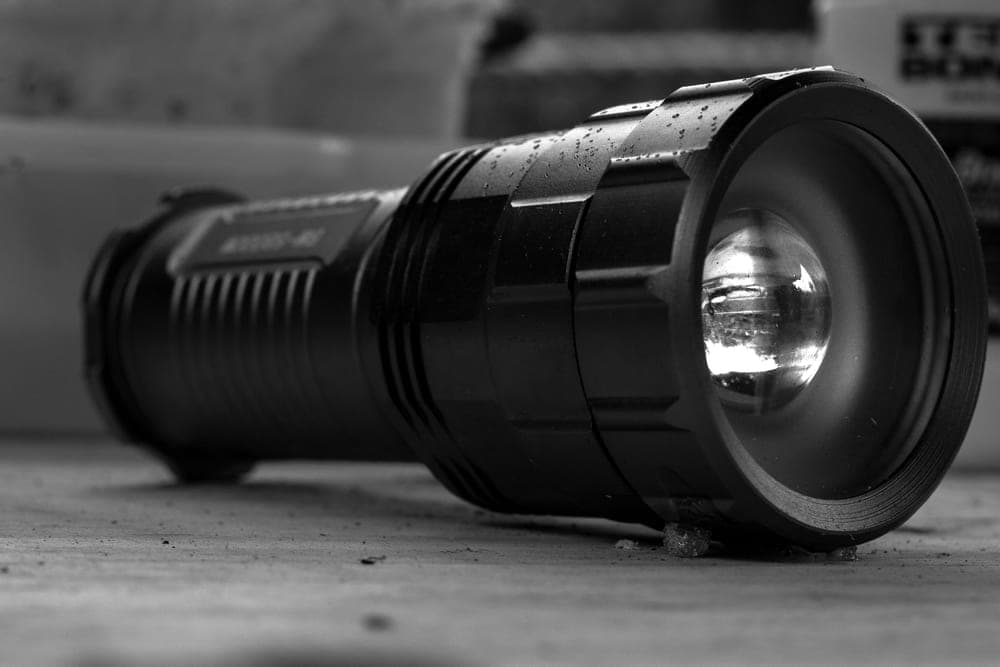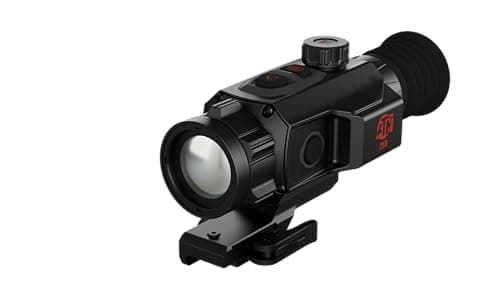
An AR-15 is the right platform for feral hogs for three reasons: fast follow-up shots on a group that scatters, light recoil so you can actually make those shots, and a rail system that takes the optic and light a night hunt requires. What people get wrong is the order they buy things in.
The order to spend money in
If you have a working AR and a budget, this is the sequence that puts the most hogs on the ground per dollar:
- The optic. You cannot shoot what you cannot identify. This is 60 to 80 percent of a hog setup's cost and all of its capability.
- The mount. A good optic on a bad mount loses zero. Non-negotiable, and cheap relative to the glass.
- A dimmable light (or an IR illuminator, depending on the optic), on a mount you can adjust.
- A rest. A tripod or sticks. The cheapest accuracy on the list.
- Everything else. Sling, spare magazines, a better trigger, a suppressor. All real improvements, none of them the reason you are missing hogs.
1. The optic
Three routes, and the right one depends on whether your problem is finding hogs or shootingthe ones you have already located at a feeder.
- Thermal. Finds animals in cover and needs no light at all. For an AR, prioritise a wide base magnification — 2x to 2.5x rather than 3.5x — because hogs at feeder distance move and a narrow window loses them. Start with our best thermal scope for an AR-15.
- Digital night vision. Cheaper, works in daylight too, and shows you a picture that looks like the world — but needs an illuminator and cannot see into brush. See best night vision scope for an AR-15.
- A clip-on in front of your day scope. Keeps the optic and zero you already trust. Covered on clip-on vs thermal scope.
Whatever you pick, check the published recoil rating. A gas-operated semi-auto puts a sharp, repeated impulse into an optic; 6000 J is the figure the better thermal makers publish, and an optic with no stated rating is an unknown on an AR.
2. Mount height and rail space
Two decisions people make by accident and regret later.
- Height over bore. A thermal or night vision scope sits higher than a red dot, and higher than a traditional scope on rings. That raises your cheek weld — which is fine if your stock has a riser or an adjustable comb, and uncomfortable if it does not. Decide the mount and the stock together.
- Rail real estate. You need room for the optic, a light or illuminator, and possibly a switch. Measure before you buy: a long thermal body on a short handguard leaves nowhere for the light, which forces you to a scope-tube or offset mount. Our light mounting guide covers the options and the shadow problems each one creates.
Torque the mount to the maker's spec, with thread locker if they call for it, and re-check it after the first few outings. Most "lost zero" stories are mount stories.
3. The light
What you need depends on the optic:
- With thermal: a visible light is still worth having to confirm what you are looking at and to see the animal go down. Red or green, dimmable, and off until needed.
- With digital night vision: an infrared illuminator is the operative part. 850 nm throws further; 940 nm is far less visible to pressured hogs. Ranked on our IR illuminator page.
- With a day scope: a dimmable three- or four-color gun light is the whole night-hunting capability. Our hog hunting light ranking covers it.
The feature to pay for in every case is dimming — a rheostat or stepless switch that brings the beam up from nothing. A light that snaps on at full power pushes a feeding sounder out of the field.
4. Something to rest on
An AR is light, which is good for carrying and bad for holding still. Any rest is a large improvement, and a clamping tripod lets you hold a rifle on a feeder for an hour without your arms deciding the shot. We compare the options on shooting sticks vs bipod vs tripod — short version: a clamp for sitting still, a yoke stick for moving, and a bipod only if you shoot prone.
Our picks for this job
A working night-hog AR, in three purchases
The optic that identifies the animal, the light that confirms it, and the rest that makes the shot repeatable - in the order we would buy them.
Best lightweight 384 under $2,000
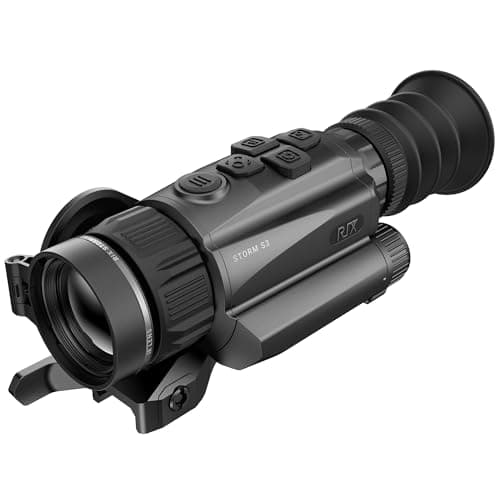
RIX Storm S3 384 (35 mm)
$1,000 to $2,0007.4/10ResearchedA 12 micron 384 behind a 35 mm F1.0 lens at under a pound, with a published 6000 J recoil rating and five years of warranty. Carry spare 18650s.
$1,299.00Amazon#ad · Price as of November 3, 2026 · How we make money for the link to RIX Storm S3 384 (35 mm)
Best 4-color light with IR
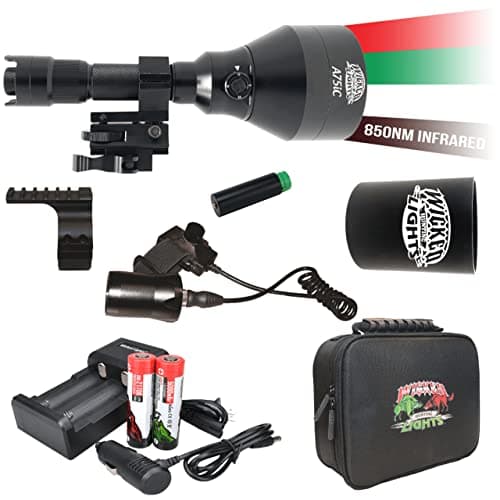
Wicked Lights A75iC 4-Color-in-1
Under $5007.9/10ResearchedRed, green, white and 850 nm IR in one center-axis head with rheostat dimming on every color, plus a quick-detach mount and a coil-cord tail cap.
$299.95Amazon#ad · Price as of November 3, 2026 · How we make money for the link to Wicked Lights A75iC 4-Color-in-1
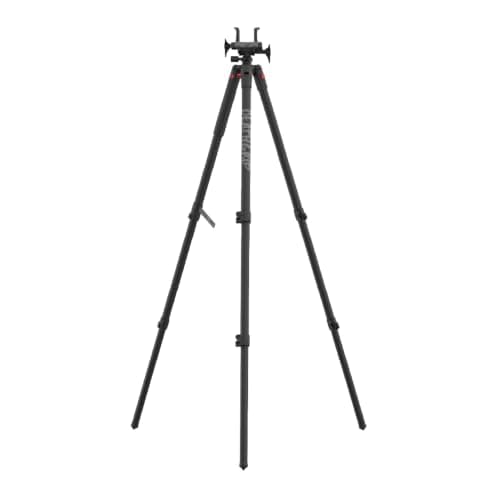
Best clamping tripod for sitting a feeder
BOG DeathGrip Tripod (Aluminum)
Under $5007.7/10ResearchedClamps the rifle hands-free from 7 to 59 in with 360-degree pan, so an hour of waiting does not cost you the shot.
$164.29Amazon#ad · Price as of November 3, 2026 · How we make money for the link to BOG DeathGrip Tripod (Aluminum)
5. The small things that matter
- Magazines you trust, and more than one. A sounder gives you seconds. Three loaded 30-rounders beat a perfect trigger.
- A sling you can shed. Useful on the walk in, and genuinely in the way when you are shooting off a tripod. A quick-detach sling point solves both.
- A switch you can reach without moving your grip. A pressure pad on the handguard where your support thumb sits, or a tail-cap dimmer you can find in the dark.
- Battery discipline. Optic, light and illuminator all have cells. Charge them all before the sit and carry spares on your body, not in a cold truck.
- A trigger, if anything is left. It genuinely helps a precise shot, and it is the last thing to buy.
- A suppressor, if you are willing to do the paperwork. Hearing protection and less disturbance to the group matter more on hogs than on most game. Texas rules are on our laws page.
Caliber and barrel
Most people should keep the 5.56 upper they already own and spend the money on the optic. Within its limits — hogs under roughly 150 lb, inside about 100 yards, with a bullet built to penetrate rather than fragment — it does the job, and Texas sets no minimum caliber for feral hogs. We go through where that holds and where it does not on is .223 good for hogs.
If you shoot big boars, hunt suppressed, or want more bullet weight at short range, 300 Blackout is the usual change — see 300 Blackout vs 5.56 for hogs. A shorter barrel handles better in a blind and out of a truck window; a longer one buys velocity you mostly are not using at feeder distance.
Zero and confirm, at the distance you actually shoot
Zero at the range your feeder sits at, not at a default 100 yards because that is what the target frame is set up for. Then confirm after every change — a new mount, a new light, a transport knock. With a thermal that means a heat-visible target and the scope's freeze-frame zeroing menu, which we walk through on how to zero a thermal scope.
While you are at it, align the light so its hot spot lands on the reticle at that same distance. An aligned beam and a confirmed zero are the two cheapest things on this page and the two most often skipped.
Mistakes people make building one
- Buying the rifle twice before buying the optic once. A second upper will not show you a hog in cedar.
- Picking a high-magnification thermal for feeder work. A 3.5x base through a 7-degree window loses a moving sounder. Wide beats magnified up close.
- Mounting a light with no adjustment. You can rotate a fixed ring; you cannot aim it.
- Ignoring the optic's recoil rating. A semi-auto is harder on glass than a bolt gun.
- Running out of battery at midnight. Three devices, three charge states, one night.
- Skipping the rest. The cheapest item on the list and the one that changes the most shots.
How we scored this
Every score, built from the published record
Every pick here is labeled Researched: we read each maker's published specs, manuals and warranty terms, compare products only against others in the same budget tier, and score them on a public rubric. Every figure links to where it came from, and seller performance numbers are labeled “maker's claim,” so you can see exactly what you are buying.
Scores are our editorial read of that documented evidence. Commissions never set a score or decide a pick. The rubric and its weights are published.
What changed
- Published.
Questions
Frequently asked
What do I need to set up an AR-15 for hog hunting?
Is 5.56 enough for an AR hog setup?
Thermal or night vision on an AR for hogs?
Where should the light go on a hog AR?
Do I need a suppressor for hog hunting?
What magnification do I want on a hog AR?
Receipts
Sources
- RIX Optics: Storm S3 thermal imaging riflescope product page, recoil rating and warranty (checked 2026-10-17)
- Wicked Lights: A75iC 4-Color-in-1 night hunting light kits page (checked 2026-10-17)
- BOG: DeathGrip Tripod product page, height range and pan/tilt (checked 2026-10-17)
- TPWD: Outdoor Annual, General Regulations, means and methods (checked 2026-10-17)
- TPWD: Outdoor Annual, Nongame and Other Species, feral hogs (checked 2026-10-17)
- TPWD: Hunter education shooting safety rules (checked 2026-10-17)
- Texas Parks & Wildlife Code §62.005, Hunting with Light (texas.public.law; checked 2026-10-17)
Specs come from each maker's own pages or the product listing (linked on every product), hog biology and trapping advice from Texas A&M AgriLife, and rules from TPWD and Texas statute. Prices are set by Amazon and change often, so we don't print them. Where a figure isn't published, we say so. Read the full method.