Not legal advice. This page summarizes Texas rules from the official sources linked in the text (TPWD Outdoor Annual, valid Sep 1, 2026 through Aug 31, 2027). Rules checked . Laws change: confirm the current rules with Texas Parks and Wildlife and your local game warden before you rely on them.
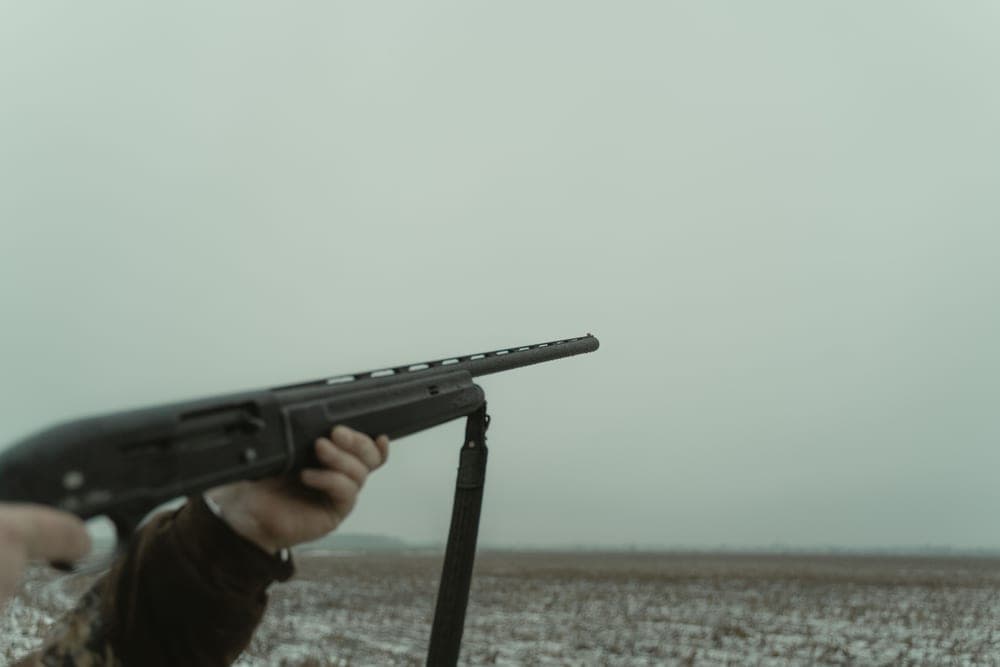
Most people shopping for night hog gear start with the most expensive piece, the thermal scope, and work out the rest later. It works better the other way around. A night setup is four pieces that each do one job, and the cheap pieces decide whether the expensive one gets used well. This guide explains each piece, gives an example build in three budget bands, and shows how the parts fit together over a feeder. Every spec below comes from the maker or the Amazon listing, and we haven't tested any of it; picks are researched, and our How We Choose page shows how they're scored.
The four pieces and what each one does
| Piece | Its job at night | Can you skip it? |
|---|---|---|
| Optic (thermal scope) | Finds hogs in the dark, including outside the lit area, and lets you aim at them | Yes, on a tight budget: a lit feeder and a daytime scope with a scope light can work |
| Scope light | Identifies the animal in visible light and puts the reticle on it; your whole system without thermal | Not without thermal. With thermal, it's the backup when the optic's battery runs flat |
| Rest | Holds the rifle on the feeder through a long wait and steadies the shot | You can, but a rested shot is what makes careful shot placement realistic at night |
| Feeder light | Turns the feed pad into a lit, known spot at a measured distance | With thermal, it's optional; without thermal, it does most of the seeing |
On shot placement, Texas A&M AgriLife is direct: "correct shot placement is important to ensure the process is quick and humane" (AgriLife, Selective Shooting). Every piece of this setup exists to make that easier in the dark.
The best night hunting setup at each budget
These are example builds from products we track, sorted into bands by the total for the whole rig. Each build fell inside its band at the Amazon prices we saw in September 2026. We don't print prices because they change; add up the current ones before you buy (every buy button links to them).
| Whole rig | Optic | Scope light | Rest | Feeder light | Where it runs short |
|---|---|---|---|---|---|
| Under $1,000 | No thermal scope. Optional: a TOPDON TS004 thermal monocular for scanning the feeder | LUMENSHOOTER D8A | Primos Edge Aluminum Tripod | LANGY Hog Lights 12000LM | You aim only at what your lights reach; the TS004's maker lists identification at 91 m |
| $1,000 to $2,000 | AGM Rattler V2 19-256 (or ATN ThOR 6 Mini 256 2-16x) | LUMENSHOOTER D8A | Primos Edge Aluminum Tripod | Elusive Wildlife Kill Light Outfitter | A 256x192 sensor on a short lens: fine at feeder distance, thin on detail across open pasture |
| $2,000 and up | Pulsar Thermion 2 XQ50 Pro (or RIX Storm S6R 640 for a 640 sensor with a rangefinder) | Sniper Hog Lights Hyperion 50 | BOG DeathGrip Tripod | Elusive Wildlife Kill Light Outfitter | The XQ50's 3x base is slower to pick up close movement in thick brush than a wider scope |
Under $1,000 is a light-only rig, and it can work well where hogs come to one site you control. Our guide to hunting hogs at night without thermal covers that setup step by step. The optional scanning monocular lets you check the feeder before you walk in, but it isn't an aiming optic.
$1,000 to $2,000 is where thermal enters. A scope from the $500 to $1,000 tier plus the other three pieces lands here. The Rattler V2 is built for feeder distances: its maker lists a 9.3° x 6.9° field of view (49 x 36 ft at 100 yd) and up to 11.5 hours per battery with two batteries in the box. Our thermal scopes under $1,000 list compares it with the rest of that tier.
$2,000 and up buys detail at distance. The Thermion 2 XQ50 Pro sits at the top of the scope tier from $1,000 to $2,000, so with the other three pieces the whole rig goes over $2,000. It pairs a 384x288 sensor with a 50 mm F/1.0 lens, IPX7 sealing and a 6000 J recoil rating. For how sensor size changes what you see, read 256 vs 384 vs 640 thermal, and for every tier ranked for hogs, see our best thermal scopes for hog hunting.
The optic: what to look for
- Sensor and lens together. A 256x192 sensor behind a short lens gives a wide view for a feeder and little detail farther out. A 384x288 or 640 sensor behind a longer lens puts more pixels on each hog at distance. Our skip note for the Rattler V2 puts it plainly: if you need to tell a sow from a big boar past about 150 yards across open pasture, step up to a 384 sensor behind a 35 mm or longer lens.
- Field of view for your distance. A wide view helps you catch hogs arriving at the edge of a feeder; a narrow one helps you identify them far out. Compare the published angles.
- Battery you can swap. A removable battery or a spare in the box beats a long runtime claim on a single built-in cell.
- Durability you can read. Look for a published IP rating and recoil rating, and a warranty you've actually read.
- Mounting. Some scopes ship with a mount; others take standard 30 mm rings you buy separately.
The scope light: what to look for
- Color. Red and green are the usual choices. Pigs have two types of color cones, peaking in the blue and green-yellow range (Neitz & Jacobs, 1989). Hunters use red and green lights on the theory that hogs see those colors poorly; how hogs actually respond varies, and we haven't found a field study that settles it (abstract). Our red vs green comparison has the detail.
- Dimming. A dimmer lets you bring the light up gradually. The LUMENSHOOTER D8A's listing describes a dimmable pressure switch; its sibling, the A8Plus, has one brightness setting.
- A mount that fits your tube. Check the tube size of the scope you'll mount it on before you order.
- IR only if you need it. An 850 nm IR module helps a digital night-vision scope. A thermal scope doesn't need it.
Our best hog hunting lights ranking compares every scope light we track on those points.
The rest: what to look for
- Clamp or yoke. A clamping head holds the rifle hands-free through a long wait; a yoke cradles it and you hold it in place. For a feeder sit, the clamp wins.
- Height range for your seat. The Primos Edge runs 9 to 67 in, which covers a low chair and a high box-blind window. The BOG DeathGrip runs 7 to 59 in.
- Pan and tilt. A 360-degree pan with some tilt lets you follow a hog across the pad without resetting the legs.
- Weight, if you carry it. The Edge is 5.75 lb and the DeathGrip 8.5 lb. Neither is a stalking stick.
Compare them all on our shooting sticks and tripods page.
The feeder light: what to look for
- Activation. Motion, dusk-to-dawn, or a timer, so it runs without you.
- Power. Built-in solar, C cells, or a port that ties into your feeder's 12 V battery.
- Brightness control. Several levels, ideally with a slow ramp-up.
- Mounting. A bracket that fits the feeder leg, a T-post or a tree where you need it.
Our best hog feeder lights ranking scores those four points for every feeder light we track.
Our picks for this job
The $1,000 to $2,000 night rig
One pick per piece: together, the middle build in the table above. Each one is chosen from published specs; the buy buttons show current prices.
 Stock photo
Best entry thermal for feeder distances
AGM Rattler V2 19-256
$500 to $1,0007.1/10Researched256x192 sensor, 19 mm lens and a 9.3° field of view for feeder work; up to 11.5 h per battery with two batteries included; IP67 and a 5-year warranty for US buyers.
Check price · Amazon#ad · Price set by Amazon · How we make money for the link to AGM Rattler V2 19-256
 Stock photo
Best dimmable 4-color value kit
LUMENSHOOTER D8A Dimmable
Under $5007.0/10ResearchedFour swappable colors (red, green, white, 850 nm IR) with a dimming pressure switch, zoom focus and a universal scope mount. Your identifier and your backup.
Check price · Amazon#ad · Price set by Amazon · How we make money for the link to LUMENSHOOTER D8A Dimmable
- Stock photo
Best clamping tripod for tall shooters
Primos Edge Aluminum Tripod Shooting Stick with Gun Clamp
Under $5007.5/10ResearchedClamping head with 360-degree pan and a 9 to 67 in height range, from a low chair to a box-blind window, at 5.75 lb.
Check price · Amazon#ad · Price set by Amazon · How we make money for the link to Primos Edge Aluminum Tripod Shooting Stick with Gun Clamp
 Stock photo
Best high-output solar feeder light
Elusive Wildlife Kill Light Outfitter
Under $5008.3/10ResearchedGreen solar light with a 7 W panel, a 12 V backup port, five brightness modes that ramp up, and a tool-less bracket for T-posts and feeders.
Check price · Amazon#ad · Price set by Amazon · How we make money for the link to Elusive Wildlife Kill Light Outfitter
Putting it together over a feeder
- Start with a site hogs already use. AgriLife's advice for trap sites applies: look for "scat, tracks, rooting damage, and wallows," and keep bait "available every single day to help make that location part of the hog's regular travel pattern" ( AgriLife, Trapping).
- Set the blind for the wind. The hunters in TPWD's Better Outside episode on hogs try to stay downwind "so their scent doesn't alert the animal" ( TPWD, May 2025). Choose a blind or box blind position with the usual night wind in mind and a safe backstop behind the feeder; our box blind rankings cover the elevated option.
- Measure the distance and match the optic to it. At 100 yards, the Rattler V2's published field of view is 49 ft wide. The Thermion 2 XQ50 Pro's is 13.1 m at 100 m, which works out to about 39 ft at 100 yards (13.1 x 0.9144 = 12 m). The wider scope shows you about 10 more feet of the pad edge; the narrower one puts more pixels on each hog.
- Aim the feeder light at the pad, not the blind. A lit circle is small: LANGY claims about 980 sq ft when mounted 10 to 15 ft high, a circle roughly 35 ft across (980 divided by 3.14 is about 312, and the square root of 312 is about 17.7 ft of radius). The Rattler's 49-ft view at 100 yards is wider than that circle, so a thermal lets you watch the dark ground around it. Without thermal, that circle is all you have.
- Mount and check the scope light at feeder distance. Line the beam up with your reticle before the season.
- Set the rest before dark. Height, pan tension and the rifle already pointing at the pad, so sitting down is the last step.
We haven't found a study on how hogs approach a lit feeder, so we won't tell you where they'll stand. Your thermal and a trail camera on the site will show you how your own hogs come in.
Batteries for a full night
Runtime decides whether the rig lasts the sit. The figures below are the maker's claims:
- AGM Rattler V2 19-256: up to 11.5 h per battery, two batteries included, so up to 23 h on paper.
- ATN ThOR 6 Mini 256 2-16x: about 4 h per 18650, two included, about 8 h in total, plus USB-C external power.
- Pulsar Thermion 2 XQ50 Pro: up to 10 h on its internal and external batteries at 22°C, plus USB-C power.
- Sniper Hog Lights Hyperion 50: about 2.5 h on red, green or white at full power.
- LUMENSHOOTER D8A: battery type and runtime aren't in the listing, so carry a spare.
- Elusive Wildlife Kill Light Outfitter: 7 W solar panel with rechargeable lithium batteries and a 12 V auxiliary port with a 13 ft cable for a feeder battery.
The math that matters: if you sit from dark until 2 a.m., that can be seven hours or more. The ThOR 6 Mini covers it only if you swap batteries partway through. The Rattler covers it on one battery by its maker's figure. Whatever you run, a charged spare costs less than a lost night.
Texas rules for a night setup
That's a summary, not legal advice. For the full picture on lights, thermal and night vision, read can you hunt hogs at night in Texas.
Setup mistakes that cost you hogs
- Buying the optic before you have a site. A thermal scope over a spot hogs don't use is an expensive way to watch an empty pasture. Build the fed site first.
- Skipping the rest. The cheapest piece in the rig is the one that makes careful shot placement realistic after an hour of waiting.
- Ignoring runtime. Do the arithmetic above for your own sit, and carry spares for anything that runs on a single cell.
- Buying a light that doesn't fit your scope. Some kit mounts cover 1 in. and 30 mm tubes only; if your scope has a 35 mm tube, check before you order.
- Sitting with the wind wrong. If it blows from you to the feeder, consider another spot for the night.
- Shooting the biggest boar first. TPWD notes that "removal of females and juveniles have the greatest impact on lowering production of the population" (TPWD, Wild Pigs). If the goal is fewer hogs next year, the sow matters most.
A night rig is one tool in a bigger plan. TPWD's wild pig page estimates that control would need to reach 66 to 70% a year just to hold a population steady. Our guide to getting rid of feral hogs shows where night hunting fits alongside trapping and fencing, and the hog hunting lights hub has the rest of the night gear.
How we scored this
Units we claim to have tested: 0
Plenty of gear sites say they field-tested everything they list. We haven't, and we say so. Every pick here is labeled Researched: we read each maker's published specs, manuals and warranty terms, compare products only against others in the same budget tier, and score them on a public rubric. Every figure links to where it came from, and seller performance numbers are labeled “maker's claim.”
Scores are editorial judgments from that documented research, not test results. Commissions never set a score or decide a pick. The rubric and its weights are published.
Questions
Frequently asked
What is the best night hunting setup for hogs?
How much does a night hog hunting setup cost?
Do I need a light if I have a thermal scope?
Should the feeder light be on all night or on motion?
Is it legal to hunt hogs at night in Texas with this setup?
Receipts
Sources
- AGM Global Vision: Rattler V2 19-256 product page and spec table (checked 2026-09-19)
- AGM Global Vision: warranty terms (checked 2026-09-19)
- Pulsar: Thermion 2 XQ50 PRO product page and specification (checked 2026-09-19)
- ATN: ThOR 6 Mini 256x192 2-16x product page (checked 2026-09-19)
- TOPDON: TS004 product page and spec table (checked 2026-09-19)
- Amazon: LUMENSHOOTER D8A and A8Plus listings via search results (checked 2026-09-19)
- Amazon: LANGY Hog Lights 12000LM listing via search results (checked 2026-09-19)
- Sniper Hog Lights: Hyperion 50 Hunters Package (checked 2026-09-19)
- Primos: Edge Aluminum Tripod Shooting Stick product page (checked 2026-09-19)
- BOG: DeathGrip Tripod product page (checked 2026-09-19)
- Elusive Wildlife: Kill Light Outfitter Solar Feeder Light product page (checked 2026-09-19)
- Texas A&M AgriLife, Coping with Feral Hogs: Trapping (checked 2026-09-19)
- Texas A&M AgriLife, Coping with Feral Hogs: Selective Shooting (checked 2026-09-19)
- TPWD: Nuisance Wildlife in Texas, Wild Pigs (John C. Kinsey, CWB, 2020) (checked 2026-09-19)
- TPWD: Better Outside podcast, Hog Wild (May 28, 2025) (checked 2026-09-19)
- TPWD: Law enforcement FAQ, spotlighting coyotes and feral hogs in deer country (checked 2026-09-19)
- TPWD: Outdoor Annual 2026-27, Nongame and Other Species (checked 2026-09-19)
- TPWD: Outdoor Annual 2026-27, Means and Methods (checked 2026-09-19)
- Texas Parks & Wildlife Code §62.005, Hunting with Light (checked 2026-09-19)
- Texas Parks & Wildlife Code §62.0031, Hunting on public roads (checked 2026-09-19)
- Neitz & Jacobs: Spectral sensitivity of cones in an ungulate, Visual Neuroscience, 1989 (PubMed; checked 2026-09-19)
We haven't tested the gear on this page and we don't pretend to. Specs come from each maker's own pages or the product listing (linked on every product), hog biology and trapping advice from Texas A&M AgriLife, and rules from TPWD and Texas statute. Prices are set by Amazon and change often, so we don't print them. Where a figure isn't published, we say so. Read the full method.