The verdict up front
The ThOR 6 Mini 256 is the entry thermal for the buyer who reads spec sheets and notices what is missing from them. In a tier where AGM leaves the recoil rating blank and RIX leaves out the IP rating and the pixel pitch, ATN fills in every line: sensitivity, ingress, recoil in joules, operating temperature, storage, warranty. It also has the longest lens of the entry 256s at 25 mm. On our rubric it scores 7.4/10.
The cost is in how the scope feels rather than what it survives. A 3.5x base through a 7.0° x 5.3° window is the narrowest picture in the tier — about 37 feet of ground at 100 yards against 49 on the AGM Rattler V2 — and the 256 model is the one Mini that gets a 0.32 inch 800x600 display while its 384 and 640 siblings get 1920x1080. Add roughly four hours per 18650 and you have a scope that is tougher and sharper than its rivals and slightly more work to hunt with.
Short version: this is the entry thermal to buy if you hunt a lane, a trail or a fence line you can cover with a narrow picture, and especially if the rifle recoils. If you are watching a wide feeder clearing where hogs arrive from anywhere, the wider-field Rattler is the easier scope.
What it actually is
ATN publishes a compact standalone thermal riflescope with:
- A 256x192 VOx sensor at 12 µm, NETD ≤20 mK
- A 25 mm germanium F/1.0 lens, 3.5-28x (1x, 2x, 4x and 8x digital steps)
- 50 Hz refresh and a 0.32 in 800x600 OLED display
- A 7.0° x 5.3° field of view
- A detection claim of 1,500 m (a maker's claim, with no stated target size)
- About 8 hours total from two included 18650s — roughly 4 hours each — plus USB-C external power
- 64 GB internal storage, Recoil Activated Video and Wi-Fi to ATN Connect 6
- IP67, 6000 J (1000 g over 0.4 ms) and -22°F to 131°F
- 528 g / 1.16 lb, with a Picatinny mount included
- Five years under ATN's published warranty terms
Two of those lines are the reason this scope exists: the ≤20 mK sensitivity and the 6000 J rating. Nothing else at this price publishes both.
The most sensitive 256 in the tier
NETD is the number that decides whether an animal's outline reads against the ground behind it. Lower is better, and the entry tier spreads further on this figure than most buyers realize:
| Entry-tier 256 scope | Published NETD | Pixel pitch | Lens |
|---|---|---|---|
| ATN ThOR 6 Mini 256 | ≤20 mK | 12 µm | 25 mm F/1.0 |
| RIX Storm S2 | <25 mK | Not published | 25 mm |
| AGM Rattler V2 19-256 | <35 mK | 12 µm | 19 mm |
| GOYOJO GRS225 | <35 mK | 12 µm | 25 mm |
That 15 mK spread between the best and worst figure here is not a rounding difference. It is most visible on the nights Texas hog hunters actually hunt: warm, humid evenings when the ground has held the day's sun and the temperature difference between a hog and the dirt behind it is small. On a cold January night every scope in this table looks better than it does in August; the ThOR 6 Mini is the one that holds up best when the contrast is poor.
The 25 mm lens, and the pixel math
Detail on an animal comes from pixel pitch and lens focal length. Inches covered by one pixel equals distance in yards × 0.036 × pitch in microns ÷ lens in millimeters, and a five-foot hog divided by that gives pixels on target.
Seventeen pixels across a hog at 200 yards is enough to call a hog-sized animal moving on four legs. It is not enough to separate a boar from a big sow, and no 256 is. That is the ceiling on this whole tier rather than a fault in this scope, and we take it apart on thermal scope resolution: 256 vs 384 vs 640. What the 25 mm lens buys is roughly a third more detail per animal than the 19 mm scopes at every distance, which is why this is the 256 we would take to a field edge rather than a feeder pen.
ATN's 1,500 m detection claim should play no part in your decision. It has no published target size, like almost every figure in this category — the evidence for that is on thermal scope detection range, where three scopes with identical front ends publish claims spanning 1,800 to 2,750 m.
What the narrow view costs you
This is the honest downside and it is a practical one. 7.0° x 5.3° is about 37 feet of ground at 100 yards. The Rattler V2's 9.3° is about 49 feet. When a sounder breaks and scatters, those twelve feet are the difference between keeping an animal in the picture and hunting for it at 3.5x in the dark.
The 3.5x base compounds it. A 2x or 2.5x base — the Rattler, or the Pulsar Talion a tier up — picks up close movement faster, and on hogs that arrive inside 60 yards that matters more than sensitivity does. The technique fix is real but partial: scan at base magnification, never zoomed, and let the digital steps do the identifying once you have found something. We cover that discipline on how to use a thermal scope.
The display is the quiet compromise
Durability: the whole block is filled in
ATN publishes IP67, 6000 J (stated as 1000 g over 0.4 ms) and an operating range of -22°F to 131°F, with five years of warranty. For a device bolted to a recoiling rifle and left in a truck through a Texas summer, all three of those are useful and all three are things you can hold the maker to.
The comparison is the point. AGM publishes no recoil rating at all for the Rattler V2 — we said so in our Rattler V2 review and we are not going to pretend it is unimportant here. RIX publishes no IP rating for the Storm S2. We have not tested any of these scopes, so we are not claiming the ThOR 6 Mini is tougher in fact; we are saying it is the only one that commits to numbers. On a hard-recoiling rifle, that is what we would want.
Battery: the weakest number on the sheet
About 8 hours total from two included 18650s — roughly four hours a cell. The AGM Rattler V2 publishes up to 11.5 hours on one cell, with a spare in the box. That is not close, and on a full-night sit it is the ThOR 6 Mini's most annoying limitation.
Two things soften it: the cells are commodity 18650s you can buy anywhere and carry a pocketful of, and the scope takes USB-C external power, so a small power bank in a pocket runs it indefinitely. For why swappable commodity cells matter more over five years than hours-per-charge does, see how long a thermal scope lasts.
Who this scope is for
| If this is you… | ThOR 6 Mini 256? | Why |
|---|---|---|
| First thermal, and you read spec sheets | Yes — this is the pick | 20 mK, IP67, 6000 J, five years, nothing left blank |
| Hard-recoiling rifle | Yes | The only entry 256 here with a published recoil rating |
| Field edges and lanes to about 200 yd | Yes | The 25 mm lens is the longest in the tier |
| Wide feeder clearing, hogs from anywhere | No | 7.0° is the narrowest view in the tier; the Rattler gives 9.3° |
| You hunt all night without touching the rifle | Cautious | About 4 h per cell; carry both and a USB-C pack |
| Display quality matters to you | No | 0.32 in 800x600 against 1024x768 on both rivals |
| You need to tell a boar from a sow at 200 yd | No | No 256 does this; step up to a 384 behind 35 mm |
| You hunt in rain | Yes | IP67 published, which the RIX Storm S2 page does not state |
Alternatives and how they differ
Three ways to spend the same money, or a little more, differently:
- AGM Rattler V2 19-256 — the easier scope to hunt with and the worse scope on paper: a 9.3° view, 11.5 hours on one cell with a spare and an ADM mount in the box, IP67 and five years. It gives up sensitivity (<35 mK), lens length (19 mm) and any published recoil rating. Our full Rattler V2 review goes through it.
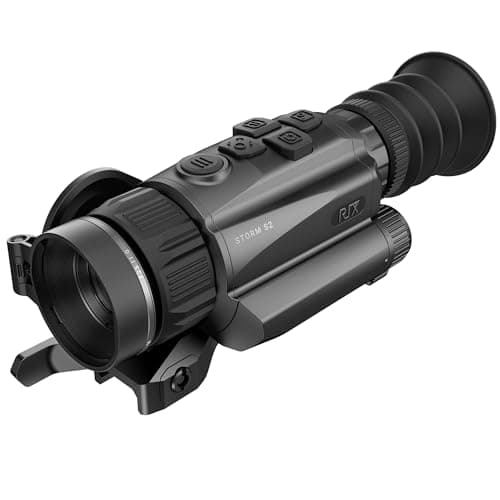
- RIX Storm S2 — the middle road: <25 mK, a 25 mm lens, a 1024x768 OLED, roughly 5 to 8 hours on a swappable 18650 and a QD Picatinny mount included. RIX publishes no IP rating, no recoil rating and no pixel pitch for it, and the warranty is three years rather than five. Head to head with the AGM on AGM Rattler vs RIX Storm.
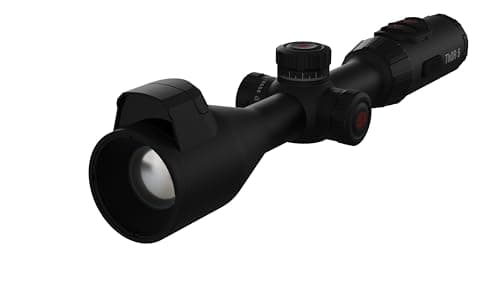
- ATN ThOR 6 Elite LRF 384 — the step that actually changes what you can identify: ATN publishes a 12 µm 384 at ≤15 mK behind a 35 mm F/1.0 lens, with a built-in 1,000 m rangefinder, a ballistic calculator, a 1920x1080 OLED, IP67, 6000 J and five years. It is a budget tier up, and it is the honest answer if 200-yard identification is the actual requirement.
Our picks for this job
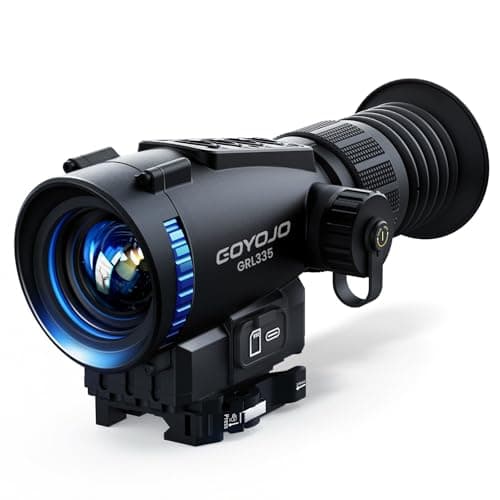
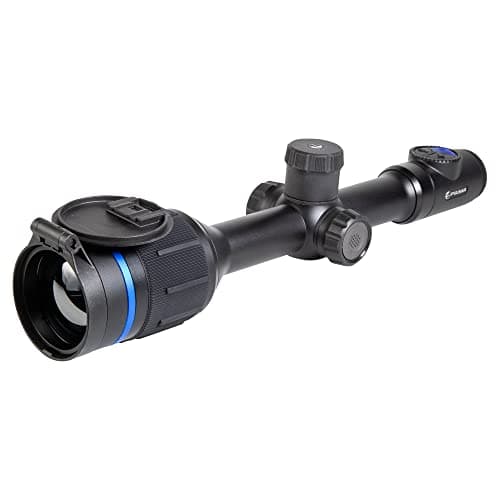
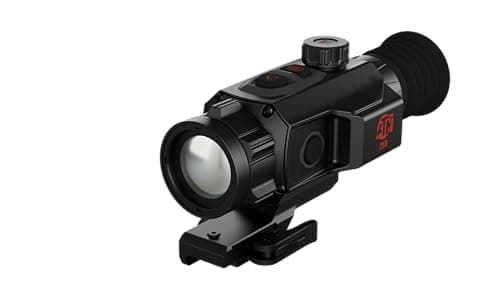
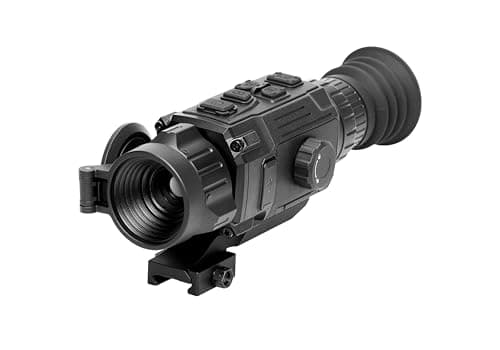
The ThOR 6 Mini and the three scopes to weigh against it
The ThOR 6 Mini, the RIX Storm S2 and the ThOR 6 Elite LRF were each confirmed currently sold with a live price on October 19, 2026. The AGM Rattler V2 returned no price in that same check - see the note above. Scores come from our published thermal rubric, not from testing.
Best rugged, lightweight thermal under $1,000
ATN ThOR 6 Mini 256 3.5-28x
$500 to $1,0007.4/10ResearchedThe subject of this review: the most sensitive 256 and the only one with a published recoil rating, behind the tier's longest lens.
$795.00Amazon#ad · Price as of November 3, 2026 · How we make money for the link to ATN ThOR 6 Mini 256 3.5-28x
Best entry thermal for feeder distances
AGM Rattler V2 19-256
$500 to $1,0007.1/10ResearchedBuy this instead for a wide feeder clearing and long sits: 9.3 degrees, 11.5 hours a cell, spare battery and mount included.
Check price · Amazon#ad · Price as of November 3, 2026 · How we make money for the link to AGM Rattler V2 19-256
Best 256 scope for a little more reach
RIX Storm S2 (256x192, 25 mm)
$500 to $1,0006.8/10ResearchedThe 25 mm middle road with a QD mount in the box - but no published IP rating, recoil rating or pixel pitch, and three years of cover.
$720.00Amazon#ad · Price as of November 3, 2026 · How we make money for the link to RIX Storm S2 (256x192, 25 mm)
Best rangefinding thermal under $2,000
ATN ThOR 6 Elite LRF 384 3.5-28x
$1,000 to $2,0008.5/10ResearchedThe step up that fixes identification: a 12 micron 384 at 15 mK behind 35 mm, with a 1,000 m rangefinder and Full HD display.
$1,890.00Amazon#ad · Price as of November 3, 2026 · How we make money for the link to ATN ThOR 6 Elite LRF 384 3.5-28x
If none of the entry scopes is enough, the honest advice is to save for the next band rather than optimize within this one — how much a thermal scope costs lays out what each tier buys, and are thermal scopes worth it asks the question before that one. The full ranking of this tier is on best thermal scope under $1,000.
How we reviewed this
Plainly: we have not shot this scope. This is a specification review. Every figure above comes from ATN's own product page and published warranty terms, re-read on October 19, 2026, and from AGM's and RIX's pages for the comparisons. We confirmed the ThOR 6 Mini and all three alternatives were currently sold with a live price the same day through our daily price check. Scores come from the published thermal rubric on how we choose: sensor and lens for hog identification (30%), usability at night (20%), battery and power (15%), durability (15%), warranty and support (10%) and value within tier (10%).
Our network standard is "tested when I can, researched when I can't, labeled either way", and this page is labeled. The pixels-per-hog figures are arithmetic from published pitch and lens specifications, not measurements. For the mounting and zeroing side, see how to zero a thermal scope.
For what a budget tier up actually buys — a 50 mm lens, ten hours across two cells and a complete durability block — see our Pulsar Thermion 2 XQ50 Pro review. If you would rather spend the same money on a day-night scope you can also use in sunlight, the Sightmark Wraith 4K Mini review covers that route.
How we scored this
Every score, built from the published record
Every pick here is labeled Researched: we read each maker's published specs, manuals and warranty terms, compare products only against others in the same budget tier, and score them on a public rubric. Every figure links to where it came from, and seller performance numbers are labeled “maker's claim,” so you can see exactly what you are buying.
Scores are our editorial read of that documented evidence. Commissions never set a score or decide a pick. The rubric and its weights are published.
What changed
- Published.
Questions
Frequently asked
Is the ATN ThOR 6 Mini worth it?
How far can the ThOR 6 Mini 256 identify a hog?
Why does the ThOR 6 Mini 256 have a lower-resolution display than the 384?
How long does the ThOR 6 Mini battery last?
ATN ThOR 6 Mini or AGM Rattler V2?
Does the ThOR 6 Mini come with a mount?
Receipts
Sources
- ATN: ThOR 6 Mini 256 3.5-28x product page and full spec table (checked 2026-10-19)
- ATN: limited warranty terms (checked 2026-10-19)
- ATN: ThOR 6 Elite LRF 384 3.5-28x product page and spec table (checked 2026-10-19)
- AGM Global Vision: Rattler V2 19-256 product page and spec table (checked 2026-10-19)
- RIX Optics: Storm S2 thermal imaging riflescope product page (checked 2026-10-19)
- Missouri Department of Conservation: Feral Hog (Feral Swine) field guide, size (checked 2026-10-19)
- TPWD: Outdoor Annual, Nongame and Other Species, feral hogs (checked 2026-10-19)
Specs come from each maker's own pages or the product listing (linked on every product), hog biology and trapping advice from Texas A&M AgriLife, and rules from TPWD and Texas statute. Prices are set by Amazon and change often, so we don't print them. Where a figure isn't published, we say so. Read the full method.