Quick picks
The picks at a glance
| # | Product | Best for | Score | Price |
|---|---|---|---|---|
| 1 | 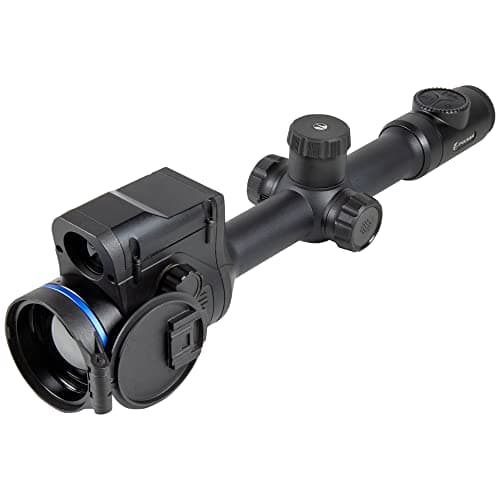 Pulsar Thermion 2 LRF XQ50 Pro The most capable scope that fits under the ceiling: a 50 mm F/1.0 lens, a built-in 800 m rangefinder on a standard 30 mm tube, up to 10 hours with a swappable external pack, IPX7 and 6000 J. Read the next pick before you buy it. | Best thermal scope under $3,000$2,000 and up | 9.8/10Researched | $2,999.97Pulsar Thermion 2 #ad · Disclosure |
| 2 | 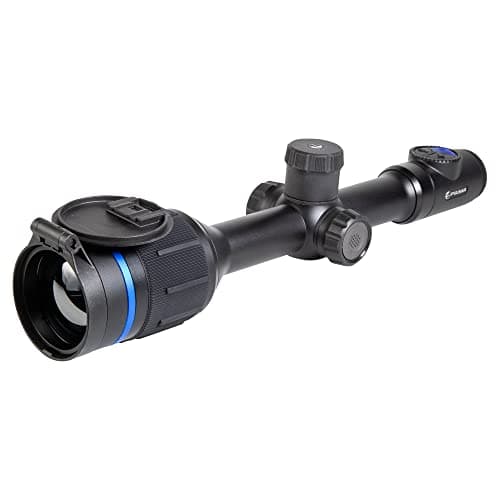 Pulsar Thermion 2 XQ50 Pro Identical sensor, lens, battery architecture, IPX7 and recoil rating. The only thing it gives up is the built-in rangefinder, and it scores exactly the same on our rubric. | Same rubric score, a tier less money$1,000 to $2,000 | 9.8/10Researched | $2,299.00Pulsar Thermion 2 #ad · Disclosure |
| 3 | 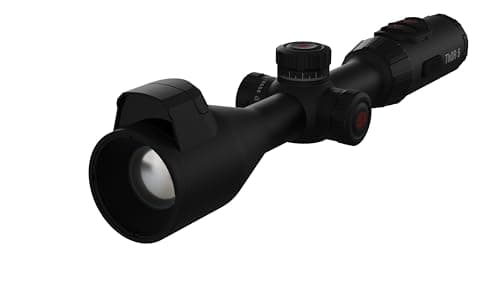 ATN ThOR 6 Elite LRF 384 3.5-28x The lowest published NETD on the page, a 1,000 m rangefinder, a 1920x1080 display, IP67, 6000 J and five years of warranty with nothing to register. | Fullest spec sheet for the money$1,000 to $2,000 | 9.7/10Researched | $1,890.00ATN ThOR 6 Elite #ad · Disclosure |
| 4 | 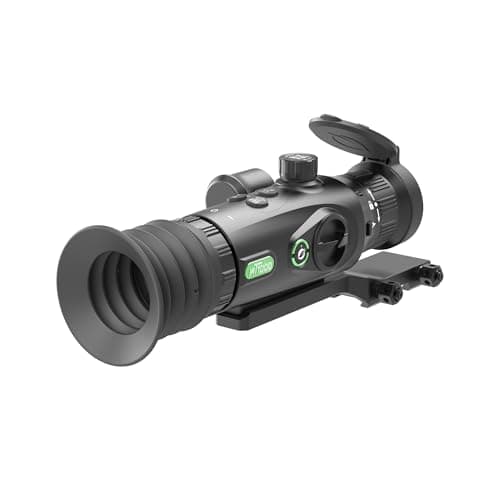 oneleaf.ai Mars MT1000LRF (35 mm) The cheapest pick here and the only one that puts a 640x512 sensor and a laser rangefinder in the same body at the bottom of this budget. About five hours per battery is the cost. | Budget pick: a 640 and a rangefinder$1,000 to $2,000 | 9.6/10Researched | $1,499.00oneleaf.ai Mars #ad · Disclosure |
| 5 | 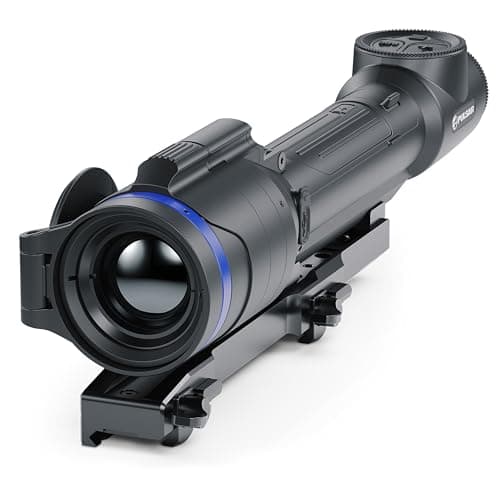 Pulsar Talion XQ35 Pro A 2.5x base and the second-widest view on the page, in a magnesium body rated IPX7 and 6000 J. Its +40C operating ceiling is the lowest here, which matters in a Texas August. | Best for close brush and fast shots$1,000 to $2,000 | 9.6/10Researched | $1,499.97Pulsar Talion #ad · Disclosure |
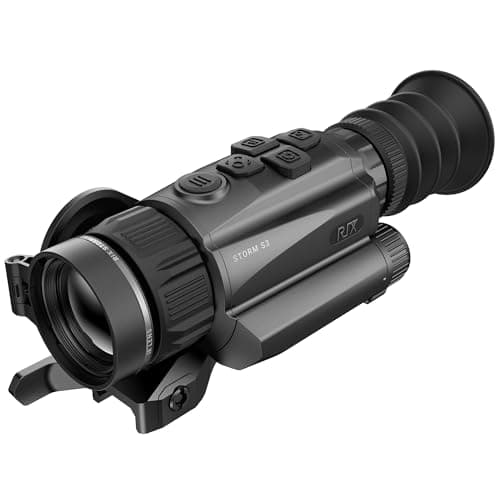
| 6 | 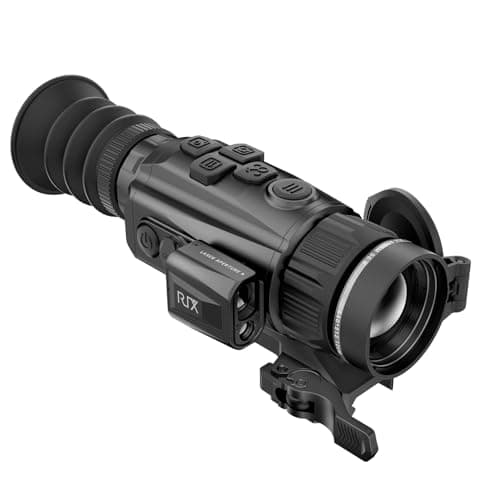 RIX Storm S6R 640 (35 mm) 640x512 at under 20 mK with a 1,312 yd rangefinder, a QD mount in the box and five years of cover, in about a pound. RIX publishes no IP rating for it. | Best 640 with a five-year warranty$2,000 and up | 9.5/10Researched | $2,599.00RIX Storm S6R 640 #ad · Disclosure |
| 7 | 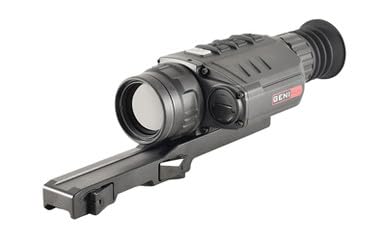 InfiRay RICO G 384 3X 35mm 11+ hours from a built-in pack plus two swappable IBP-2 packs, IP67 and a stated .300 Win Mag recoil class. InfiRay leaves the NETD cell on its own US page blank. | Longest night on one set of batteries$2,000 and up | 9.5/10Researched | $2,799.99InfiRay RICO G #ad · Disclosure |
| 8 | 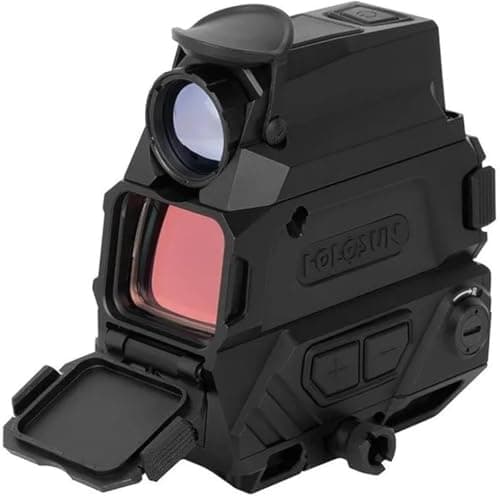 Holosun DRS-TH A red dot with the thermal image overlaid, for hogs that come in close and fast. A 256 sensor and a 5x digital top end mean it is not a field scope. | Different tool: thermal reflex sight$1,000 to $2,000 | 9.1/10Researched | $1,599.99Holosun DRS-TH #ad · Disclosure |
#ad · Prices come live from Amazon, last checked November 18, 2026. Scores are ours, built from published specs, manuals and warranty terms. Photos are illustrative stock. Tap a row for the full write-up.
What a $3,000 ceiling actually buys
A $3,000 ceiling is where most serious hog shoppers land: high enough that nothing on the shortlist is a compromise optic, low enough that the top of the market is still out of reach. What the money buys, in the registry we keep, is one of two things. It buys a laser rangefinder and a ballistic calculator built into the scope body, so an unknown distance across open pasture stops being a guess. Or it buys a 640x512 sensor, which does not put more detail on a hog at a given distance but shows you far more ground around it.
What it does not buy is a jump in how well you can identify an animal. Run the pixel math below and you will see five of these eight scopes land on the same number of pixels across a hog at 100 yards. That is the single most useful thing to understand before you spend this much: above about the $1,500 mark, you are buying endurance, sealing, warranty, ranging and field of view, not sharpness.
If you have not read it, our best thermal scope for hog hunting ranking covers every budget tier and explains the pixel math in full. This page asks the narrower question a buyer with a hard ceiling actually has: of everything under $3,000, what should I put on the rifle?
The rangefinder tax, stated plainly
Two scopes on this page score 9.8 on our rubric, the highest score on the site. They are the Pulsar Thermion 2 LRF XQ50 Pro and the Pulsar Thermion 2 XQ50 Pro. Pulsar publishes the same 384x288 sensor at 17 microns, the same <25 mK NETD, the same 50 mm F/1.0 lens, the same 1024x768 AMOLED, the same internal-plus-external battery architecture rated to about 10 hours, the same IPX7, the same 6000 J recoil rating and the same -25C to +50C operating range for both. The LRF adds a built-in 800 m laser rangefinder and Pulsar's ballistics app support, and it sits a full budget tier higher.
That is the page's first honest finding, and it cuts against the pick at the top. If your shots happen over a feeder you filled yourself, you knew the distance before dark and you can zero for it; the rangefinder earns nothing. If your shots happen across 200 yards of open field at an unknown distance, it earns its money on the first clean hit. Decide which hunter you are before you spend the difference.
Pixels on a hog at this budget
The formula uses the makers' published pixel pitch and lens focal length: inches per pixel = distance (yd) x 0.036 x pitch (um) / lens (mm). Divide a hog's length by that to get pixels across the animal. We use a 60-inch hog, the top of the Missouri Department of Conservation's range for feral hogs, which it lists at "to 5 feet" long (MDC field guide). A smaller sow or a shoat gets proportionally fewer.
| Scope (published pitch / lens) | Pixels across a 5 ft hog at 100 / 150 / 200 yd | Horizontal view | Width of view at 100 yd |
|---|---|---|---|
| Pulsar Thermion 2 LRF XQ50 Pro (17 um / 50 mm) | 49 / 33 / 25 | 7.5° (published) | About 39 ft |
| Pulsar Thermion 2 XQ50 Pro (17 um / 50 mm) | 49 / 33 / 25 | 7.5° (published) | About 39 ft |
| ATN ThOR 6 Elite LRF 384 (12 um / 35 mm) | 49 / 32 / 24 | 7.5° (ATN lists 7.53°) | About 39 ft |
| oneleaf Mars MT1000LRF 640 (12 um / 35 mm) | 49 / 32 / 24 | 12.5° (published) | About 66 ft |
| RIX Storm S6R 640 (12 um / 35 mm) | 49 / 32 / 24 | 12.5° (math; RIX publishes none) | About 66 ft |
| InfiRay RICO G 384 (12 um / 35 mm) | 49 / 32 / 24 | 7.5° (published) | About 39 ft |
| Pulsar Talion XQ35 Pro (17 um / 35 mm) | 34 / 23 / 17 | 10.7° (published) | About 56 ft |
| Holosun DRS-TH (worked from its published 7.2° view over 256 pixels) | About 34 / 23 / 17 | 7.2° (published) | About 38 ft |
This is illustrative math from published figures, not a test. Three things fall out of it. First, six of the eight land within a pixel of each other at 100 yards, including the 17-micron Thermions, because a 50 mm lens offsets the coarser pixel exactly as a 12-micron sensor behind 35 mm does. Second, the two 640s are not sharper, they are wider: about 66 feet of ground at 100 yards against 39, which is the difference between watching one hog and watching a sounder decide where to go. Third, the Talion and the Holosun give up real detail at distance for a wider, faster picture up close, and that is a legitimate choice if your hogs come inside 75 yards.
RIX does not publish a field of view for the Storm S6R, so its row is worked from the sensor and lens it does publish (640 pixels at 12 microns behind 35 mm). We go through every detection and view figure the registry holds, and how far apart makers' claims are for identical front ends, on how far a thermal scope can really see.
How we picked
The rule, stated so you can check it: every thermal riflescope in our registry that Amazon showed a buyable price for under $3,000 on November 9, 2026, and that scores 9.5 or higher on our published thermal rubric, plus the one thermal reflex sight in that band, because it answers a different question and buyers ask about it.
Each scope is scored on sensor and lens for identifying a hog at feeder-to-field distance (30%), usability at night (20%), battery and power (15%), durability (15%), warranty and support (10%) and value within its tier (10%). Every figure comes from the maker's own spec page, read on the dates in our sources list, and every detection or rangefinder distance is the maker's claim. A blank spec costs points: no spec, no score. The full rubric and the scale the numbers are published on are on our How We Choose page.
Every pick on this page is labeled Researched, which on this site means the ranking is built from published specifications, manuals and warranty terms rather than field testing.
The picks side by side
The picks in context
1. Pulsar Thermion 2 LRF XQ50 Pro
The most capable optic that fits under the ceiling, and the only scope here that combines a built-in rangefinder with a traditional 30 mm tube, so it drops into rings you may already own rather than a proprietary mount. Pulsar publishes the whole durability block, which almost nobody else in the registry does: IPX7, 6000 J on rifled weapons, and -25C to +50C. The battery design is the best on the page, pairing a 4.9 Ah internal pack with a changeable 2 Ah external one for up to 10 hours at 22C, with USB-C power delivery on top.
Honest cons: it is a 384 sensor at 17 microns in a band where 640s exist for less; its 800 m rangefinder claim is the shortest of the four ranging scopes here; it is the heaviest scope on the page at 0.97 kg; and the five-year warranty needs you to register it, where ATN, RIX and InfiRay all give five years with no step. Our full Pulsar Thermion 2 review covers what the 50 mm lens buys and where the 17-micron sensor costs you.
2. Pulsar Thermion 2 XQ50 Pro
The same scope without the rangefinder, and the pick we would push most readers toward. Same sensor, same lens, same display, same battery architecture, same IPX7, same 6000 J, same operating range, same 30 mm rings, five zero profiles and 10 reticles, and the identical 9.8 on our rubric. It is our number one thermal for hogs across all budgets for exactly this reason.
Honest cons: no ranging at all, so on open ground at unknown distances you are carrying a separate rangefinder or estimating; 17-micron pixels behind a big lens rather than a finer sensor; the same 0.97 kg on the rifle; a 3x base magnification that is slow on a hog that walks in at 30 yards; and registration required for the fifth warranty year.
3. ATN ThOR 6 Elite LRF 384 3.5-28x
The fullest spec sheet for the money anywhere in the registry, and the scope to buy if you want ranging without paying the top of this budget. ATN publishes a 12-micron, 384x288 sensor at under 15 mK, the lowest NETD figure on this page by a clear margin; a 1,000 m rangefinder feeding a ballistic calculator with six profiles; a 0.49 in 1920x1080 OLED, the sharpest display here; 64 GB of storage with Recoil Activated Video; IP67, 6000 J and -22F to 131F; and five years of warranty with nothing to register.
Honest cons: two 18650s give about nine hours but only one is replaceable in the field; 30 mm rings are not included, so budget for them; and the 3.5x base gives a 7.5-degree view that is tight inside about 75 yards. It is the number one on our best thermal scope under $2,000 page for the same reasons.
4. oneleaf.ai Mars MT1000LRF (35 mm) — the budget pick
The cheapest pick on this page and the one that most undermines the top of it. oneleaf puts a 640x512 sensor at 12 microns behind a 35 mm lens, adds a rangefinder claimed to 1,300 yards and a ballistic calculator with seven profiles, publishes IP67 and 6000 J, and does it in a 19.4 oz body. A 2x base and roughly 66 feet of view at 100 yards make it the easiest scope here to watch a whole sounder through, and oneleaf sells 50 mm and 75 mm lens versions if you later need reach.
Honest cons: about five hours per removable 18650, so a full night needs spares or a USB bank; a three-year warranty against five from ATN, RIX and InfiRay; and a small brand with less service history behind it than Pulsar or ATN. If a 640 is specifically what you are shopping for, the cheapest 640 thermal you can buy ranks every 640-class optic in the registry by cost of entry.
5. Pulsar Talion XQ35 Pro
The close-country pick. A 2.5x base and a 10.7 x 8 degree view make a hog moving through brush at 40 yards far easier to stay on than any 3x-plus scope here, in a magnesium body that is IPX7, rated to 6000 J and good for about nine hours on an APS 5T pack plus USB-C.
Honest cons: 17-micron pixels behind only 35 mm, which is the least detail at distance of any riflescope on this page; a published operating ceiling of +40C where Pulsar's own Thermion publishes +50C, and a Texas August sit can reach it; Weaver-style Talion-specific mounts rather than standard rings, so you cannot reuse rings you own; and no rangefinder. Our Pulsar Talion XQ35 Pro review goes through the empty NETD cell on Pulsar's own specification table for this scope.
6. RIX Storm S6R 640 (35 mm)
The lightest way to get a 640 with ranging onto a rifle: 640x512 at under 20 mK, a 2x base, a built-in 1,312 yd rangefinder with a ballistic calculator, 1000 g / 6000 J, Recoil-Activated Video, a Picatinny QD mount in the box and a five-year warranty, in about a pound.
Honest cons: about four hours per 18650, the shortest runtime of any 640 we track, and no IP rating published for the S6R at all — RIX leaves the same cell blank on the cheaper S3, so it reads as a house habit rather than an oversight. Keep it out of sustained rain until RIX publishes a figure, and carry cells.
7. InfiRay RICO G 384 3X 35mm
The endurance pick, and the scope to buy if your sits run from dusk to dawn. InfiRay publishes a built-in pack good for about five hours plus two swappable IBP-2 packs at 3+ hours each, for 11+ hours total, with USB-C power on top — nothing else here is close. It is IP67, states a recoil class of .300 Win / 7mm Mag, mounts to a STD-1913 Picatinny rail, carries one-shot zero and picture-in-picture, and comes with five years of warranty.
Honest cons: InfiRay's own US product page leaves the NETD field blank, which on a scope at nearly the top of this budget is the one number we most want; it is a 384 at a price where the two 640s on this page are cheaper; and the 3x base on 35 mm gives a 7.5-degree view that is tight for close feeder work. It is also the most expensive pick on this page and finishes seventh, which is the clearest illustration of what a blank spec sheet costs on our rubric.
8. Holosun DRS-TH
A different tool, included because buyers at this budget ask about it. It is a red-dot reflex sight — a 2 MOA dot inside a 65 MOA circle — with a thermal image overlaid, for fast shots on hogs that are already close. Holosun publishes a 256x192 sensor behind a 25 mm F1.1 lens, 1x, 3x and 5x thermal zoom, a 1024x768 OLED, 50 fps, IP67, a 7075-T6 aluminum housing, 1000 G vibration resistance, and two removable 18350s good for up to 10 hours in observation mode.
Honest cons: a 256 sensor at under 50 mK and a 5x digital ceiling put identification past about 100 yards out of reach, and Holosun's product page states neither a recoil rating nor a warranty length. Buy it as a close-cover sight, not as the scope that covers your whole place.
What we left out, and why
Two exclusions worth stating, because a roundup that hides them is not much use.
The AGM Clarion 384 Dual Focus belongs in this band on AGM's own pricing, and it is a genuinely unusual scope: a mechanical switch between a 25 mm and a 50 mm lens, a 12-micron sensor at under 20 mK, up to 11 hours per NE-4400 cell with a spare in the box, IP67 and five years of US warranty. We left it off the ranking because it returned no buyable price in our November 9, 2026 price check, and this site does not rank gear it cannot confirm you can buy today. If that changes it will be added. We compare the two brands that bracket this budget, including what AGM does not publish about recoil, on Pulsar vs AGM.
The ATN ThOR 5 640 is the other 640 in the registry and it sits above the ceiling, so it is out by definition. It would not have placed well anyway: ATN's page for it leaves NETD, lens size, battery life, IP rating and recoil rating blank, all of which the newer ThOR 6 publishes.
Scopes that fit under $3,000 but score below 9.5 on the rubric — the RIX Storm S3 384, the Sightmark Wraith Mini thermal, and the whole sub-$1,000 group — are ranked on thermal scopes under $2,000 and thermal scopes under $1,000 instead.
In detail
The picks, in full
Rank 01
Best thermal scope under $3,000
Pulsar Thermion 2 LRF XQ50 Pro
The most capable scope that fits under the ceiling: a 50 mm F/1.0 lens, a built-in 800 m rangefinder on a standard 30 mm tube, up to 10 hours with a swappable external pack, IPX7 and 6000 J. Read the next pick before you buy it.
Published specsResearched · every spec sourced
| Sensor | 384x288 (uncooled) |
|---|---|
| Pixel pitch | 17 µm |
| NETD | <25 mK |
| Lens | 50 mm, F/1.0 |
| Magnification | 3-12x |
| Refresh rate | 50 Hz |
| Field of view | 7.5° x 5.6° (13.1 x 9.8 m at 100 m) |
| Detection range | 1,800 mMaker's claim |
| Display | 1024x768 AMOLED |
| Battery | 2 Ah changeable external plus 4.9 Ah internal, up to 10 h at 22°C; USB-C (5 V/9 V) external power |
| Recording | 16 GB internal; Wi-Fi (2.4/5 GHz) to Stream Vision 2 and Stream Vision Ballistics |
| Rangefinder | Built-in, 800 m max, ±1 m (905 nm, Class 1)Maker's claim |
| IP rating | IPX7 |
| Recoil rating | 6000 J on rifled weapons; 12 gauge on smoothbores |
| Operating temperature | -25°C to +50°C |
| Weight | 0.97 kg |
| Mount | Standard 30 mm rings |
| Warranty | 3 years; 5 years with registration |
How the 9.8 score breaks down
- Sensor & lens for hog ID (30%)
- 8.5
- Usability at night (20%)
- 9
- Battery & power (15%)
- 9
- Durability (15%)
- 9
- Warranty & support (10%)
- 8.5
- Value within its tier (10%)
- 6.5
Why we picked it
- Built-in rangefinder on a traditional 30 mm-tube scope that fits standard rings
- Up to 10 h with a changeable external pack, plus USB-C power delivery
- IPX7, 6000 J and a -25°C to +50°C range, all published
Good to know
384 sensor at 17 µm, while the RIX Storm S6R and AGM Clarion 640 offer 640 or 12 µm sensors in this tier
#ad · Price as of November 18, 2026 · How we make money for the link to Pulsar Thermion 2 LRF XQ50 Pro
Rank 02
Same rubric score, a tier less money
Pulsar Thermion 2 XQ50 Pro
Identical sensor, lens, battery architecture, IPX7 and recoil rating. The only thing it gives up is the built-in rangefinder, and it scores exactly the same on our rubric.
Published specsResearched · every spec sourced
| Sensor | 384x288 (uncooled) |
|---|---|
| Pixel pitch | 17 µm |
| NETD | <25 mK (sNETD <18 mK) |
| Lens | 50 mm, F/1.0 |
| Magnification | 3-12x |
| Refresh rate | 50 Hz |
| Field of view | 7.5° horizontal (13.1 m at 100 m) |
| Detection range | 1,800 m (about 1,969 yd)Maker's claim |
| Display | 1024x768 AMOLED |
| Battery | Internal APS5 plus external APS2, up to 10 h at 22°C; USB-C (5 V/9 V) external power |
| Recording | 16 GB internal; Wi-Fi (2.4/5 GHz) to Stream Vision 2 app |
| IP rating | IPX7 |
| Recoil rating | 6000 J on rifled weapons; 12 gauge on smoothbores |
| Operating temperature | -25°C to +50°C |
| Weight | 0.9 kg (31.7 oz) |
| Mount | Standard 30 mm rings |
| Warranty | 3 years; 5 years with registration |
How the 9.8 score breaks down
- Sensor & lens for hog ID (30%)
- 8.5
- Usability at night (20%)
- 8.5
- Battery & power (15%)
- 9
- Durability (15%)
- 9
- Warranty & support (10%)
- 8.5
- Value within its tier (10%)
- 7.5
Why we picked it
- Big 50 mm F/1.0 lens with a 3x base: more detail on a hog at field distance than 25-35 mm scopes
- Swappable external APS2 pack on top of the internal battery, up to 10 h, plus USB-C power
- IPX7, 6000 J recoil rating and a -25°C to +50°C operating range, all published
- Mounts in standard 30 mm rings; five zero profiles and 10 reticles
Good to know
17 µm pixels versus 12 µm on newer 384 scopes; field of view at 3x is narrower than a 35 mm scope
#ad · Price as of November 18, 2026 · How we make money for the link to Pulsar Thermion 2 XQ50 Pro
Rank 03
Fullest spec sheet for the money
ATN ThOR 6 Elite LRF 384 3.5-28x
The lowest published NETD on the page, a 1,000 m rangefinder, a 1920x1080 display, IP67, 6000 J and five years of warranty with nothing to register.
Published specsResearched · every spec sourced
| Sensor | 384x288 (12 µm VOx) |
|---|---|
| Pixel pitch | 12 µm |
| NETD | ≤15 mK |
| Lens | 35 mm germanium, F/1.0 |
| Magnification | 3.5-28x (1x, 2x, 4x, 8x digital zoom) |
| Refresh rate | 50 Hz |
| Field of view | 7.53° x 5.65° |
| Detection range | 2,750 mMaker's claim |
| Display | 0.49 in OLED, 1920x1080 |
| Battery | Two 18650s (one internal, one replaceable), about 9 h; USB-C external power |
| Recording | 64 GB internal; Recoil Activated Video; Wi-Fi to ATN Connect 6 app |
| Rangefinder | Built-in, 1,000 m, ±1 m (905 nm, Class 1); ballistic calculatorMaker's claim |
| IP rating | IP67 |
| Recoil rating | 6000 J (1000 g over 0.4 ms) |
| Operating temperature | -22°F to 131°F (-30°C to 55°C) |
| Weight | 830 g (1.83 lb) |
| Mount | 30 mm rings (not included) |
| Warranty | 5 years |
How the 9.7 score breaks down
- Sensor & lens for hog ID (30%)
- 8.5
- Usability at night (20%)
- 8
- Battery & power (15%)
- 8
- Durability (15%)
- 9
- Warranty & support (10%)
- 9
- Value within its tier (10%)
- 8.5
Why we picked it
- Lowest published NETD in this list (≤15 mK) on a 12 µm 384 sensor
- Built-in laser rangefinder feeds the ballistic calculator; six ballistic profiles
- Full HD 1920x1080 OLED, 64 GB storage and Recoil Activated Video
- IP67, 6000 J and a five-year warranty, all published
Good to know
3.5x base on a 35 mm lens is a narrow 7.5° view for close feeder work
#ad · Price as of November 18, 2026 · How we make money for the link to ATN ThOR 6 Elite LRF 384 3.5-28x
Rank 04
Budget pick: a 640 and a rangefinder
oneleaf.ai Mars MT1000LRF (35 mm)
The cheapest pick here and the only one that puts a 640x512 sensor and a laser rangefinder in the same body at the bottom of this budget. About five hours per battery is the cost.
Published specsResearched · every spec sourced
| Sensor | 640x512 |
|---|---|
| Pixel pitch | 12 µm |
| NETD | <20 mK |
| Lens | 35 mm, F1.0 (50 mm and 75 mm lenses optional) |
| Magnification | 2x base; 1-8x digital |
| Refresh rate | 60/50/30 Hz selectable |
| Field of view | 12.5° x 10.1° |
| Detection range | 1,800 m / 1,969 ydMaker's claim |
| Display | 1024x768 OLED |
| Battery | Removable 18650 (3200 mAh), up to 5 h; USB-C 5 V/2 A external power |
| Recording | Photo and video with microphone; 32-256 GB storage |
| Rangefinder | Built-in, 5.5-1,300 yd; ballistic calculator with 7 data profilesMaker's claim |
| IP rating | IP67 |
| Recoil rating | 6000 J (1000 g over 0.4 ms) |
| Operating temperature | -4°F to 122°F |
| Weight | 549 g (19.37 oz) |
| Mount | Picatinny |
| Warranty | 3 years |
How the 9.6 score breaks down
- Sensor & lens for hog ID (30%)
- 9
- Usability at night (20%)
- 8
- Battery & power (15%)
- 6
- Durability (15%)
- 8.5
- Warranty & support (10%)
- 7.5
- Value within its tier (10%)
- 9
Why we picked it
- The only 640x512 sensor in this list's $1,000 to $2,000 tier, with <20 mK NETD
- 2x base and a 12.5° x 10.1° view: wide for sounders, with 640 detail for zooming in
- Built-in rangefinder and ballistic calculator, IP67 and a 6000 J rating
- Swappable lenses (50 mm, 75 mm) if you later need more reach
Good to know
About 5 h per 18650, so a full night needs spares or USB-C power
#ad · Price as of November 18, 2026 · How we make money for the link to oneleaf.ai Mars MT1000LRF (35 mm)
Rank 05
Best for close brush and fast shots
Pulsar Talion XQ35 Pro
A 2.5x base and the second-widest view on the page, in a magnesium body rated IPX7 and 6000 J. Its +40C operating ceiling is the lowest here, which matters in a Texas August.
Published specsResearched · every spec sourced
| Sensor | 384x288 (uncooled) |
|---|---|
| Pixel pitch | 17 µm |
| NETD | <25 mK (sNETD <15 mK) |
| Lens | 35 mm, F/1.0 |
| Magnification | 2.5-10x |
| Refresh rate | 50 Hz |
| Field of view | 10.7° x 8° (18.2 x 13.7 m at 100 m) |
| Detection range | 1,350 m (about 1,475 yd)Maker's claim |
| Display | 1024x768 AMOLED HD |
| Battery | APS 5T pack, up to 9 h at 22°C; USB-C (5 V/9 V) external power |
| Recording | 16 GB internal; Wi-Fi (2.4/5 GHz) to Stream Vision 2 app |
| IP rating | IPX7 |
| Recoil rating | 6000 J on rifled weapons; 12 gauge on smoothbores |
| Operating temperature | -25°C to +40°C |
| Weight | 0.7 kg without APS 5T battery |
| Mount | Weaver U, USQD or LQD mounts |
| Warranty | 3 years; 5 years with registration |
How the 9.6 score breaks down
- Sensor & lens for hog ID (30%)
- 7.5
- Usability at night (20%)
- 8
- Battery & power (15%)
- 8
- Durability (15%)
- 8.5
- Warranty & support (10%)
- 8.5
- Value within its tier (10%)
- 7
Why we picked it
- 2.5x base and a 10.7° view make close, moving hogs easier to follow than on 3x-plus scopes
- IPX7, 6000 J recoil rating and magnesium-alloy body
- Up to 9 h on the APS 5T pack plus USB-C power delivery
Good to know
17 µm pixels on a 384 sensor; the ATN ThOR 6 Elite offers 12 µm and ≤15 mK in the same tier
#ad · Price as of November 18, 2026 · How we make money for the link to Pulsar Talion XQ35 Pro
Rank 06
Best 640 with a five-year warranty
RIX Storm S6R 640 (35 mm)
640x512 at under 20 mK with a 1,312 yd rangefinder, a QD mount in the box and five years of cover, in about a pound. RIX publishes no IP rating for it.
Published specsResearched · every spec sourced
| Sensor | 640x512 |
|---|---|
| Pixel pitch | 12 µm (listing title) |
| NETD | <20 mK |
| Lens | 35 mm |
| Magnification | 2x base; 1-4x digital |
| Refresh rate | 50 Hz |
| Detection range | About 1,969 ydMaker's claim |
| Display | 1024x768 AMOLED |
| Battery | Swappable 18650, about 4 h at 72°F; 5 V USB-C external power |
| Recording | 32 GB built-in; Recoil-Activated Video; Wi-Fi to RIX+ app |
| Rangefinder | Built-in, 1,312 yd, ±1.09 yd; ballistic calculatorMaker's claim |
| Recoil rating | 1000 g / 6000 J |
| Weight | About 1 lb |
| Mount | Picatinny QD mount included |
| Warranty | 5 years |
How the 9.5 score breaks down
- Sensor & lens for hog ID (30%)
- 9
- Usability at night (20%)
- 8
- Battery & power (15%)
- 5.5
- Durability (15%)
- 6
- Warranty & support (10%)
- 9
- Value within its tier (10%)
- 8.5
Why we picked it
- 640x512 with <20 mK NETD at a wide 2x base: a big view for sounders with detail to zoom into
- Built-in 1,312 yd rangefinder and ballistic calculator
- About 1 lb with a 6000 J rating and a five-year warranty
Good to know
About 4 h per 18650 is the shortest runtime among the 640s here
#ad · Price as of November 18, 2026 · How we make money for the link to RIX Storm S6R 640 (35 mm)
Rank 07
Longest night on one set of batteries
InfiRay RICO G 384 3X 35mm
11+ hours from a built-in pack plus two swappable IBP-2 packs, IP67 and a stated .300 Win Mag recoil class. InfiRay leaves the NETD cell on its own US page blank.
Published specsResearched · every spec sourced
| Sensor | 384x288 (InfiRay MICRO II) |
|---|---|
| Pixel pitch | 12 µm |
| Lens | 35 mm germanium, F1.1 |
| Magnification | 3x optical; 4x stepped digital |
| Refresh rate | 50 Hz |
| Field of view | 7.5° x 5.7° |
| Detection range | 1,750 ydMaker's claim |
| Display | 1024x768 AMOLED |
| Battery | Built-in pack (5 h) plus two IBP-2 packs (3+ h each), 11+ h total; USB-C external power |
| Recording | 32 GB onboard; Wi-Fi streaming to mobile app |
| IP rating | IP67 |
| Recoil rating | 1000 g/s² (.300 Win. / 7mm Mag) |
| Operating temperature | -4°F to 122°F |
| Mount | Picatinny STD-1913 rail |
| Warranty | 5 years |
How the 9.5 score breaks down
- Sensor & lens for hog ID (30%)
- 7
- Usability at night (20%)
- 7.5
- Battery & power (15%)
- 9
- Durability (15%)
- 8
- Warranty & support (10%)
- 9
- Value within its tier (10%)
- 5.5
Why we picked it
- 11+ hours from a built-in pack plus two field-swappable IBP-2 packs, and USB-C power
- IP67 with a recoil rating stated for .300 Win. / 7mm Mag
- Five-year warranty; one-shot zero and picture-in-picture
Good to know
InfiRay's US product page leaves the NETD field blank
#ad · Price as of November 18, 2026 · How we make money for the link to InfiRay RICO G 384 3X 35mm
Rank 08
Different tool: thermal reflex sight
Holosun DRS-TH
A red dot with the thermal image overlaid, for hogs that come in close and fast. A 256 sensor and a 5x digital top end mean it is not a field scope.
Published specsResearched · every spec sourced
| Sensor | 256x192 |
|---|---|
| NETD | <50 mK (listed by Holosun as MRTD) |
| Lens | 25 mm, F1.1 |
| Magnification | 1x reflex window; 1x, 3x, 5x thermal digital zoom |
| Refresh rate | 50 fps |
| Field of view | 7.2° x 5.3° (thermal) |
| Display | 1024x768 OLED |
| Battery | Two removable 18350s: 10 h observation mode, 8 h full function; magnetic 5 V charging |
| Recording | Built-in video recording |
| IP rating | IP67 |
| Operating temperature | -20°C to 50°C |
| Weight | 18 oz |
| Mount | Direct Picatinny mount |
How the 9.1 score breaks down
- Sensor & lens for hog ID (30%)
- 5
- Usability at night (20%)
- 7
- Battery & power (15%)
- 7.5
- Durability (15%)
- 8
- Warranty & support (10%)
- 5
- Value within its tier (10%)
- 6
Why we picked it
- Red-dot sight picture (2 MOA dot, 65 MOA circle) with the thermal image overlaid
- 7075-T6 aluminum housing, IP67 and 1000G vibration resistance
- Two removable 18350 batteries, up to 10 h in observation mode
Good to know
256 sensor, <50 mK and a 5x digital top end limit it to close range
#ad · Price as of November 18, 2026 · How we make money for the link to Holosun DRS-TH
What to look for with $3,000 to spend
- Pitch and lens together, never one alone. 12 microns behind 35 mm and 17 microns behind 50 mm land on the same pixels across a hog. A spec sheet that brags about one and stays quiet about the other is telling you half the story.
- Decide about ranging before you shop. It is the single biggest price step on this page. Known feeder distance: skip it and buy the cheaper Thermion. Open ground at unknown distances: the ThOR 6 Elite, the oneleaf Mars and the RIX S6R all give you ranging well below the ceiling.
- Battery architecture, not the headline hours. The InfiRay gives 11+ hours across three packs. The Thermions pair an internal pack with a swappable external one. The RIX S6R and oneleaf run single swappable cells at about four and five hours. Anything under about eight hours needs spares or USB-C power planned for, not discovered at 2am.
- Count the blank cells. Pulsar fills in IP, recoil and operating range on both Thermions. ATN and InfiRay publish IP and recoil. RIX publishes recoil but no IP for the S6R. Holosun publishes neither a recoil rating nor a warranty term. On a purchase this size, what a maker declines to measure is information.
- The mount decides your shortlist. Both Thermions take standard 30 mm rings. The ThOR 6 Elite takes 30 mm rings that ATN does not include. The Talion takes Pulsar's own Weaver-style mounts. The RIX, oneleaf, InfiRay and Holosun go straight onto Picatinny. On a flattop AR that difference is the decision, which is why we rank it separately in the best thermal scope for an AR-15.
- Warranty terms, including the registration step. ATN, RIX and InfiRay: five years, nothing to register. Pulsar: three years, five if you register. oneleaf: three. Holosun does not publish a term on the product page.
Should you spend the whole $3,000?
Usually not. Here is the honest mapping from how you hunt to what to buy.
| If your shots are... | Buy | Why |
|---|---|---|
| Over one feeder at a distance you measured in daylight | Pulsar Thermion 2 XQ50 Pro | Identical rubric score to the top pick, a tier cheaper, and you will never miss the rangefinder |
| Across open pasture at unknown distances | ATN ThOR 6 Elite LRF 384 | Ranging, the lowest published NETD here and five no-registration years, well under the ceiling |
| Watching whole sounders decide where to feed | oneleaf Mars MT1000LRF or RIX Storm S6R 640 | About 66 ft of view at 100 yd against 39 ft from the 384s |
| Hogs in close brush, fast and moving | Pulsar Talion XQ35 Pro, or the Holosun DRS-TH reflex | Wide, low-magnification pictures you can stay on |
| Dusk-to-dawn sits with no chance to charge | InfiRay RICO G 384 | 11+ hours across a built-in pack and two swappables |
| Still not sure a thermal is the right first spend | Nothing yet | A feeder, a timer and a light often take more hogs per dollar; see how to get rid of feral hogs |
Our guide to how much a thermal scope costs walks each tier from the bottom up, and 256 vs 384 vs 640 thermal is the page to read if the sensor number is what is pulling you up to this budget. If ranging is the feature you came for, thermal scopes with a rangefinder and ballistic calculator ranks the registry on that alone.
Mistakes at this budget
- Paying the rangefinder premium for feeder shots. The two Thermions score the same. One of them costs a tier less. If you know the distance, you know the distance.
- Buying a 640 and then zooming it like a 384. A 640 with the same pitch and lens puts the same pixels on the hog. Its gift is the wider view. Use the view.
- Chasing detection-range claims. The scopes here claim from about 1,750 yd to 2,700 yd. Hog shots happen at a tiny fraction of that, and the claims are not measured the same way brand to brand.
- Treating a blank NETD cell as a pass. InfiRay and ATN both leave real cells empty on scopes at this price. That is a reason to rank them lower, not to assume the number is fine.
- Forgetting the rings. ATN does not include them with the ThOR 6 Elite, and Pulsar's Talion needs its own Weaver-style mounts.
- Running a four-hour scope on one cell. The RIX S6R and oneleaf Mars both need spares or USB-C power for an all-night sit.
- Mounting it and skipping the zero work. A $3,000 scope that is not properly zeroed is worse than a cheap one that is; our walkthrough is how to zero a thermal scope.
- Thinking the scope is the plan. A good thermal takes hogs a few at a time. Whole-sounder removal is trapping, and the kit for the rest of the night is in our predator light rankings and the cellular camera options.
Our recommendation
Best thermal scope under $3,000
Pulsar Thermion 2 LRF XQ50 Pro
The most capable scope that fits under the ceiling: a 50 mm F/1.0 lens, a built-in 800 m rangefinder on a standard 30 mm tube, up to 10 hours with a swappable external pack, IPX7 and 6000 J. Read the next pick before you buy it.
#ad · Price as of November 18, 2026 · How we make money for the link to Pulsar Thermion 2 LRF XQ50 Pro
Runner-up
Pulsar Thermion 2 XQ50 Pro
Identical sensor, lens, battery architecture, IPX7 and recoil rating. The only thing it gives up is the built-in rangefinder, and it scores exactly the same on our rubric.
#ad · Price as of November 18, 2026 · How we make money for the link to Pulsar Thermion 2 XQ50 Pro
Choose the Pulsar Thermion 2 XQ50 Pro over the Pulsar Thermion 2 LRF XQ50 Pro when its “good to know” line above suits your ground better — both earned a place on this page.
Brands: want your product tested? For Brands.
How we scored this
Every score, built from the published record
Every pick here is labeled Researched: we read each maker's published specs, manuals and warranty terms, compare products only against others in the same budget tier, and score them on a public rubric. Every figure links to where it came from, and seller performance numbers are labeled “maker's claim,” so you can see exactly what you are buying.
Scores are our editorial read of that documented evidence, published on an 8.4 to 9.8 scale: 9.5 and up is category-defining, 9.0 and up outstanding, 8.4 and up excellent. The scale starts at 8.4 because a product only earns a card here once it has already cleared the bar — anything weaker comes off the list instead of scoring low. Commissions never set a score or decide a pick. The scale, the rubric and its weights are published.
What changed
- Published. Every pick confirmed currently sold with a live price the same day; the AGM Clarion 384 Dual Focus was excluded for returning no buyable price.
Questions
Frequently asked
What is the best thermal scope under $3,000?
Can you get a 640 thermal scope under $3,000?
Is a 384 thermal scope still worth buying at this price?
Do I need a built-in rangefinder for hogs?
Why is the most expensive scope on this page not ranked first?
Pulsar, ATN or RIX at this budget?
Can you legally use a thermal scope on hogs at night in Texas?
Receipts
Sources
- Pulsar: Thermion 2 LRF XQ50 PRO product page and full specification (checked 2026-11-09)
- Pulsar: Thermion 2 XQ50 PRO product page and full specification (checked 2026-11-09)
- Pulsar: Talion XQ35 PRO product page and full specification (checked 2026-11-09)
- ATN: ThOR 6 LRF 384x288 3.5-28x product page and spec table (checked 2026-11-09)
- ATN: ThOR 5 640 product page, sensor and lens options (checked 2026-11-09)
- oneleaf.ai: Mars MT1000LRF product page and spec table (checked 2026-11-09)
- RIX Optics: STORM S6R product page and FAQ (checked 2026-11-09)
- InfiRay Outdoor (iRayUSA): RICO G 384 3X 35mm product page and spec table (checked 2026-11-09)
- Holosun: DRS-TH product page and specs (checked 2026-11-09)
- AGM Global Vision: Clarion 384 Dual Focus product page and spec table (checked 2026-11-09)
- Missouri Department of Conservation: Feral Hog (Feral Swine) field guide, size (checked 2026-11-09)
- Texas A&M NRI: An update on feral pig laws and regulations in Texas (April 1, 2026; checked 2026-11-09)
- TPWD: Outdoor Annual, Nongame and Other Species, Feral Hogs and Coyotes (valid Sep 1 2026 - Aug 31 2027; checked 2026-11-09)
- TPWD: Outdoor Annual, Means and Methods (valid Sep 1 2026 - Aug 31 2027; checked 2026-11-09)
- Texas Parks & Wildlife Code §62.004, Hunting at Night (texas.public.law; checked 2026-11-09)
- Texas Parks & Wildlife Code §62.0031, Hunting on Public Roads (texas.public.law; checked 2026-11-09)
Specs come from each maker's own pages or the product listing (linked on every product), hog biology and trapping advice from Texas A&M AgriLife, and rules from TPWD and Texas statute. Prices are set by Amazon and change often, so we don't print them. Where a figure isn't published, we say so. Read the full method.