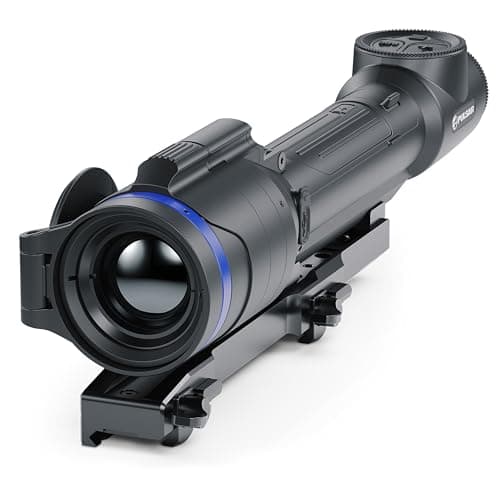
The verdict up front
The Talion XQ35 Pro is the thermal scope to buy when the hogs are close and the weather is not. It scores 7.9/10 on our rubric, and the two things that earn it are a wide view and a body built to be rained on: 2.5x base magnification behind a 35 mm F1.0 lens giving 10.7° by 8° of field (about 18.2 m across at 100 m), in a magnesium alloy housing Pulsar rates IPX7 - which it defines as surviving submersion in a meter of water for half an hour, not merely shrugging off a shower.
Three things work against it, and all three are on Pulsar's own specification table rather than in anyone else's opinion. The sensor is a 17 micron 384 where both of the 384s we compare it with in the same budget tier now use 12 micron parts. The NETD row on that table is blank - the "<25 mK" figure exists only in the marketing copy above it. And the published operating range stops at +40°C, which is 104°F: a number a South Texas summer clears regularly.
We have not shot this scope. This is a specification review: everything below comes from Pulsar's own Talion XQ35 Pro page, re-read on November 2, 2026, scored against the rubric published on our How We Choose page.
What Pulsar publishes
Pulsar is one of the more complete spec publishers in this category, and the Talion page is a good example. The headline figures:
- Sensor: uncooled 384x288, 17 µm pixel pitch, 50 Hz frame rate.
- Optics: 35 mm F1.0 objective, 2.5-10x magnification (4x digital zoom), 50 mm eye relief.
- Field of view: 10.7° x 8°, or 18.2 x 13.7 m at 100 m.
- Detection range claim: 1,350 m, about 1,475 yd.
- Display: 1024x768 AMOLED HD.
- Reticles: ten preloaded shapes in nine colors; 18 mm click value at 100 m on minimum magnification, with 3,600 mm of click range in each axis.
- Recording: 16 GB built in, 1024x768 .mp4 and .jpg, Wi-Fi on both 2.4 and 5 GHz to the Stream Vision 2 app.
- Durability: IPX7, 6000 J maximum recoil energy on rifled weapons, 12 gauge on smoothbores, operating range -25°C to +40°C.
- Power: APS 5T pack, 4,900 mAh, up to 9 hours at 22°C, plus USB-C Power Delivery at 5 V or 9 V.
- Size and weight: 330 x 57 x 67 mm, 0.7 kg without the battery pack.
- Warranty: 3 years, 5 with registration.
That is a fuller sheet than most of the registry manages. Compare it with the RIX Storm S3, which publishes no IP rating, no operating temperature range and no field of view at all. When we criticize the Talion below, it is worth holding onto the fact that we can criticize it precisely because Pulsar published the numbers.
The wide view is the real feature
Most thermal buying advice is written as though the problem is seeing far. For a landowner shooting over corn, the problem is more often seeing wide. A sounder does not arrive in single file down the middle of your reticle; it spills out of the brush, splits, and moves. At 2.5x with 10.7 degrees of field, the Talion shows roughly 18 meters of ground at 100 meters - enough to hold several pigs in frame at the same time and to follow one that breaks without losing the rest.
That is the opposite trade from the one most scopes in this tier make. A 50 mm lens at 3x or 3.5x base reaches further and sees a narrower slice; the Talion's 35 mm at 2.5x sees a wider slice and reaches less far. Which is right depends entirely on your ground. Thick mesquite and a feeder at sixty yards favor the Talion. An open sendero with shots out past two hundred favors the longer glass, and our guide to detection range claims explains why the headline distance number is the least comparable figure on any of these spec sheets.
The second half of the same argument is the 2.5x base itself. Low base magnification is what lets you find a hog at all. Scanning at 3.5x or 4x through a 384 sensor is like looking for pigs through a paper towel tube; the Talion's 2.5x is genuinely usable for finding as well as shooting, which matters if this scope is also your scanner. If it is not - if you scan with a monocular and shoot with the scope - that advantage shrinks, and the monocular versus scope question is worth settling first.
The 17-micron question
Pixel pitch is the physical size of each detector on the sensor. Smaller pitch means more detectors in the same area of silicon, which generally means more detail resolved at the same magnification. The industry has been moving from 17 µm to 12 µm, and in this budget tier that move has already happened to the Talion's rivals: the ATN ThOR 6 Elite LRF 384 and the RIX Storm S3 384 are both 12 µm parts. The Talion is 17.
What offsets it rather than cancels it is the glass. A 384 sensor at 17 µm behind a fast 35 mm F1.0 lens collects a lot of energy per pixel, and Pulsar pairs it with three levels of signal amplification and a 1024x768 AMOLED. The honest summary is that the Talion trades resolved detail for light-gathering and field of view, and that this is a defensible trade for close work and a poor one for identifying a sow at 250 yards.
If detail at distance is what you are buying, the number to read is not the sensor size on its own - it is the combination of pitch, lens and magnification. We lay that out across the whole registry in 256 vs 384 vs 640.
The blank cell on Pulsar's own spec table
There is a related wrinkle we flagged on our Pulsar Thermion 2 review and it applies here too. Pulsar quotes sNETD alongside, or sometimes instead of, standard NETD. sNETD is measured differently from the NETD figure other makers print, so a Pulsar sNETD number cannot be compared with an AGM or RIX NETD number as if they were the same measurement. Treat sensitivity as roughly comparable within a brand and not across brands, whoever is publishing it.
The +40C ceiling, in Texas
This is the finding we would most want a reader on this site to take away, because it is specific to where the site's readers hunt.
Pulsar publishes the Talion's operating temperature range as -25°C to +40°C. The upper figure is 104°F. That is not an exotic temperature in Texas - it is a normal July or August afternoon over much of the state, and the air temperature inside a closed box blind or a parked truck cab runs well above the air temperature outside it. The National Weather Service's heat index material is a reminder of how fast conditions stack up in that range.
For comparison, Pulsar rates its own Thermion 2 XQ50 Pro to +50°C, ten degrees higher, which tells you this is a property of the Talion rather than of Pulsar. In practice: hogs are mostly a night and dawn problem, and night air in August is under 104°F almost everywhere. But the scope does not stop existing during the day. It rides in a truck, sits in a blind, and gets zeroed at a range at two in the afternoon. Storage is different from operation, and Pulsar does not publish a separate storage range - but a scope with a 104°F operating ceiling is one we would not leave on a dash in August.
If you hunt a hot country and you want one less thing to think about, the Thermion 2 XQ50 Pro's extra ten degrees is a real reason to spend the difference.
No rangefinder, and no mount in the box
Two absences, both worth pricing in before you buy.
There is no laser rangefinder and no ballistic calculator. Both of the other 384s here have one: the ATN ThOR 6 Elite LRF publishes a 1,000 yd rangefinder plus ballistics, and the oneleaf Mars MT1000LRF in the same tier pairs an LRF with a 640 sensor. On hog distances this matters less than the marketing suggests - most feeder shots are inside 100 yards and your holdover is zero - but if you shoot across pastures at unknown distances, buying a scope without an LRF means buying a separate rangefinder, and that is a two-hand job in the dark. Our roundup of scopes with a rangefinder and ballistic calculator covers the ones that do include it.
The mount is a separate purchase, and it is proprietary. Pulsar lists compatible mounts as the Weaver U Mount, Weaver USQD Mount and Weaver LQD Mount - Talion-specific hardware rather than standard 30 mm or 34 mm scope rings. Two consequences. First, the mount is money and a decision on top of the scope. Second, you cannot move this scope between rifles using rings you already own, which is exactly what a hunter with a bolt gun and an AR tends to want to do. The RIX Storm S3, a tier cheaper, ships a Picatinny quick-detach mount in the box.
Who this scope is for
Buy it if: your shots are inside about 150 yards, your ground is brushy, you want one scope that both scans and shoots, you hunt in rain and want a body actually rated for submersion, and you shoot a thumping caliber - the 6000 J rating and 12 gauge shock resistance are at the top of what anything in this tier publishes.
Do not buy it if: you identify hogs past 200 yards (the 17 µm sensor and 35 mm lens are the wrong end of that job), you want a rangefinder built in, you already own scope rings you expected to reuse, or your rifle spends hot afternoons somewhere that clears 104°F.
One more framing that applies to every scope at this money: a thermal scope kills hogs one at a time. Shooting is not population control, which is the argument running through how to get rid of feral hogs. If the pasture damage is the problem rather than the hunting, the money goes further on a trap.
Alternatives and how they differ
ATN ThOR 6 Elite LRF 384 (ATN's page) is the answer if you want the newer sensor and the rangefinder: a 12 µm 384 with a built-in LRF and ballistics, in the same budget tier. It is heavier and ATN's battery figures are less generous than Pulsar's.
RIX Storm S3 384 (RIX's page) is the light, cheap, mount-included option - a 12 µm 384 under a pound with a five-year warranty and a QD mount in the box. The catch is that RIX publishes no IP rating, no operating range and no field of view, so the comparison with the Talion is partly a comparison between a known limit and an unknown one. Our full RIX Storm S3 review goes through that.
Pulsar Thermion 2 XQ50 Pro is the Talion's own family answer to everything above: a 50 mm lens for reach, +50°C instead of +40, and a 30 mm-ring body that mounts in standard rings. It is heavier, narrower in the view, and a tier up in money. The Thermion vs Talion comparison is the page for that decision, and our Thermion 2 review covers the scope itself.
Our picks for this job
The Talion and its three closest alternatives
All four were confirmed currently sold with a live price on 2026-11-02. Prices shown are whatever Amazon is asking right now - Pulsar and RIX both sell direct as well, so it is worth checking the maker's own store before you buy.
Best compact thermal for close brush hogs
Pulsar Talion XQ35 Pro
$1,000 to $2,0007.9/10ResearchedThe subject of this review: widest view and the toughest published body in the tier, with a 17 micron sensor and a +40C ceiling.
$1,767.55Amazon#ad · Price as of November 3, 2026 · How we make money for the link to Pulsar Talion XQ35 Pro
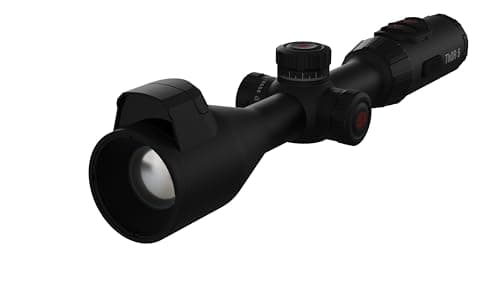
Best rangefinding thermal under $2,000
ATN ThOR 6 Elite LRF 384 3.5-28x
$1,000 to $2,0008.5/10ResearchedBuy instead for a 12 micron sensor and a built-in rangefinder with ballistics.
$1,890.00Amazon#ad · Price as of November 3, 2026 · How we make money for the link to ATN ThOR 6 Elite LRF 384 3.5-28x
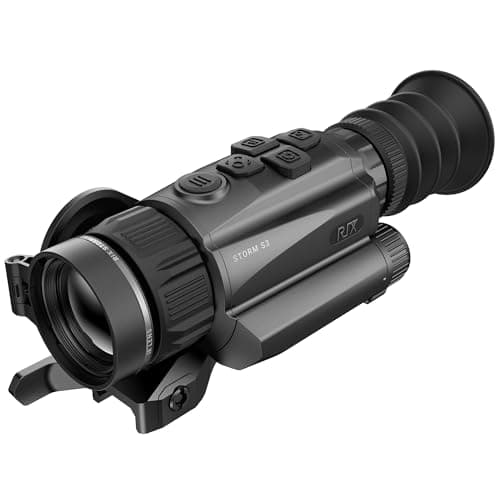
Best lightweight 384 under $2,000
RIX Storm S3 384 (35 mm)
$1,000 to $2,0007.4/10ResearchedBuy instead for the lightest 12 micron 384 with a QD mount included and a five-year warranty.
$1,299.00Amazon#ad · Price as of November 3, 2026 · How we make money for the link to RIX Storm S3 384 (35 mm)
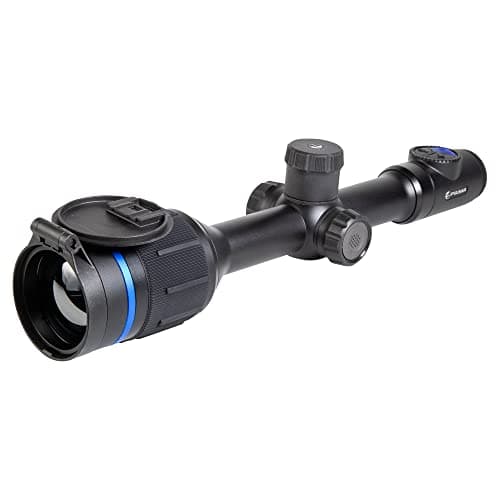
Best all-around thermal for hogs at field distance
Pulsar Thermion 2 XQ50 Pro
$1,000 to $2,0008.6/10ResearchedBuy instead for reach, +50C instead of +40C, and standard 30 mm rings.
$1,999.97Amazon#ad · Price as of November 3, 2026 · How we make money for the link to Pulsar Thermion 2 XQ50 Pro
How we reviewed this
We have not shot this scope. Iron Mako Media's standard is "tested when I can, researched when I can't, labeled either way," and this page is labeled Researched. Everything above is a published figure read off Pulsar's own product page on November 2, 2026, or a comparison between published figures, scored on the thermal rubric on How We Choose: sensor and lens for hog ID (30 percent), usability at night (20), battery and power (15), durability (15), warranty and support (10), value within its tier (10). Where a maker leaves a cell blank we say the cell is blank rather than filling it from a retailer.
We also hold an availability line: the Talion XQ35 Pro and all three alternatives were confirmed currently sold with a live price on November 2, 2026, the day this page was written. Prices on this site are pulled live and never typed into the copy, so if a listing goes dark the page shows "check current price" instead of a stale number.
How we scored this
Every score, built from the published record
Every pick here is labeled Researched: we read each maker's published specs, manuals and warranty terms, compare products only against others in the same budget tier, and score them on a public rubric. Every figure links to where it came from, and seller performance numbers are labeled “maker's claim,” so you can see exactly what you are buying.
Scores are our editorial read of that documented evidence. Commissions never set a score or decide a pick. The rubric and its weights are published.
What changed
- Published. Specs re-read on Pulsar's own Talion XQ35 Pro page the same day; the subject and all three alternatives confirmed currently sold with a live price. Zero new products added.
Questions
Frequently asked
Is the Pulsar Talion XQ35 Pro worth it?
What is the NETD of the Pulsar Talion XQ35 Pro?
Does the Talion XQ35 Pro have a rangefinder?
Does the Talion come with a mount?
How long does the Talion XQ35 Pro battery last?
Talion XQ35 Pro or Thermion 2 XQ50 Pro?
Receipts
Sources
- Pulsar: Talion XQ35 PRO Thermal Riflescope product page and full specification table - 384x288 at 17 µm, 50 Hz, 35 mm F1.0, 2.5-10x, 10.7x8 degrees, 1,350 m detection claim, 1024x768 AMOLED, IPX7, 6000 J, -25C to +40C, APS 5T 4,900 mAh / 9 h at 22C, USB-C PD, magnesium alloy, 330x57x67 mm, 0.7 kg, Weaver U / USQD / LQD mounts, 3-year warranty (5 with registration). NETD and sNETD rows on the table are blank (re-read 2026-11-02)
- Pulsar: What is NETD - the maker's own explainer on the sensitivity figure (checked 2026-11-02)
- ATN: ThOR 6 Elite LRF 384 3.5-28x product page - the 12 µm 384 with a built-in rangefinder and ballistics in the same budget tier (checked 2026-11-02)
- RIX Optics: Storm S3 thermal imaging riflescope product page - the 12 µm 384 with a QD mount included and a five-year warranty (checked 2026-11-02)
- NOAA / National Weather Service: heat index safety material, for context on a +40C (104F) operating ceiling
- TPWD: Outdoor Annual, Nongame and Other Species - where the current feral hog rules live
Specs come from each maker's own pages or the product listing (linked on every product), hog biology and trapping advice from Texas A&M AgriLife, and rules from TPWD and Texas statute. Prices are set by Amazon and change often, so we don't print them. Where a figure isn't published, we say so. Read the full method.