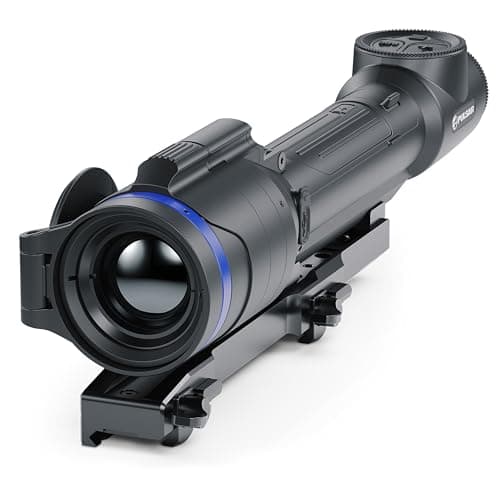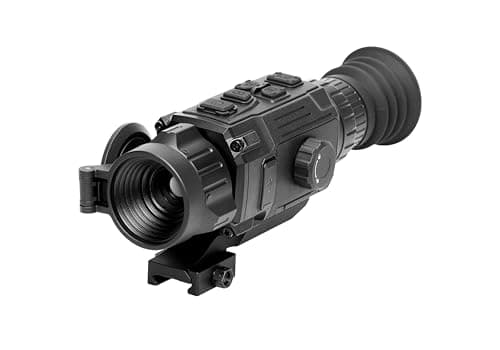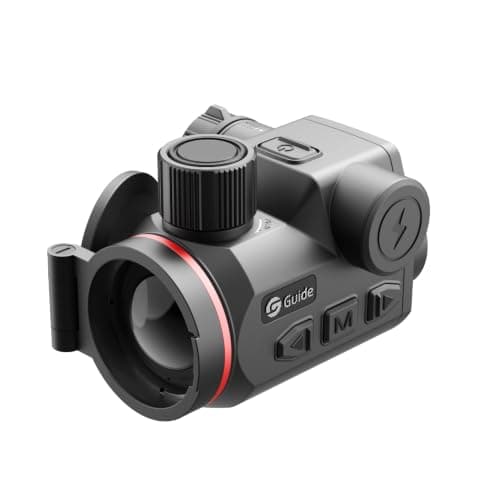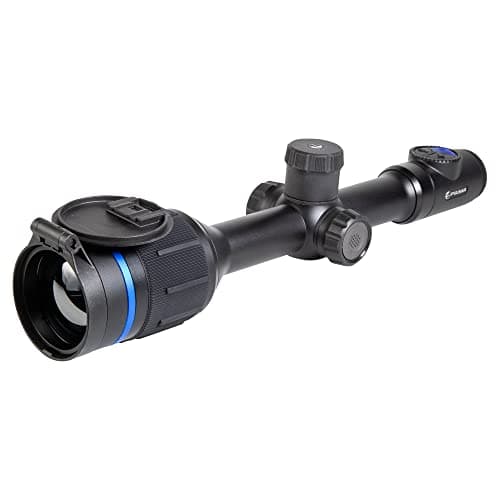
The verdict up front
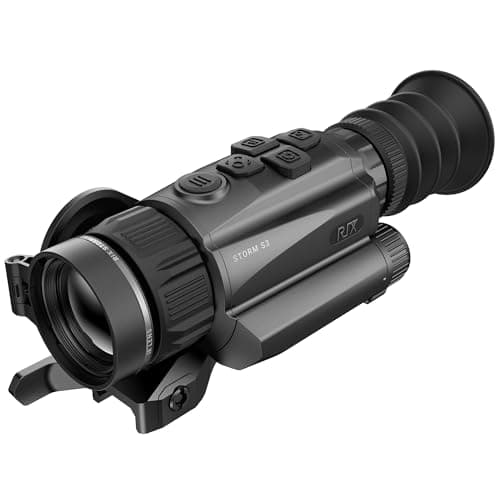
The Storm S3 is the thermal scope to buy when weight is the constraint. At about 0.97 lb it is roughly half the mass of the ATN ThOR 6 Elite LRF in the same budget tier, it arrives with a Picatinny quick-detach mount in the box rather than as a separate purchase, and RIX backs it for five years. On our rubric it scores 7.4/10.
The case against it is not about the sensor. A 12 µm 384 behind a 35 mm F1.0 lens at 50 Hz is a perfectly good front end for hog distances. The case against it is three empty cells on the spec sheet and one short number. RIX publishes no IP or waterproof rating, no operating temperature range and no field of view for this scope, and it publishes a runtime of about 4.5 hours per 18650 - the shortest in the three scopes we compare it against here.
So: a light, well-warrantied, well-mounted 384 for a hunter who carries their rifle and manages batteries, with more unknowns about weather tolerance than we would like at this money. If you sit still and want the most capability per dollar instead, the section on the awkward comparison below is the part to read.
What RIX publishes
RIX's own Storm S3 page, re-read on October 26, 2026, states:
- A 384x288 sensor at 12 µm pixel pitch
- <25 mK NETD
- A 35 mm objective at F1.0
- 3.5x base magnification with 1-4x digital zoom
- 50 Hz refresh, and a 1024x768 AMOLED display also at 50 Hz
- A detection claim of about 1,969 yd - a maker's claim
- A swappable 18650 cell, about 4.5 h at 72°F, plus 5 V USB-C input
- 32 GB of built-in storage, Recoil-Activated Video, and Wi-Fi to the RIX+ app
- A 1000 g / 6000 J recoil rating
- About 0.97 lb, in a 6.0 x 2.8 x 2.4 in aluminum alloy housing
- A Picatinny QD mount included, and a five-year warranty
That is a complete-looking list, which is exactly why the gaps are easy to miss.
The three blanks
The weight is the real feature
About 0.97 lb, which is 15.5 oz. For comparison, in the same budget tier the ATN ThOR 6 Elite LRF 384 is 830 g (1.83 lb) and the oneleaf Mars MT1000LRF is 549 g (19.37 oz). The S3 is the lightest of the three, and the gap to the ATN is nearly a pound.
A pound sounds like nothing until you have walked a section line at 2 a.m. with a rifle slung, or held one offhand on a hog that stepped out at the wrong angle. Weight on the rifle is the spec most buyers under-value and most owners complain about, and it is the one the S3 wins outright here. Pair it with the lightest rest you can live with - our shooting stick and tripod ranking sorts those by weight as well as height.
The included Picatinny QD mount compounds the advantage. ATN ships the ThOR 6 Elite for 30 mm rings and does not include them, so that scope costs more than its price and arrives needing a second decision. The S3 is ready to go on an AR rail out of the box, which for a 300 Blackout or 5.56 hog rifle is the normal case - see the hog hunting AR setup.
Four and a half hours
RIX rates the S3 at about 4.5 hours at 72°F on one 18650. A sit from last light to 2 a.m. is about six hours, so the scope is specified not to cover one full night on the cell it comes with.
Two mitigations, both real. The cell is swappable, which is better than the sealed or half-sealed arrangements elsewhere - the ATN runs two 18650s of which only one is replaceable in the field - and the scope takes 5 V USB-C external power, so a pocket bank covers a long sit. Neither is free: you are carrying either spare cells or a cable.
Note also that 4.5 hours is the figure at 72°F, and lithium cells give up capacity as the temperature drops. RIX does not publish a cold-weather runtime, and since it does not publish an operating temperature range either, there is no published floor to plan against. Budget two spare cells for a winter night and you will not be caught. More on this in how long a thermal scope lasts.
The awkward comparison in its own tier
S2 or S3? Where the extra tier goes
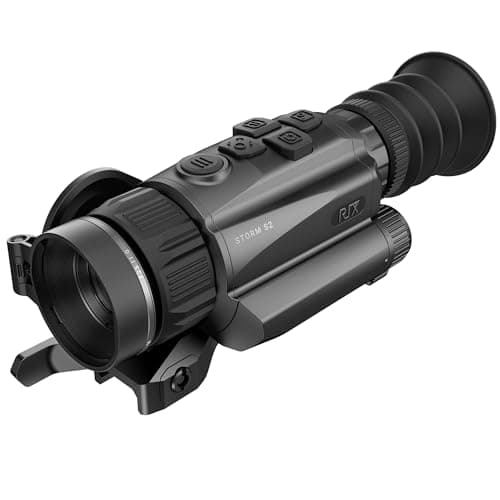
RIX also sells the Storm S2, a 256x192 scope on a 25 mm lens, a budget tier below. On our rubric the S3 scores 7.4/10 against the S2's 6.8 - a real gap, but a smaller one than a whole budget tier implies, and it is worth knowing exactly what the extra money buys before you spend it.
The whole difference is the front end and the warranty. The S3 is a 384 at 12 µm against a 256, which is more pixels on a hog at any distance, and it carries five years against the S2's three. Everything else runs the other way: the S2 wins runtime at roughly 5 to 8 hours per 18650 against the S3's 4.5, it wins price by a whole tier, and both are about the same weight with the same QD mount in the box. Note that the S2 page leaves the same IP and operating-range cells blank, so the S3 is not buying you any extra durability information either.
Practically: if your shots are inside about 100 yards over a lit feeder, the S2 is the sane purchase and the money saved buys a feeder light and a rest. If you are identifying hogs at 150 to 250 yards, the 384 earns its tier. The full argument about sensor sizes is on thermal scope resolution: 256 vs 384 vs 640.
Who this scope is for
| If this is you… | Storm S3? | Why |
|---|---|---|
| You walk and stalk, or carry the rifle a lot | Yes - this is the pick | Lightest 384 here at about 0.97 lb |
| You want a mount in the box | Yes | Picatinny QD included; the ATN needs rings you buy |
| Long warranty matters to you | Yes | Five years, against three on the S2 and the oneleaf |
| You hunt wet nights | Cautious | RIX publishes no IP or waterproof rating at all |
| You hunt below freezing | Cautious | No published operating temperature range |
| You sit from last light to 2 a.m. | Only with spares | About 4.5 h per 18650 at 72°F |
| You want a rangefinder and a ballistic solution | No | Neither is on this scope; the oneleaf and the ATN have both |
| Hogs come in close around one feeder | No | 3.5x base through a 35 mm lens is a narrow window |
| You want the most sensor per dollar | No | A 640 with an LRF sits in the same budget tier |
Alternatives and how they differ
Three ways to spend about the same money differently:
- oneleaf.ai Mars MT1000LRF - the capability pick, and the scope we would buy for a rest: oneleaf publishes 640x512 at <20 mK, a 1,300 yd rangefinder with a seven-profile ballistic calculator, a 2x base through a 12.5° x 10.1° view, IP67, 6000 J and optional 50 mm and 75 mm lenses. It is 4 oz heavier and the warranty is three years rather than five. It leads our under-$2,000 ranking.
- ATN ThOR 6 Elite LRF 384 - the sensitivity and ranging pick: ATN publishes ≤15 mK, the lowest NETD we have found in this tier, a 1,000 m rangefinder, a 1920x1080 OLED against the S3's 1024x768, 64 GB, IP67, -22°F to 131°F and a five-year warranty. The costs are weight (1.83 lb) and rings that are not in the box. Head to head with this family on AGM Rattler vs ATN ThOR.
- RIX Storm S2 - a budget tier below with the same body habits: a 256x192 on 25 mm, roughly 5 to 8 hours per 18650 - better than the S3 - the same included QD mount, and a three-year warranty. It scores six tenths lower than the S3 on our rubric, which is less of a gap than a whole budget tier suggests. Compared directly with the AGM 256 on AGM Rattler vs RIX Storm.
Our picks for this job
The Storm S3 and the three scopes to weigh against it
All four were confirmed currently sold with a live price in our price data on October 26, 2026. Scores come from our published thermal rubric, not from testing.
Best lightweight 384 under $2,000
RIX Storm S3 384 (35 mm)
$1,000 to $2,0007.4/10ResearchedThe subject of this review: the lightest 384 here, with a QD mount in the box and a five-year warranty - and no published IP rating, operating temperature or field of view.
$1,299.00Amazon#ad · Price as of November 3, 2026 · How we make money for the link to RIX Storm S3 384 (35 mm)
Best 640 sensor under $2,000
oneleaf.ai Mars MT1000LRF (35 mm)
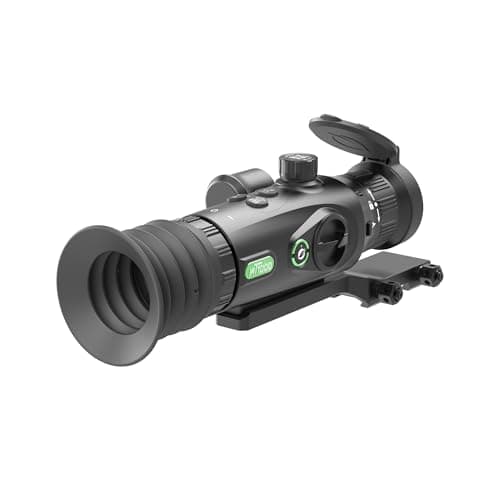
$1,000 to $2,0008.1/10ResearchedThe capability buy in the same budget tier: a 640 at <20 mK with a 1,300 yd rangefinder, IP67 and a wider 2x base. Four ounces heavier, three-year warranty.
$1,499.00Amazon#ad · Price as of November 3, 2026 · How we make money for the link to oneleaf.ai Mars MT1000LRF (35 mm)
Best rangefinding thermal under $2,000
ATN ThOR 6 Elite LRF 384 3.5-28x
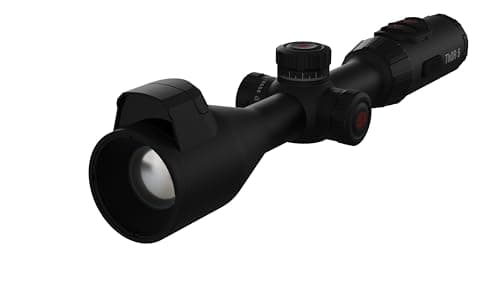
$1,000 to $2,0008.5/10ResearchedThe most sensitive sensor in the tier at <=15 mK, with a 1,000 m rangefinder and a 1920x1080 display - at 1.83 lb, and rings are not included.
$1,890.00Amazon#ad · Price as of November 3, 2026 · How we make money for the link to ATN ThOR 6 Elite LRF 384 3.5-28x
Best 256 scope for a little more reach
RIX Storm S2 (256x192, 25 mm)
$500 to $1,0006.8/10ResearchedA tier below, with longer runtime and a 256 sensor: the sane buy if your shots are inside about 100 yards.
$720.00Amazon#ad · Price as of November 3, 2026 · How we make money for the link to RIX Storm S2 (256x192, 25 mm)
If the real question is whether to buy thermal at all, start with are thermal scopes worth it, and the best thermal scope for hog hunting ranks this whole category for the hog problem specifically.
How we reviewed this
Plainly: we have not shot this scope. This is a specification review. Every figure above comes from RIX's own Storm S3 product page, re-read on October 26, 2026, and from ATN's, oneleaf's and RIX's own pages for the comparisons. We confirmed the Storm S3 and all three alternatives were currently sold with a live price the same day through our daily price check. Scores come from the published thermal rubric on how we choose.
Our network standard is "tested when I can, researched when I can't, labeled either way", and this page is labeled. Where RIX does not publish a figure - the ingress rating, the operating range, the field of view - we have said so rather than borrowing a number from a sibling model or a retailer's copy.
For the same money in a different brand, read the Pulsar Thermion 2 XQ50 Pro review; a tier down, the ATN ThOR 6 Mini 256 review covers the entry end. And if you are weighing a headlamp into the same budget, our hunting headlamp ranking is the cheapest part of a night setup.
How we scored this
Every score, built from the published record
Every pick here is labeled Researched: we read each maker's published specs, manuals and warranty terms, compare products only against others in the same budget tier, and score them on a public rubric. Every figure links to where it came from, and seller performance numbers are labeled “maker's claim,” so you can see exactly what you are buying.
Scores are our editorial read of that documented evidence. Commissions never set a score or decide a pick. The rubric and its weights are published.
What changed
- Published.
Questions
Frequently asked
Is the RIX Storm S3 waterproof?
How long does the RIX Storm S3 battery last?
Is the RIX Storm S3 good for hog hunting?
What is the difference between the RIX Storm S2 and S3?
Does the RIX Storm S3 have a rangefinder?
What warranty does RIX give on the Storm S3?
Receipts
Sources
- RIX Optics: Storm S3 thermal imaging riflescope product page, specification block and FAQ (checked 2026-10-26)
- RIX Optics: Storm S2 thermal imaging riflescope product page (checked 2026-10-26)
- RIX Optics: Storm S6R thermal imaging riflescope product page (checked 2026-10-26)
- ATN: ThOR 6 Elite LRF 384 3.5-28x product page, including the IP67 rating and -22F to 131F operating range (checked 2026-10-26)
- oneleaf.ai: Mars MT1000LRF thermal riflescope product page, including the 640x512 sensor, rangefinder and IP67 rating (checked 2026-10-26)
- TPWD: Outdoor Annual, Nongame and Other Species, feral hogs (checked 2026-10-26)
- Texas Parks & Wildlife Code §62.005, Hunting with Light (texas.public.law; checked 2026-10-26)
Specs come from each maker's own pages or the product listing (linked on every product), hog biology and trapping advice from Texas A&M AgriLife, and rules from TPWD and Texas statute. Prices are set by Amazon and change often, so we don't print them. Where a figure isn't published, we say so. Read the full method.