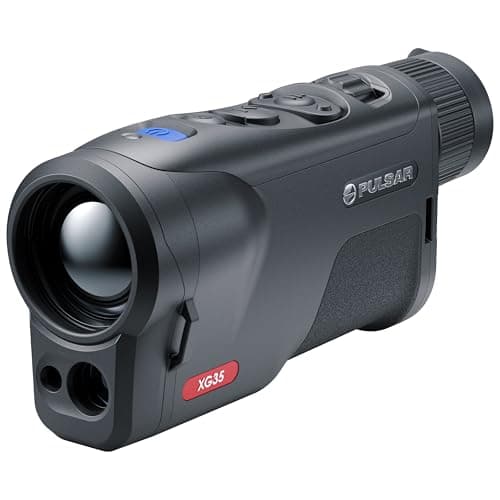
Scan wide, shoot narrow
The commonest mistake with a new thermal is hunting at the magnification you bought it for. A 3-12x scope at 6x shows you a slot of pasture, and hogs walk into and out of that slot without you ever seeing them. Scan at base magnification — the whole reason a 2x or 2.5x base matters — and only zoom once you have found something worth looking at. Then zoom to identify, not to shoot: digital zoom on a thermal is interpolation, and past 2x of it you are making decisions on invented pixels.
Scan in overlapping sweeps rather than one pass. Go left to right at a steady speed, come back a half-field lower, and repeat. Heat signatures at distance are small and dim; a fast sweep hides them in your own motion blur, especially on a 50 Hz unit. If you are on a tripod, pan slowly enough that the image settles between movements.
Scan the ground as well as the treeline. Hogs lie in wallows and in shade all night, and a bedded pig is a flat oval, not an animal shape. Early in a sit it is worth running one deliberate pass over every place a hog could be lying down before you decide the field is empty.
Two optics beat one, and it is not close
The single biggest change most hog hunters make is adding a handheld thermal to a thermal scope. Searching with a rifle-mounted optic means swinging a loaded rifle around to look at things — slow, awkward and unsafe — and it is why people sit for two hours and see nothing on a property with hogs on it.
With a scanner in your off hand, you find the animal first, decide whether it is worth a stalk, and only then bring the rifle up on a known target. It also means your scope can be the long, narrow, higher magnification optic you actually want for shooting, because finding is no longer its job. We work the whole trade-off through on thermal monocular vs thermal scope.
Read the group before you shoot anything
Feral hogs are a group animal, and Texas A&M AgriLife is blunt that selective shooting is the least effective control method on its own — it educates survivors and removes a fraction of the sounder. If your goal is fewer hogs rather than one hog, spend thirty seconds counting and watching before the first shot.
What you are reading for:
- How many. A thermal picture at 4x hides pigs behind pigs. Count twice.
- Where the edges are. The animals on the outside of the group are the ones you can take without the others immediately having a direction to run.
- Which way is out. Hogs break for cover they know. Work out where that is before you shoot, because it decides whether shot two and three exist.
- Whether a sow has young with her. Shooting a sow with piglets leaves piglets; AgriLife's ecology page and our reproduction page explain why that is the opposite of control.
If the whole sounder is on bait and you cannot take most of it, the honest answer is often to leave it alone and trap it instead. That is not hunting advice people enjoy, but it is what the research says works — see how to trap feral hogs.
Wind, not light, is what busts you
Thermal fixes the seeing problem and does nothing at all about the smelling problem. Hogs have poor eyesight and an excellent nose, and Mississippi State's extension service puts playing the wind at the top of its wild-hog hunting advice for exactly that reason.
Practical version: park further away than feels necessary, walk in downwind or crosswind, and accept a longer shot over a better angle if taking the better angle means crossing their wind. On still nights in brush country, cold air sinks into draws after dark and carries scent downhill — if the feeder is below you, you are in the wrong place regardless of what the forecast said.
Noise matters second. Steel on steel from a gate, a truck door, a bipod leg clacking onto a shooting rail — those are the sounds that empty a field. Thermal makes you confident enough to move, and moving is when people get noisy.
Shot order on a sounder
Texas A&M's research summary notes that feral swine shift their activity patterns in response to hunting pressure, becoming more strictly nocturnal where they are pressured. Every sounder you shoot at and fail to finish is a sounder that gets harder next week. So:
- Start with the animal furthest from cover, not the biggest one. A hog dropped between the group and the brush does nothing to help you; one dropped on the open side leaves the others milling.
- Shoot fast and keep the picture. After the first shot you have a few seconds of confusion. Stay in the scope, do not look up to see what happened.
- Expect the group to bunch before it runs. That bunching is the second shot.
- Stop when they are gone. Shooting into a running group at night, with a thermal, on flat ground, is how people put rounds somewhere they cannot account for.
On caliber and bullet choice, we keep that argument on its own pages: best caliber for hogs and 300 Blackout vs 5.56.
The settings people get wrong
- Palette. White-hot is the right default for finding; black-hot gives many people better shape recognition for identifying. Learn to flip between the two with one button and do it before every shot.
- Brightness and contrast too high. A hot-looking picture blooms, and bloom is how a shoat becomes a boar. Turn both down until the hog has edges.
- Never running a shutter calibration. Uncooled sensors drift. If the image is getting muddy and ghosty, calibrate; if your unit has a manual option with the lens cap on, use it between sits.
- One zero profile for several rifles or loads. Both Pulsars on our comparison page store multiple zeroes. Use them, and confirm the zero on paper rather than assuming it travelled — Pulsar's own zeroing guide is worth reading once. Our zeroing walkthrough is the long version.
- Recording everything. Fine, but internal storage fills and a full card has stopped more than one hunt's worth of footage. Clear it before you go, not after.
The gear these tips assume
Our picks for this job
A scanner, a scope and something to rest on
Nothing here is required to apply the advice above, but this is the shape of a working night setup: one optic to find with, one to shoot with, and a rest so the shot is steady. Scores come from our published rubrics, not from testing.
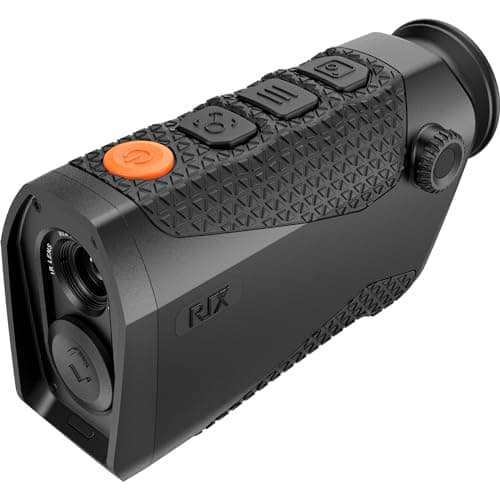
Lightest 384 monocular
RIX Pocket K3
$500 to $1,0007.5/10ResearchedThe scanner, as small as the job allows: use this in your off hand so the rifle only comes up on a found target.
$799.00Amazon#ad · Price as of October 11, 2026 · How we make money for the link to RIX Pocket K3
Best entry thermal for feeder distances
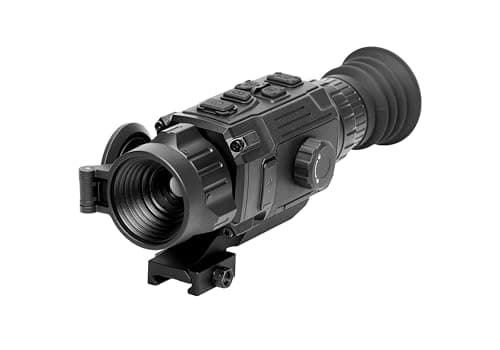
AGM Rattler V2 19-256
$500 to $1,0007.1/10ResearchedThe entry-tier scope these habits matter most on: a short lens and low base magnification is exactly what you want for scanning wide.
$695.00Amazon#ad · Price as of October 11, 2026 · How we make money for the link to AGM Rattler V2 19-256
Best all-around thermal for hogs at field distance
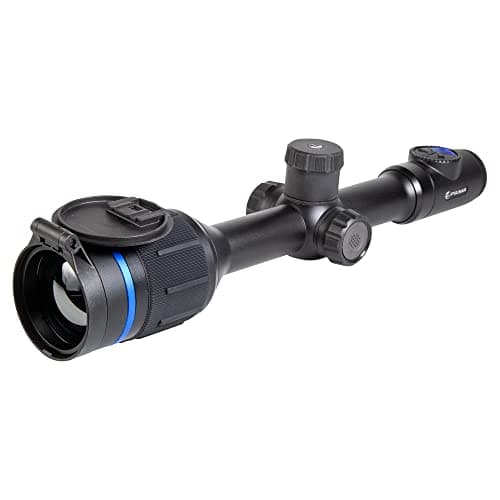
Pulsar Thermion 2 XQ50 Pro
$1,000 to $2,0008.6/10ResearchedThe reach option, with a 50 mm lens and up to 10 hours of battery for a full night of sits.
$1,999.97Amazon#ad · Price as of October 11, 2026 · How we make money for the link to Pulsar Thermion 2 XQ50 Pro
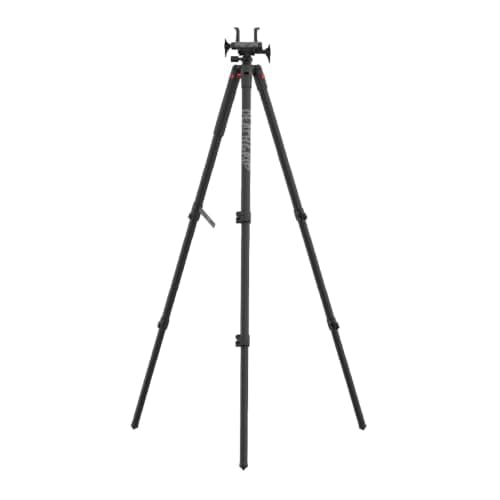
Best clamping tripod for sitting a feeder
BOG DeathGrip Tripod (Aluminum)
Under $5007.7/10ResearchedA clamping rest. Most missed night shots on hogs are unsupported shots; this removes that variable.
$164.31Amazon#ad · Price as of October 11, 2026 · How we make money for the link to BOG DeathGrip Tripod (Aluminum)
After the shot
Keep watching through the optic for a full minute before you move. Hogs that run twenty yards and pile up are easy to find with thermal and nearly impossible without it, and a wounded animal that has not been pushed usually does not go far. A fresh carcass glows for a long time; a dead hog that has cooled does not, which is the argument for recovering it now rather than at daylight.
Then handle it properly. Feral hogs carry pathogens that transfer to people during field dressing, so gloves are not optional — the detail is on feral hog diseases and meat safety, and the technique is on how to field dress a hog. If you are not keeping it, carcass disposal rules apply; see what to do with trapped hogs in Texas.
Ten mistakes, briefly
- Hunting at 6x instead of scanning at base magnification.
- Using the rifle scope as the search optic.
- Walking in upwind because thermal made you feel invisible.
- Shooting the biggest hog rather than the one on the outside.
- Looking up after the first shot.
- Letting digital zoom convince you that you have identified an animal.
- Never calibrating the sensor.
- Carrying one battery.
- Shooting into a running group on flat ground.
- Shooting a sounder you could have trapped whole. A five-foot animal that breeds as fast as this one does is not a problem you solve one at a time.
How we scored this
Every score, built from the published record
Every pick here is labeled Researched: we read each maker's published specs, manuals and warranty terms, compare products only against others in the same budget tier, and score them on a public rubric. Every figure links to where it came from, and seller performance numbers are labeled “maker's claim,” so you can see exactly what you are buying.
Scores are our editorial read of that documented evidence. Commissions never set a score or decide a pick. The rubric and its weights are published.
What changed
- Published.
Questions
Frequently asked
What magnification should I scan at with a thermal scope?
Which hog in a group should you shoot first?
Does thermal mean wind no longer matters for hogs?
White hot or black hot for hogs?
Is shooting hogs at night with thermal enough to control them?
Receipts
Sources
- Texas A&M Natural Resources Institute: activity patterns and behavioral modifications of feral swine (checked 2026-10-11)
- Texas A&M AgriLife: selective shooting as a feral hog control method (checked 2026-10-11)
- Texas A&M AgriLife: feral hog ecology (checked 2026-10-11)
- Mississippi State University Extension: top tips for hunting wild hogs (checked 2026-10-11)
- Pulsar: how to zero your thermal riflescope (checked 2026-10-11)
- Missouri Department of Conservation: Feral Hog (Feral Swine) field guide (checked 2026-10-11)
- TPWD: Outdoor Annual, Nongame and Other Species, feral hogs (checked 2026-10-11)
- Texas Parks & Wildlife Code §62.005, Hunting with Light (texas.public.law; checked 2026-10-11)
Specs come from each maker's own pages or the product listing (linked on every product), hog biology and trapping advice from Texas A&M AgriLife, and rules from TPWD and Texas statute. Prices are set by Amazon and change often, so we don't print them. Where a figure isn't published, we say so. Read the full method.