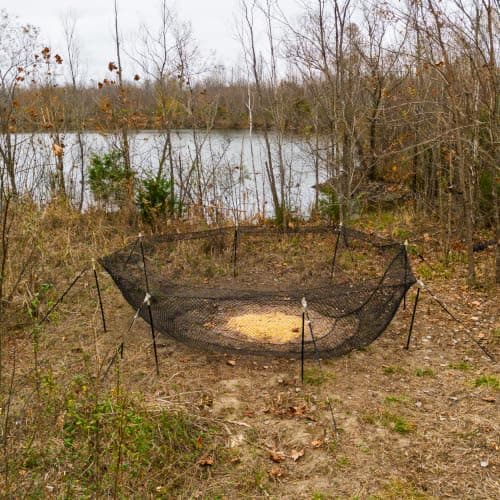
The principle: you move hogs, you do not summon them
The question is usually asked backwards. Corn does not conjure a sounder onto empty ground. TPWD describes feral hogs as established across nearly all of Texas, and they are already working a home range that may cover several thousand acres. What bait does is give them a reason to use your corner of that range, at a time you choose, in a spot where you have a backstop, a rest and a safe shot.
So the job is not attraction. It is relocation and scheduling. Everything below follows from that.
Step 1: find the sign before you spend anything
Walk the property in daylight and look for four things. If you cannot find any of them, feed is the wrong first purchase — the hogs are not using your ground yet and a camera on the boundary will tell you more than a feeder will.
- Rooting. Turned soil in patches, usually in damp low ground or along a fence line. Fresh rooting is dark and crumbly; old rooting has crusted over.
- Wallows. Muddy depressions near water, often with mud slung up tree trunks nearby. Hogs need water and shade more than they need your corn.
- Rubs and tracks. Mud on trunks at knee height, and round-toed tracks narrower than a deer's with a blunter front.
- Crossings. Trails under or through a fence, through a creek, along the edge of thick cover. This is where you want to be.
Our feral hog damage page covers reading sign in more detail, including telling hog rooting from armadillo and raccoon work.
Step 2: pick the site
A good hog site is chosen for the hogs first and for you second, in that order. Five tests:
- On a route they already walk — within 50 yards of a crossing or trail, not in the open middle of a field.
- Within easy reach of cover. Hogs come out of thick stuff and go back into it. A site with brush on one side gets used far sooner.
- Near water. A tank, a creek, a wallow. In a Texas summer this is the single strongest draw you have, and it costs nothing.
- Shootable in the dark. A safe backstop, a known distance, and nothing behind it — a rise, a bank, a thick treeline.
- Downwind of your approach. You will come and go for weeks. Pick a site you can get into without walking your scent across it.
Step 3: the feed
Start with whole corn, and do not overcomplicate it. Texas A&M AgriLife's own feral hog trapping guidance builds its baiting around shelled corn for the simple reasons that hogs eat it readily, it is cheap in bulk, and it is easy to place in volume.
- Plain corn first, for a week or two. You are establishing trust, not tempting a single animal. Put out more than they can clean up in a night.
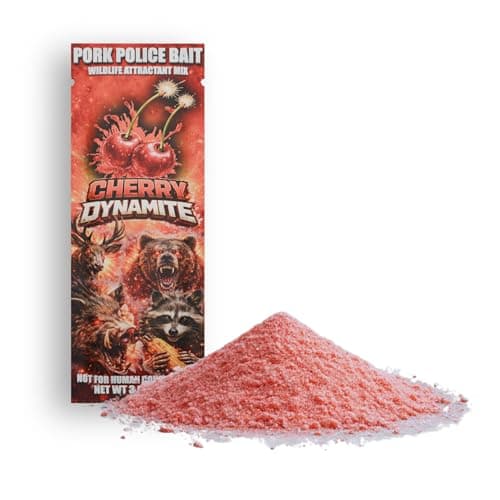
- Add a granular or liquid attractant once they are coming. A bait additive makes a pile smell further and last longer in the rain. It does not substitute for corn.
- Soured corn when you need extra pull. Fermented corn smells much further and most non-target animals like it less — our sour corn guide has the method, and hog bait recipes covers the mixes worth making.
- Estrus and boar lures are a hunting tool, not a feeding tool. They pull a curious boar past a stand. They do not hold a sounder.
If you are building toward a trap rather than a sit, the bait strategy changes — see best hog trap bait, which ranks the attractants on exactly that job.
Step 4: feed on a schedule, and let them learn it
This is the step most people skip, and it is the one that turns a visited site into a patterned one. Hogs are intelligent and intensely habitual: feed at the same time every day and within a week or two the sounder is arriving in that window.
- Pick a time you can hunt. A timer throwing corn at 3 p.m. patterns hogs for the middle of the afternoon.
- Two short throws beat one long one. Enough feed to hold them, little enough that they come back tomorrow.
- Do not change it. Every change resets the pattern you are building.
- Expect night first. Pressured hogs arrive after dark before they ever arrive in daylight — which is what the thermal and feeder light are for.
Hog activity shifts with season, temperature and pressure, and our when are hogs most active page covers what to expect through the year.
Step 5: scent, used properly
Scent is a marker, not a meal. Its job is to make a site obvious from downwind and to give hogs a reason to stop rather than pass through.
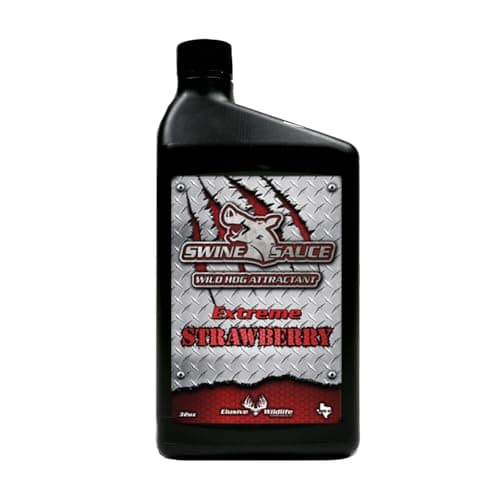
- Build a rub or scent post. A pour-on oil on a trunk or a set post near the feed, refreshed every few weeks.
- Put it near the feed, not on it. You want them to linger within your shooting lane, not to eat the scent.
- Keep your own scent out. Downwind approach, gloves when you handle bait, and as few visits as you can manage — which is the strongest argument for a solar cellular camera.
Our picks for this job
What a working hog site needs
A feeder you can reschedule without driving out, something to make the corn smell further, a scent post to hold them, and a camera that tells you the hours.
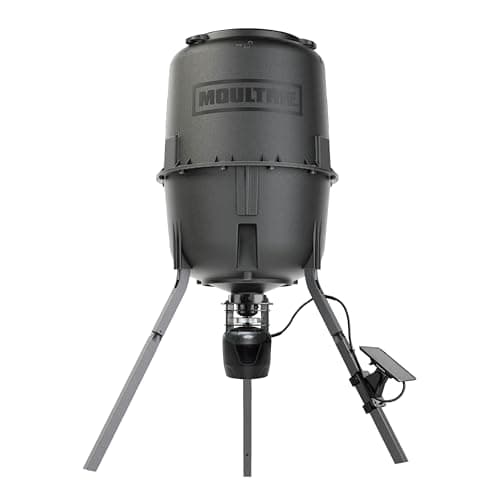
Best cellular tripod feeder
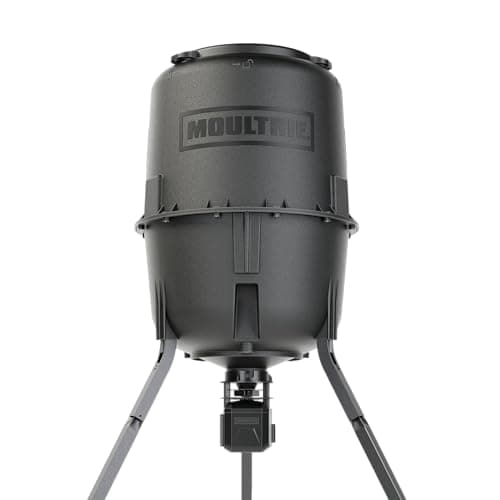
Moultrie Deer Feeder Connected (250 lb, cellular tripod)
Under $5006.2/10ResearchedChange feed times from your phone instead of driving out and resetting the pattern. 250 lb, up to 10 feeds a day, with feed-level and clog alerts.
$169.99Amazon#ad · Price as of November 3, 2026 · How we make money for the link to Moultrie Deer Feeder Connected (250 lb, cellular tripod)
Best granular bait for pre-baiting a trap
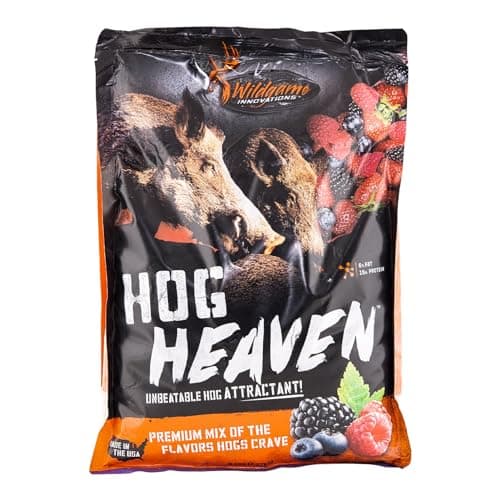
Wildgame Innovations Hog Heaven 5 lb
Under $5007.4/10ResearchedA granular bait to work into the corn once hogs are coming, so a pile smells further and survives rain better.
$12.87Amazon#ad · Price as of November 3, 2026 · How we make money for the link to Wildgame Innovations Hog Heaven 5 lb
Best scent post for a stand or trap site
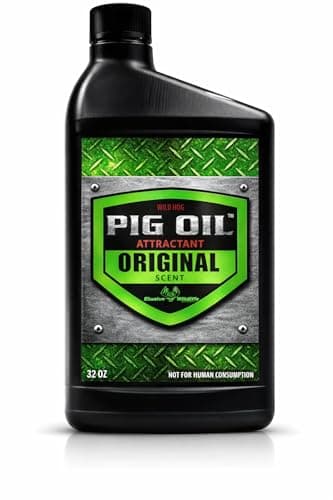
Elusive Wildlife Pig Oil
Under $5007.6/10ResearchedA pour-on for a tree or rubbing post near the site: a marker that holds for weeks between bait refills. Scent, not feed.
$24.99Amazon#ad · Price as of November 3, 2026 · How we make money for the link to Elusive Wildlife Pig Oil
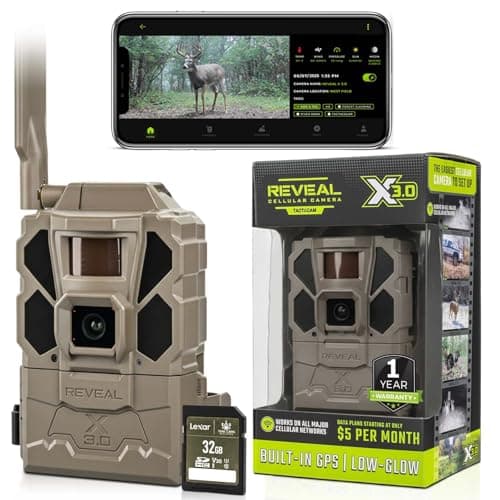
Best value Tactacam
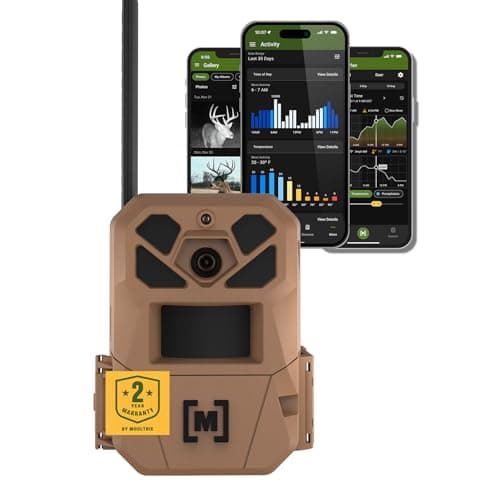
Tactacam Reveal X Gen 3.0
Under $5007.8/10ResearchedThe confirmation step. Auto-carrier LTE with 4K stills and a 12 V input for a panel, so you learn the arrival window without walking in.
$119.99Amazon#ad · Price as of November 3, 2026 · How we make money for the link to Tactacam Reveal X Gen 3.0
Step 6: confirm with a camera before you sit on it
Do not hunt a site you have not photographed. A week of camera data tells you four things you cannot guess: how many hogs, what time, from which direction, and whether they are still coming after your last visit.
- Hang it above browse height, six to eight feet, angled down at the feed. Hogs rub anything at shoulder level.
- Prefer no-glow at a baited site. Pressured sounders do notice a low-glow flash, and an educated group changes its hours.
- Read the direction of travel, not just the time stamp. It tells you where to sit and which way to approach.
- Count, then decide. Three hogs is a hunt. Fifteen is a trapping job — see how to trap feral hogs.
Keeping a site working
- Never let it go empty. One week of nothing and the sounder is somewhere else, and it takes longer to get them back than it did to bring them in.
- Shoot sparingly, or not at all until you are ready. Every shot educates the survivors. One quiet, well-planned sit beats four opportunistic ones.
- Move water, not just feed, in a dry summer. A trough near the site can out-pull corn in August.
- Watch what else shows up. Raccoons and deer will clean a pile. A guard cage on a spinner keeps varmints off the mechanism.
- Expect the group to split. A big sounder breaks into smaller groups through the year, and your camera will show it.
What not to do
- Do not use diesel, used motor oil or any petroleum product. It is a persistent myth, it contaminates soil and water, and it does nothing corn does not do better. Our sour corn page addresses the diesel question directly.
- Do not use a toxicant unless it is registered and you follow the label. Warfarin-based hog bait has a controlled regulatory history in Texas — see the Texas Department of Agriculture's feral hog pesticide program before you consider anything of the kind, and read does hog repellent work for what the non-lethal products actually do.
- Do not bait where you cannot shoot safely at night. A site is only as good as its backstop.
- Do not bait a property line. You will pull your neighbor's hogs onto a shooting lane pointed at their ground.
- Do not expect bait to solve the problem. Baiting concentrates hogs; trapping removes them. Attraction without removal just feeds a growing population.
The deer-feeder problem, in reverse
Most people reading this already have a deer feeder that hogs have taken over — which is the same phenomenon working against them. Texas A&M's Natural Resources Institute has published on using exclusion fencing to keep feral hogs away from feeding stations, and that is the honest answer when the goal is deer rather than hogs.
If you want both — deer fed and hogs patterned — run two separate sites: a protected deer feeder with exclusion, and a dedicated hog site a few hundred yards away that you bait and hunt deliberately. Mixing them gets you neither. Our pages on keeping hogs away from a deer feeder and hog-proof deer feeders cover the protection side.
How we scored this
Every score, built from the published record
Every pick here is labeled Researched: we read each maker's published specs, manuals and warranty terms, compare products only against others in the same budget tier, and score them on a public rubric. Every figure links to where it came from, and seller performance numbers are labeled “maker's claim,” so you can see exactly what you are buying.
Scores are our editorial read of that documented evidence. Commissions never set a score or decide a pick. The rubric and its weights are published.
What changed
- Published.
Questions
Frequently asked
How do you attract hogs to your property?
How long does it take to attract hogs to a new site?
What is the best bait to attract hogs?
Does diesel attract hogs?
Should I bait hogs if I am trying to get rid of them?
Will baiting hogs ruin my deer hunting?
Receipts
Sources
- Texas A&M AgriLife: Coping with Feral Hogs - trapping and baiting guidance (checked 2026-10-17)
- Texas A&M Natural Resources Institute, Dec. 2025: using exclusion fencing to prevent feral hog access at feeding stations (checked 2026-10-17)
- TPWD: Feral hogs / wild pigs in Texas, distribution and management overview (checked 2026-10-17)
- TPWD: Outdoor Annual, Nongame and Other Species, feral hogs (checked 2026-10-17)
- Texas Department of Agriculture: Feral Hog Pesticide regulatory program (checked 2026-10-17)
- Moultrie: 250 lb Deer Feeder Connected product page and spec table (checked 2026-10-17)
- Wildgame Innovations: Hog Heaven attractant product page (checked 2026-10-17)
- Elusive Wildlife: Pig Oil product page and application guidance (checked 2026-10-17)
- Tactacam: Reveal X Gen 3.0 product page (checked 2026-10-17)
Specs come from each maker's own pages or the product listing (linked on every product), hog biology and trapping advice from Texas A&M AgriLife, and rules from TPWD and Texas statute. Prices are set by Amazon and change often, so we don't print them. Where a figure isn't published, we say so. Read the full method.